the sun is fine, the mediocre ones bother themselves (idiom); nothing is wrong with the sun
The sun is nothing but a mediocrity
The recent movie “Wandering Earth 2” based on Liu Cixin’s novel is now in theaters. The movie setting atmosphere, plot bizarre, visual shock, not only the Chinese science fiction film to an unprecedented new height, in the world is also unique, definitely worth watching. This talk is assuming that you have been shocked, also excited also cried, also gave five stars, the good words have finished, we can come to some serious discussion.
The sun is gone. Humans must wander with the Earth, going through 2,500 years of underground life to the planet Proxima, 4.2 light years away. Not everyone can get into the Underground, so half the population is given up by lottery first. The rest had a hard time, not to mention the darkness and a series of crises such as nuking the moon and getting rid of Jupiter …… Countless heroes and civilians were sacrificed in the process.
*This is really a grand and tragic narrative. But is it really necessary to be so tragic? *
Let’s talk about the physics of it and beyond.
✵
Let’s ignore the details and talk about the three key settings of Wandering Earth - the
The sun will turn into a red giant star, so the entire solar system will be unsuitable for Earth’s existence;
A lot of people didn’t believe the sun would turn into a red giant star, and the Wandering Earth program was in a crisis of confidence - just then, the sun had a “helium flash”, so everyone believed it;
The destination of Wandering Earth, the planet Proxima, is a suitable place to live.
All three of these setups were dead wrong. Scientists are very clear about how the Sun will spend its life [1], so let me run through it for you.
The sun is, essentially, a device that uses gravity to create pressure that causes a nuclear fusion reaction. At its most basic, the process takes ions of hydrogen atoms - aka protons - and turns them into helium through a series of fusion reactions [2].
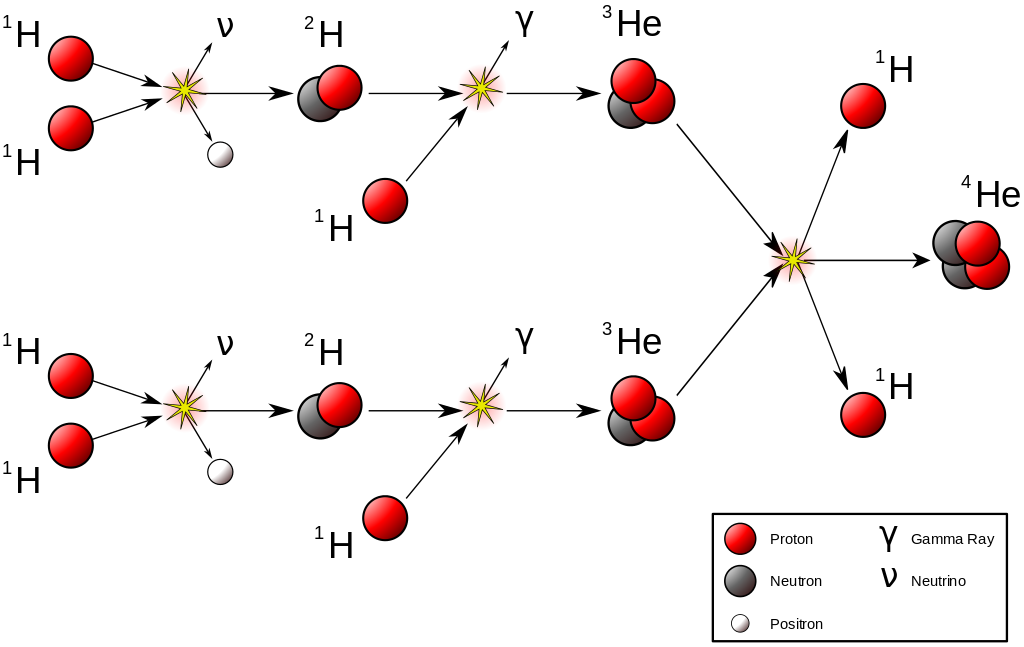
Nuclear fusion requires temperature and pressure. Fusion occurs in the interior of the Sun because the temperature and pressure are greatest in the interior. If the fusion reaction goes too fast, the sun releases more light and heat, and then the temperature and pressure inside decreases, which makes the reaction slower - a negative feedback, self-regulating process. That’s why our sun has always behaved in a very stable way, never a shock.
But this self-regulating mechanism is not perfect. Helium builds up in the core, leading to an overall trend of increasing internal temperature and pressure, and a trend of accelerating fusion reactions. This trend makes the sun brighter and larger in diameter.
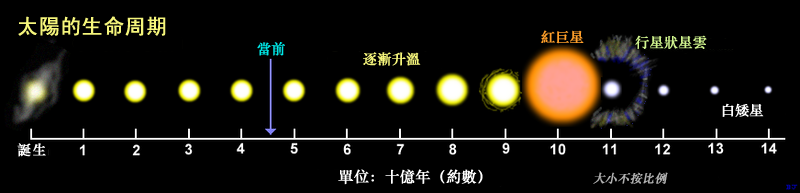
But we don’t have to worry about that for now, because the process is extremely slow. As shown in the figure below, each unit is a billion years: the Sun is currently changing at a rate that increases the amount of energy it delivers to the Earth by about 10 percent for every billion years that pass.
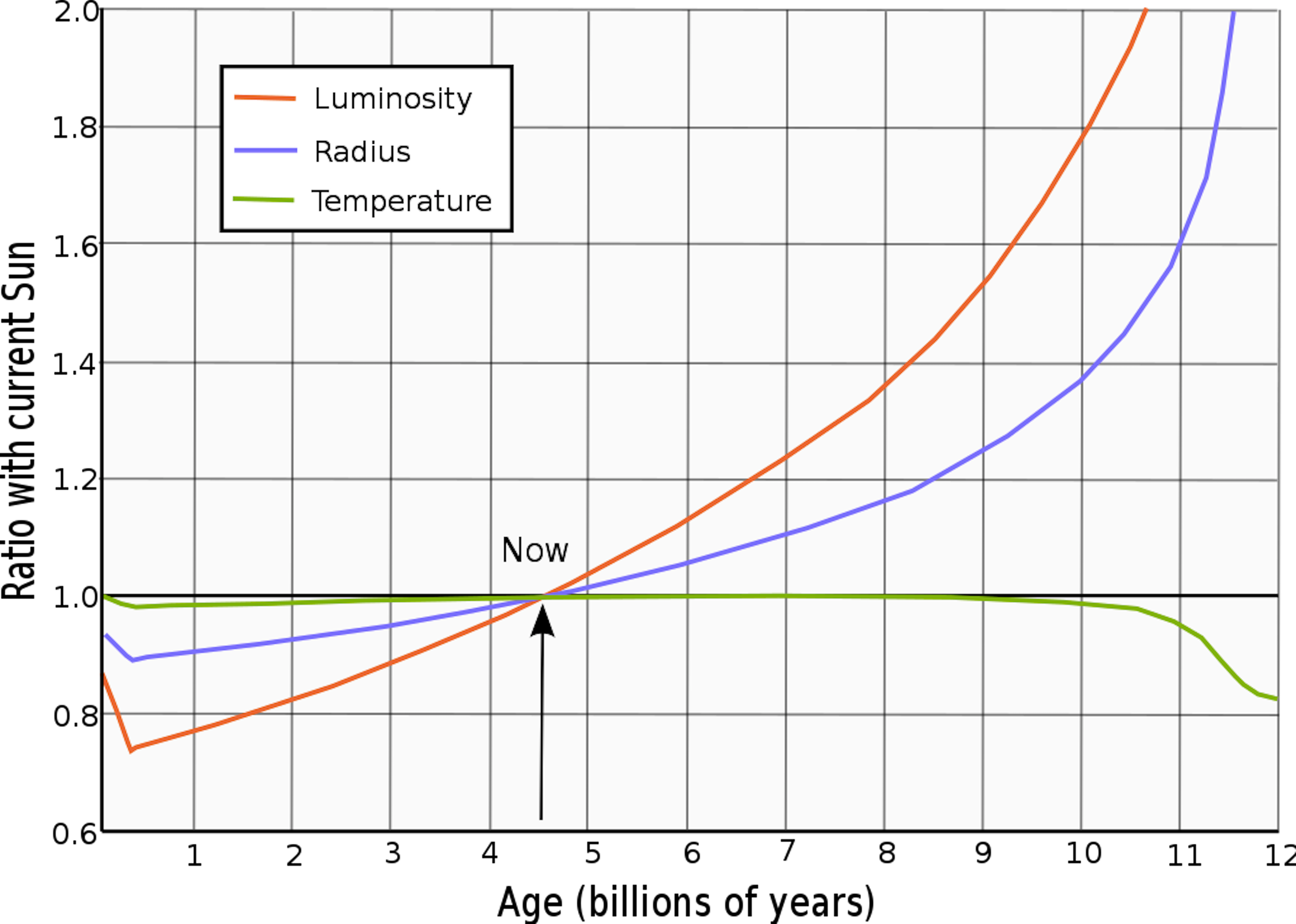
But the process is firm. After about a billion years, without having to wait for the sun to become a red giant, the Earth would already be too hot to survive. According to calculations, that’s when all the water on Earth will boil. In other words, the Earth will no longer be in the “habitable zone” of the solar system.
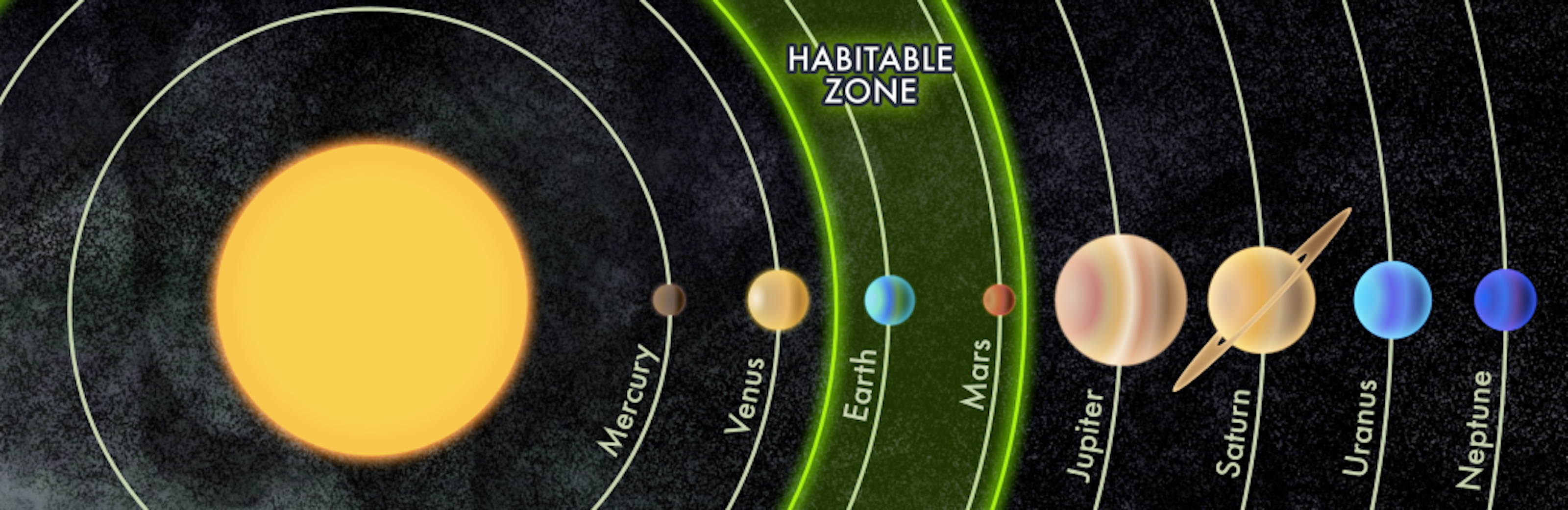
Shouldn’t we start a program to roam the Earth? It’s not necessary. The sun is still the same sun, and the solar system is still the same solar system, except that the habitable zone is now farther away. If you really have a “planetary engine”, just move the Earth a little bit out of the new habitable zone. If you don’t have a planetary engine, consider migrating to Mars. It’s all a lot easier than going to Proxima.
After about 5 billion years, the sun is finally turning into a red giant. This is because the protons in the Sun’s core have burned out, and there’s no way to release the pressure, which causes the protons on the outside of the core to start to fusion, and it’s like blowing up a balloon, and the Sun’s size starts to expand. It will become so large that it will subsume the orbits of Mercury and Venus. As to whether or not the Earth’s orbit will be subsumed by then, the calculation is now in the middle of a two-way street.
So you’re saying that when the sun becomes a red giant, do we have to go to Proxima? There’s no need for that either. The sun is still the sun when it gets bigger, and it’s still shining a light on the solar system. The solar system is far from being all subsumed - in fact, Jupiter and Saturn, according to calculations, are right in the habitable zone at this point.
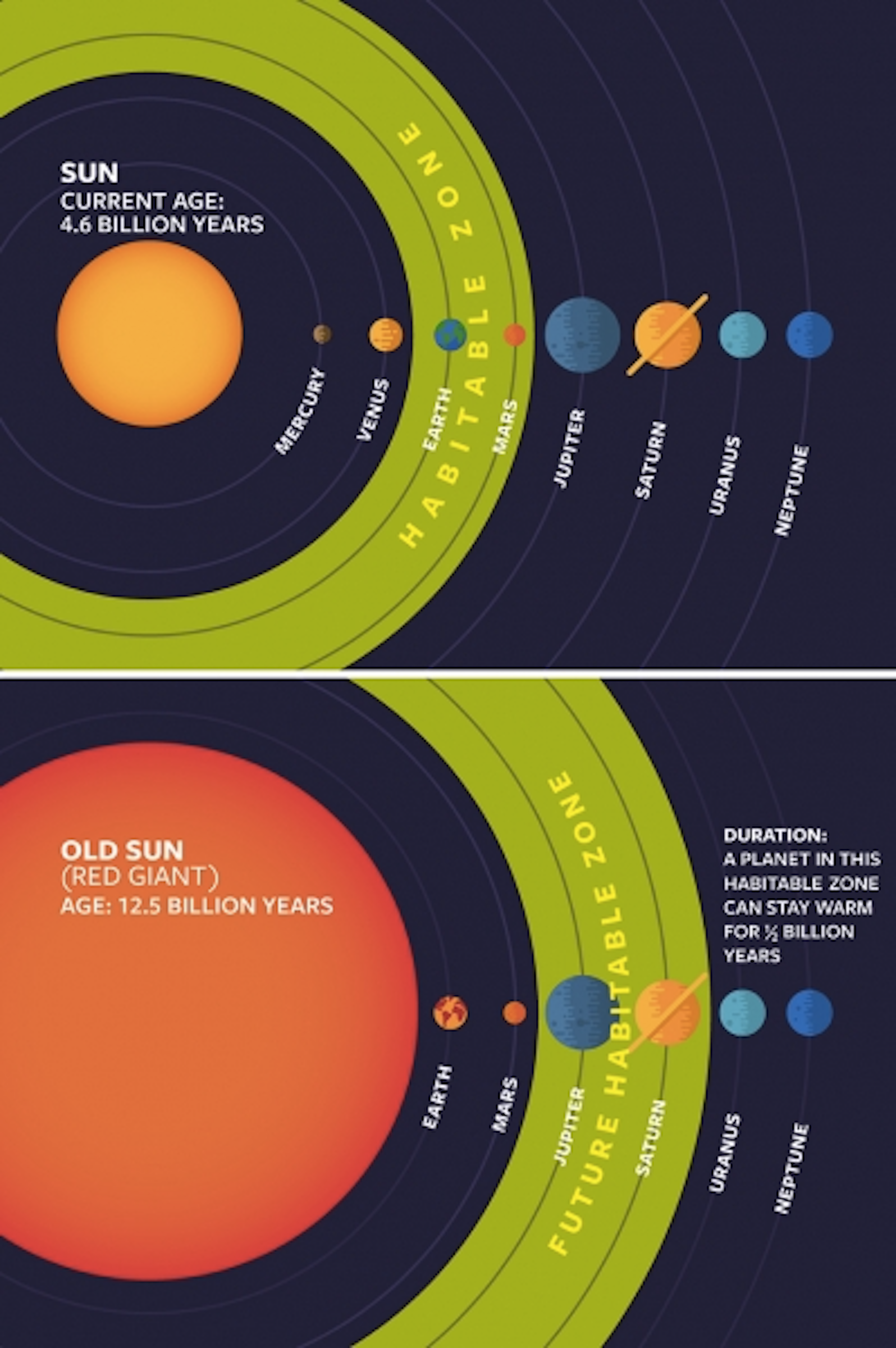
It’s still the same thing, either you move the Earth to the new habitable zone, or you migrate to one of the moons of Jupiter and Saturn - there are a couple of moons that have better living conditions than even Mars because of the water on them.
As long as the sun is still there, you don’t need to send people to live in some dungeon. In either case you don’t need to stop the Earth’s rotation.
Helium flashes, occur after the sun turns into a red giant after, not as a precursor to red giants as novels and movies say.
All that was left of the Sun’s core was helium, and these helium nuclei were pressed together in their most extreme form - the ‘Simplified Merger State’[3] - gathering more and more and eventually undergoing fusion. Because of the simplicity pressure beyond all forces, this fusion of helium will not be affected by the pressure, so there is no negative feedback regulation given by the outside world, so it will happen in a flash, which is the helium flash.
What exactly a helium flash would entail I understand is not conclusive at this time. As far as I know right now astronomers have not observed a helium flash in any star, helium flashes only exist in theory. Maybe the energy from the helium flash will be absorbed by the sun itself and won’t get out at all, or maybe the helium flash will cause the sun to explode one last time, allowing a nebula to form in the outer layers.
Either way, the Sun will eventually run out of energy and become a lifeless white dwarf. And that’s at least 6 billion years away.
So you’re saying we should always go to Proxima this time? What I’m asking is, what’s the future of going to Proxima? Proxima is a red dwarf star, much less energetic and massive than the sun, and emits very weak light, which results in it being very close to the habitable zone. The Earth is so close to it that it can’t stand a little solar wind flash. What’s more, Proxima is not an independent star; it forms a three-star system with two other nearby stars [4] - a “triple body”! That’s an unstable system. If the Earth went there, it might experience a “chaotic epoch” - isn’t that why the Tristarians couldn’t make it on their own planet and had to take over the Earth?
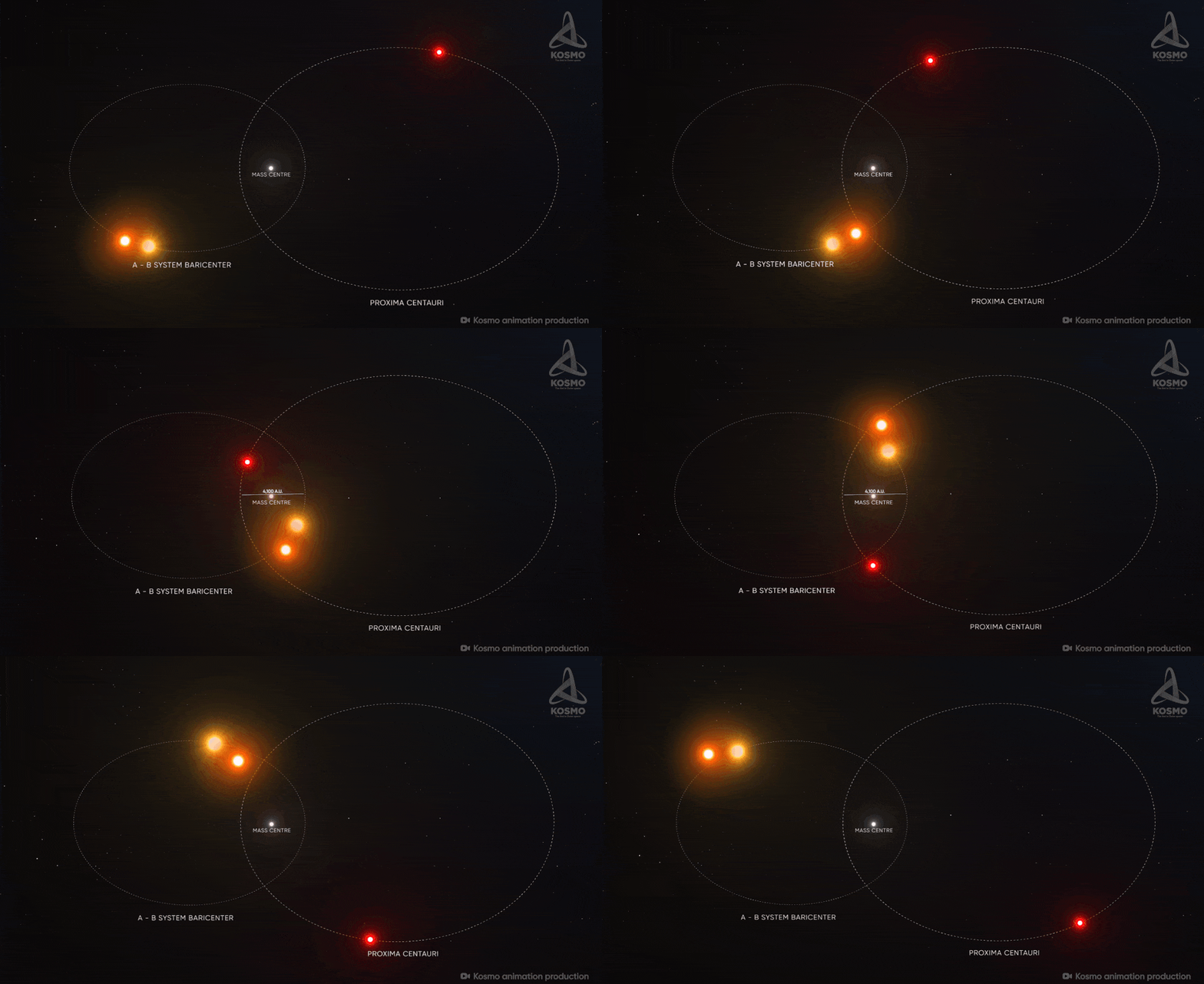
To go, you’d have to go to a more reliable star. For example, Barnard’s Star, 6 light years from Earth …… Of course that would require us to go much farther, but since it’s sci-fi, going 2,500 years or 4,000 years is all in a word. Besides, 6 billion years from now, haven’t we developed the technology of the Tritons yet?
✵
Simply put, the true impact of the sun on the fate of mankind is that-
*1) The sun will not become a red giant for billions of years. *
*2) Helium flashes don’t happen before the red giant stage, they happen after. * The fact is that mankind didn’t need to be alerted by a helium flash that something was going wrong with the Sun - we knew that already. The Sun’s problems occur gradually, as a ‘gray rhino’. The Sun will grow steadily and age gracefully.
*3) Even if the Sun becomes a red giant, we can continue to survive in the solar system for another billion years without having to let the Earth wander. * Even if we have to go in the future, there are better options.
The big difference between this picture and the Wandering Earth setting is that the real future is actually more optimistic. There’s no skyrocketing catastrophe, we’ll have plenty of time to prepare, and we’ll have options like “move Earth slightly out of the habitable zone with us” and “emigrate to a new habitable planet in the solar system”.
The sun will never let us suddenly get so bad that we have to give up half of our population, then mobilize global forces for a “saturation rescue”, and then sacrifice all the Chinese astronauts over the age of 50.
So why do you think we have to make such a sad setup when we can just live our lives?
✵
One of the great things about Wandering Earth is this sense of pathos. It embodies the ‘collectivist rationality aesthetic’.
This aesthetic advocates uniting all people, mobilizing all forces, and working together for a grand goal - under this grand goal, everything is a means to an end, and everyone is willing to give. There is a special charm to this sense of inclusion of all, this sense of nobility in sacrificing the ego for the sake of the greater self, this sense of certainty in knowing clearly what is right and what is wrong. Any small mind, any small emotion, any small freedom that is not connected to that goal is anachronistic, ridiculous and even to be criticized.
Collectivist aesthetics demands that all form ‘one fist’, not ‘a scattered mass’.
The collectivist aesthetics of rationality demands conditions of implementation that go beyond the ordinary. Human society is in a state of free-flowing dispersion on an ordinary day. Just like a food market, each vendor and customer has his own interests and preferences, you have the right to pursue anything, you are willing to go it alone or find a few people to partner with, you are free to explore in all directions. Only when a major crisis arrives can society be turned into a ship with a clear course, a captain, and layers of sailors, all of whom are in their places, moving along in the prescribed direction.
So in order to realize a collectivist rational aesthetic, you have to create a crisis. Not just any crisis, it has to be one that affects everyone’s lives, even their lives, to the point where you can’t even morally justify not participating in it.
Some people are particularly fond of collectivist rational aesthetics, others - like me - not so much.
I think collectivist rational aesthetics is a delusion that only stands in people’s fantasies.
✵
That’s not how the real world works.
In fact, the only reason humans have created so much wealth and so much amazing technology is because of the “one-size-fits-all” market economy where everyone is free to explore and make choices.
That’s why hero narratives that fit the Divine Principle have three characteristics.
First, the protagonist keeps an open mind, ready to discover and draw on the favorable conditions of the outside world, allowing for the exploration of other possibilities;
Second, the protagonist changes his or her ego and has a mind upgrade between experiencing difficulties and solving them;
Third, always prioritizing human life and never taking sacrifice lightly - especially at the expense of others.
The collectivist rational aesthetic is the polar opposite of these three characteristics. The kind of one-dimensional thinking in which everyone pushes hard in one direction is exactly what true entrepreneurs try to avoid. The collectivist rational aesthetic is never about success stories, but about paranoia and insanity of thought.
It is said that Liu Cixin once did a show with the philosopher Jiang Xiaoyuan and a female host, Liu Cixin asked Jiang Xiaoyuan, if you have to eat the hostess in order for civilization to continue, do you eat it? Jiang Xiaoyuan said, “Of course I won’t eat her, what’s the point of a civilization that has lost its humanity? Liu Cixin, on the other hand, emphasized that “if you don’t choose human nature now, you will have a chance to develop human civilization in the future” [5].
Liu Cixin is really fond of constructing such factually non-existent and logically untenable situations to exert his collectivist rational aesthetics. He will probably never understand that that’s not called rationality, that’s taking individuality as rationality.
Notes
[1] SEAN RAYMOND, A Step-by-Step Guide to Our Solar System’s Demise, nautil.us, September 17, 2022.
[2] https://euro-fusion.org/fusion/fusion-on-the-sun/
[3] ELITE DAY CLASS, QUARTER 4, QUIZ: Do particles exist that violate the laws of the universe?
[4] Shepherd, What is the experience of a physics PhD student watching Wandering Earth 2, CAS Physics Public, 2023-01-22.
[5] Liu Cixin: If there are only 2 men and 1 woman left in the world, women must be eaten to continue civilization, do you eat them? https://www.163.com/dy/article/G4REE2F00543MXFV.html
Highlight
The true impact of the sun on the fate of humanity is that-
- The sun will not become a red giant for billions of years.
- The helium flash doesn’t happen before the red giant stage, but after.
- Even if the sun becomes a red giant, we can continue to survive in the solar system for another billion years without having to let the earth wander.