To summarize: what exactly is 'counterintuitive'

Summary: What exactly is ‘counterintuitive’?
World Wide Steel Let’s go ahead and summarize the book Don’t Trust Your Intuition. The author of this book is Seth, we had read his previous book “Everybody Lies” in the first season, with the help of the summary of “Don’t Trust Your Intuition”, we also review the previous book together, click on the link to review the original text. Have a productive day.
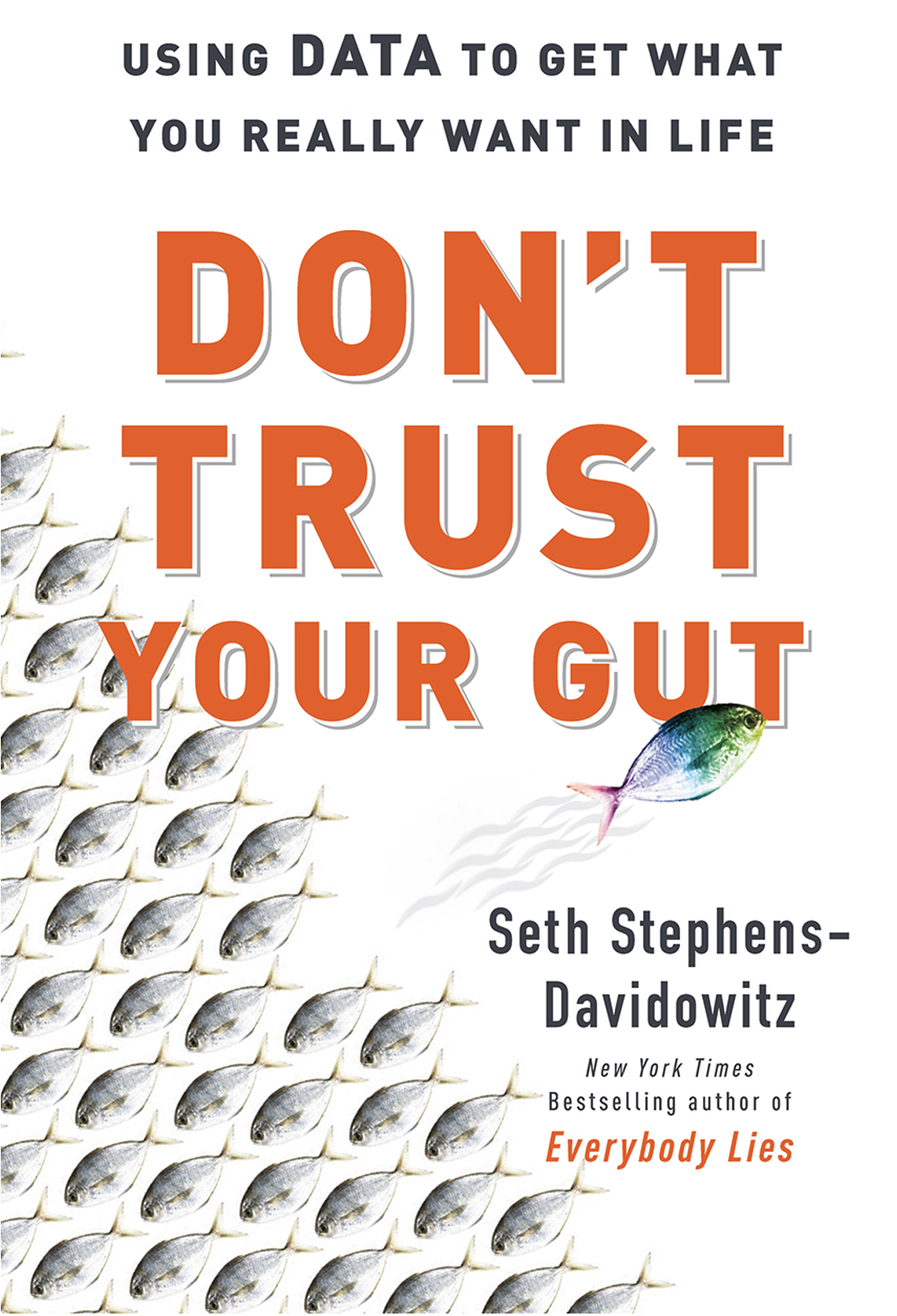
★Book Title : Don’t Trust Your Gut: Using Data to Get What You Really Want in Life.
★Publication date : May 2022 (not yet available in Chinese)

★Title :Everybody Lies: Big Data, New Data, and What the Internet Can Tell Us About Who We Really Are
★Publication date : May 9, 2017
★Author: Seth Stephens-Davidowitz, a former data scientist at Google who now works as a lecturer at the Wharton School and writes a regular column for the New York Times.
★ 20 Counterintuitive Truths Data Tells Us ★
*☆The Truth About Marriage***1. If you want a happy marriage, how should you look for your significant other?**What people actually seek in the marriage market, and what they should seek, happen to be two completely different things. The usual points of attraction - looks, height, occupation, personality like you or whatever - don’t matter at all. If you’re going to force a pick, look for people who have good qualities, including life satisfaction, secure attachment style, dutifulness, and a growth mindset. @MarriageBigData
**2. Does a relationship last longer the more mutual friends a couple has? Nope.**The more overlapping the circle of friends, the more likely couples or men and women are to declare themselves single again after a certain amount of time. In other words, the longest lasting relationships tend to be the ones where each partner has a different circle of friends. Why does it have to be “big” data?
**3. How can you increase your attractiveness in the eyes of the other person in the delicate state before you settle down in a relationship?**The data tells us that the best thing for men to do is to accept women’s leadership - laugh at jokes she tells, follow her lead if she’s talking about a certain topic, and support her when she says she wants to do something. This will go a long way in increasing her favor with you.
**4. So what are some special conversation tips for women?*Sorry, the data shows that women don’t use conversation tips - it’s always the good looking ones that men end up choosing. @If you know what to look for ……
☆The Truth About Education*5. Does the method of parenting matter to your child? NO.**A child’s destiny is his own, and parents can play a very small role. And genetic factors have 2.5 times more influence on a child’s future income than the method of parenting. Choosing where to live - this one decision accounts for 25% of all parental influence on a child. @parentingmethods don’t matter, role models do!
**6. Do single-parent, poor families produce better players than two-parent, middle-class families? NO.**The answer is that players from two-parent middle-class families are more likely to do well. There are two main reasons for this. The first is that children from such families are well nourished from an early age, so they grow taller. The second is that such children have better social skills. These two qualities are too important for basketball. Why does it have to be “big” numbers?
**7. Does investment in education produce celebrities? Doesn’t matter much.**Examining the birthplaces of celebrities reveals that they are concentrated in two types of places: the first is college towns. This may be due to strong genes; children of university professors and graduate students are certainly smarter than the average person. A more important reason is that university towns provide an innovative environment. The second is the big city. Big cities are where talent and innovation resources are concentrated. You want to be a journalist, you’d better be born in New York; Boston produces the most and best scientists; and Los Angeles is home to first-rate actors. A family investing more in education does help get a child into the upper middle class – but it doesn’t help him become a celebrity who makes it into Wikipedia. @HiddenLaw.
**8. Do prestigious schools have a “value-added” effect on a student’s ability? No.**The famous Stuyvesant High School, which is ranked No. 1 in the United States and has an acceptance rate of only 5%, has no added value for the students who were lucky enough to get into the school. There was no difference between the two experimental groups in terms of prerequisite course scores, SAT scores, or which colleges they ended up attending. Not even a small difference!
What a brand, what a prestigious faculty, what an alumni association, all this aura of prestigious schools adds up to no observable effect, at least for personal income. Cowboys are cowboys wherever they go. Famous schools don’t “train” people, they just “choose” them. @Unexpected usefulness and uselessness
**The Truth About Success
**9. What should I do if I want to make money and become one of the top 0.1% of the rich?**The answer is to look for ‘structural opportunities’. Most industries don’t make rich people. Industries that you think are very profitable are actually very difficult to make money in, and some really profitable industries are very inconspicuous. To make high profits you need to have some sort of moat.
To get into the TOP 0.1%, think about three questions first: do you have your own business? Can your business avoid simple price competition? Is your business immune to giant suppression? Structural opportunity for @BecomeRich
**10. luck is uncontrollable, do I just have to work hard? no.**The right relationship between effort and luck is this -
We have to recognize the importance of luck. The world is unfair and it may often be the seemingly accidental, innate factors that are beyond your control that determine your success or failure.
But we still believe that effort works - but not specifically in the direction of defying luck.
Effort can improve luck. The specific way to do this is to work in the direction of luck and multiply effort with luck. Luck isn’t for lamenting, it’s for planning. @effort x luck.
**11. Are successful companies met with more good luck? Not necessarily.**Researchers have found that there is no statistically significant difference between 10x and 1x companies when it comes to good luck events. In fact, 10x companies encountered an average of 7 good luck events, but 1x companies encountered an average of 8 good luck events!
This means that the average company has just as many, or perhaps even more, opportunities for good fortune, but they don’t take them, or they don’t take them well, and they don’t use them as well as the 10x companies, which are strong because they maximize the benefits of their good fortune. There is a competence issue here. High level decision making is competence, and competence can become good luck when it meets bad luck.
When the same opportunity is presented to different people, the more capable are better able to use it. @Ability x Luck
*☆The Truth About Happiness***12. Do people know what to do to bring happiness and take the initiative to do it? No.**People are actually not very good at assessing whether doing something is pleasurable. There are five activities that are commonly underestimated as being pleasurable: going to a museum exhibit, playing sports, drinking alcohol, gardening, going out shopping, and running errands.
Another five activities are overestimated in terms of how happy we think we are doing them, when in fact we are not that happy: sleep rest and relaxation, computer and cell phone games, watching TV and movies, eating and snacking, and browsing the Internet.
You have the right to do things that are pleasurable, you need to understand what is truly pleasurable and you can regulate pleasure yourself. @HappyEngineering
**13. Is it necessarily happier to be a fan? Not necessarily.**The answer is: winning for the team you support certainly makes you happy, but losing causes you a lot of pain. Quantitatively and collectively, being a die-hard fan of a particular team is more than worth it. @HappyEngineering
**14.Does nature always make us happy?****Not necessarily.*Different natural environments bring different levels of happiness, at the beach you are the happiest with a score of 6.02, in the mountains it’s 2.71, and in the woodlands 2.12 …… A sunny day with the right temperature will make you happy, but rain and snow won’t make you feel very unhappy… ...@HappyEngineering.
☆The Truth About Racism*15.Does the fact that Obama can become president mean that there is no racism in America?**No. On the eve of Obama’s first presidential election, 1% of all searches for the word “Obama” included the word “nigger”. In some states, more people searched for “nigger president” than for “first black president.”
This may not seem like a large percentage, but when it comes down to votes, Obama got at least 4 percentage points less votes because of racism. Obama was elected president not because there is no racism in the United States, or because racism has very little impact on elections, but because Obama and the Democrats are simply too dominant in other areas! @TheRealYouMeExposedBeneathTheData
**16.Are Republicans more racist than Democrats?**No. There are traditionally two stereotypes we have about racism. One is that we always think that Democrats are progressive and less racist; Republicans are conservative and more racist. The other is that the North is economically advanced, people are more enlightened and less racist, while the South is economically backward, people are more closed-minded, and racism is more severe - this is, of course, the impression left by the Civil War.
However, Seth judged from Google data that both impressions are wrong. It’s not the political parties or the North and South that divide racism, but the East and the West - the eastern states of the US have more people who are racist, whereas in the West, especially around California, people really don’t have much of a discriminatory mindset. @The Real You and Me Exposed to Data
*☆The Truth About Depression***17. Is the most effective treatment for depression taking medication?**Not necessarily. If you get depressed when winter comes around, the best thing you can do is not to take pills, but to move to a sunny place like Hawaii. Big data tells us that moving is about twice as effective as taking pills. Why does it have to be “big” data?
**☆The Truth About Violence
**18. Do violent movies increase violence in the real world?****No.*Instead of increasing violent crime, violent movies decrease it. The data shows that on all those days when a violent movie is released, violent crime is down from the usual rate. The reason for this may make you laugh: because violent movies keep violent people in the movie theater - and since they’re in the theater watching a movie, they’re less likely to go out on the street and commit a crime! @HiddenLaw.
☆The Truth About Lifespan*19. What factors are most correlated with a person’s lifespan?*Big data tells us exactly what factors increase the life expectancy of the poor. The truth is a bit surprising: the state of religious practice in a city, the state of pollution in the environment, how many people have health insurance - none of these factors matter. What matters is how many rich people are in the city! The more rich people there are, the higher the life expectancy of the poor. @HiddenLaw
☆The Truth About Prejudice*20.Is America free of patriarchal thinking?****No.**The percentage of people who searched “Is my son gifted?” is 2.5 times higher than the rate of people searching for “Is my daughter gifted?” 2.5 times higher than “Is my daughter gifted? Searches for “is my daughter overweight” are twice as likely as searches for “is my son overweight”. Searches about whether a girl is pretty are 1.5 times higher than searches about whether a boy is pretty, and searches about whether a girl is ugly are 3 times higher than searches about whether a boy is ugly. It seems that American parents expect boys to be gifted and girls to be pretty and not overweight. This bias, comes from their parents. @PoliticalCorrectness is hypocritical?