To summarize: what exactly is 'chaos'

Summarize: what exactly is ‘chaos’
Happy Holidays from World Wide Web. Today we’re going to summarize the book “Primary Doubt”. The theme of this book is how to recognize this uncertain world, which has a Fibonacci coefficient of difficulty of 21. I hope that today’s summary can help you sort out the veins more clearly and understand the knowledge more deeply. Elite day class, wish you every day have a harvest.
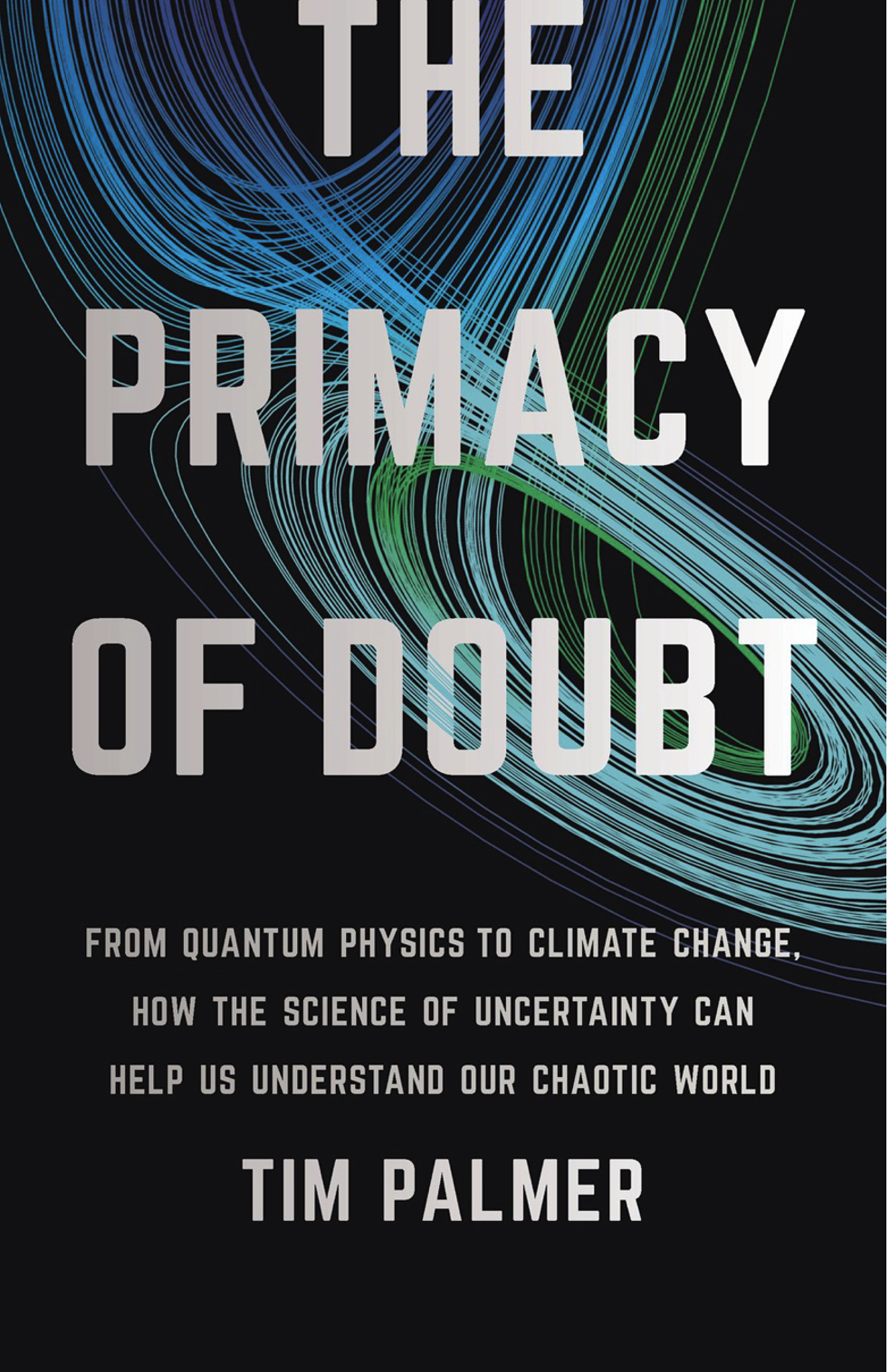
★Title : The Primacy of Doubt: From Quantum Physics to Climate Change, How the Science of Uncertainty Can Help Us Understand Our Chaotic World)
★Author : Tim Palmer, Professor of Physics at the University of Oxford, Fellow of the Royal Society and Foreign Associate of the National Academy of Sciences, Dirac Prize winner, and fellow student of Stephen Hawking.
★Publication date : October 18, 2022 (not yet available in Chinese)
★Main Content: This book connects “chaos,” “fractals,” quantum mechanics, and “human consciousness,” “free will,” and even economics and social systems, and shows readers how to understand a world that may be certain, but unpredictable, and perhaps inherently uncertain.
- ★Title Commentary:* “The Primacy of Doubt”, from a quote by a biographer describing the physicist Feynman: “He believed in the primacy of doubt: that our knowledge of the world should essentially be doubtful, that doubt is not a blot on our cognitive faculties, but is the very essence of our cognition.”
★Henry : Four stars of the same mass, which move entirely by the gravitational pull of each other. At first, you deliberately arrange the four stars so that they move in very regular 4 elliptical orbits. Over a long period of time, the four stars just move honestly in their respective elliptical orbits in a very regular way. With the help of the expression invented by Cixin Liu, we can call this situation ‘constant epoch’.
★The Chaotic Epoch : Computer simulations have shown that a little, no matter how small, inaccuracy is enough to bring the four elliptical orbits to a complete collapse. That’s the “chaotic epoch”. As long as the number of stars N>2, there will always be a chaotic epoch.
★Lorentz attractor : A system designed by Lorentz. Consider the motion of a point in three-dimensional space, which has coordinates x, y, z. The point moves according to a simple “nonlinear” equation. The point’s trajectory is like two leaves. Sometimes it turns around on this leaf, and sometimes it turns around on the other leaf. It never leaves these two leaves, and it always turns around the center of these two leaves, as if it is attracted by some force. This pattern is called “Lorenz attractor”.
Lorenz attractor, has no periodicity. Lorenz proved that the point never returns to the same position.
★ Chaos : The Lorenz attractor has a strange property, where a small change in the initial value is followed by a very different one. This phenomenon of “very sensitive dependence of the evolution result on the initial value” is called “Chaos”. The key feature of Chaos is that if the initial value of the system changes a little bit, the subsequent evolution results will be very different - this means that the initial error will be amplified rapidly, and such a system will be difficult to predict and grasp.
Lorenz discovered chaos. Chaos is confusion, it is chaotic epochs, it is unpredictable.
★ Chaotic systems : are actually everywhere - the weather is like this, the stock market is like this, the population is like this, the world itself is like this. What happens in the future with chaotic systems is very much related to the range of initial values chosen. Many situations are very safe, and it is the unsafe ones that are difficult for us to predict. For more complex systems, Lorenz says it doesn’t matter how accurate you are.
★Turbulence: There is a phenomenon in fluid dynamics where what happens on a small scale can dramatically affect what happens on a large scale. This is called “turbulence”. Turbulence has several characteristics: it is irregular, it moves around, it spreads, it is affected by flow velocity and viscosity, and so on. Turbulence is caused by various ‘eddies’ in the fluid. Large vortices are laced with smaller vortices, and smaller vortices are lined with even smaller structures.
The entire Earth’s atmosphere is one large-scale turbulent system, with several very large vortices called ‘jet streams’ circling the Earth. Turbulence really runs through both small and large scales …… The trouble for weather forecasting models is the small scale turbulence.
“Will a butterfly flapping its wings in Brazil bring a tornado to Texas?” Talk about turbulence, which is where the later allusion to the ‘butterfly effect’ comes from.
Low-order chaos and high-order chaos: We call the Lorentz attractor “low-order chaos” and a system like the weather “high-order chaos”.
★Navier-Stokes equations: The principle of weather forecasting is very simple, you just have to solve a hydrodynamic problem for the Earth’s atmosphere. The equations are readily available and incredibly accurate, called “Navier-Stokes equations”. It is based on Newtonian mechanics, with no unnecessary assumptions, and can accurately depict the motion of air and water. All you have to do is input the pressure, density, temperature and velocity at each location in the atmosphere into the equations, solve them with a computer, and find out how the weather will evolve next.
★Monte Carlo Method : If you want to predict the outcome of something, you just simulate the event many times with various randomly generated inputs and see what the many outcomes you simulate probably look like. The Monte Carlo method predicts not an outcome, but a ‘collection’ of outcomes.
★Predictive Action: Before a disaster occurs, if the predictive model calculates a red or orange alert, supplies and emergency funds should be prepared in advance. This type of “anticipatory action” has been proven to greatly improve the efficiency of disaster relief. The United Nations has resolved to place predictive action at the center of its humanitarian efforts in the future.
Structural Uncertainty: If you already know that a parameter is needed, but you don’t know what it is, this kind of uncertainty is the ‘known unknown’; structural uncertainty is when you don’t know what kind of parameter is needed at all, the ‘unknown unknown’.
★ Chaos Geometry : Each orbital turn back of the Lorentz attractor lands on a different plane. Each leaf, is made up of layers and layers of countless planes stacked on top of each other. It’s a fractal structure! That’s Lorenz’s biggest discovery. He connected chaos to fractals. Palmer called this study ‘Chaos theory’.
★Superdeterminism: The idea that there is no free will at all, and that all events are determined by the laws of physics from the very beginning of the universe. Superdeterminism was probably first thought up by Bell and is now popular with philosophers. According to this theory, there are no isolated things in the universe, no separate events; everything is correlated with everything else. And that association determines both what the particles do and what we think.
Everything in the world, including what you think, is located in a precise orbit in a fractal structure, all arranged long ago. Of course this arrangement is not God’s arrangement, it is the arrangement of the laws of physics, it was arranged back at the beginning of the universe.
But according to Palmer’s hypothesis, there would have been no beginning of the universe. The universe should have always existed.
★Simulated Annealing Algorithm : The process is very much like looking for a job and jumping from one to the next: if you don’t know much about the industry yet, you can jump when there is about the same chance; if you already know the industry very well, then you have to see a higher salary before jumping.
The simulated annealing algorithm proved to be a very efficient detection method. This algorithm gives us three hints.
First, moving step by step, scanning one by one in a fixed direction, is a very inefficient way to detect;
Second, actively incorporating randomness can quickly help you find a better way out;
Third, use randomness in a controlled way: early on, you can randomize a little more, then gradually reduce the randomness, and later on, your actions should become more and more clear.
Combining randomness and direction in this way is a good way to solve problems.
- ★ Are things in the world predictable? *
Considering that all sorts of systems in the real world are more complex like the weather and not more simple like Lorentz attractors, we have to come to an incredibly pessimistic conclusion:
Things in the world are, by their very nature, things you cannot predict many days in advance.
No matter how advanced technology gets, we will never know what the weather will be like 14 days from now.
But - there are two insights, and they are equally important - the
The first is that the world is inherently non-cyclical and unpredictable, and it doesn’t matter how capable you are.
Second, however, most of the world is not chaotic for the most part. Even the Lorentz attractor has relatively friendly regions on it, the Earth’s orbit is almost cyclical, hurricanes don’t blow every day everywhere on the planet, and yesterday’s experience is often approximately equal to tomorrow’s predictions.
*★ If complex systems are unpredictable, how do we grasp uncertainty? *
Although you cannot know what will definitely happen in the future, you can know the ‘probability’ of various things happening in the future. Ensemble modeling largely solves the problem of where to go out of constant epochs and where to go out of chaotic epochs that we talked about earlier.
Recognizing the uncertainty of the future and being able to quantify that uncertainty for you is a conceptual upgrade.
When we talk about predicting the future, we have to have a sense of probability.
*★ How do you understand the use of scientific predictions in public policy? How do you make decisions? *
Because of structural uncertainty, scientists currently operate on complex predictions by running multiple models that give you a collection of predictions. By looking at how the outcomes in the set are distributed, we can guess - or “project” - what the probabilities of various scenarios are, and then make decisions from those probabilities. and then make decisions from those probabilities.
We can’t accurately predict the future, we can only know the probability of various scenarios, then we can only make decisions based on probability.
*★ According to the prediction, under what circumstances should preventive action be taken? *
“Action should be taken to prepare for a disaster when c < pL.” pL, which is the loss multiplied by the probability of the loss occurring, is the ‘expected loss’ that this disaster will bring you - that is, on average, you will suffer that much loss. As long as the expected loss is greater than the cost of preventive action, prevention is worthwhile. If the expected loss is less than the cost of prevention, then you are completely resigned to the fact that it is not worth preventing. How to explain quantum mechanics. He came up with an idea called the Invariant set postulate.
*★ How do you think about artificially added randomness in predictions? *
Artificially added randomness is noise. Previously, we added noise to weather models to make predictions, and it saves a lot of arithmetic power, finds a variety of possible outcomes quickly, and can predict the probability of, say, a hurricane. Noise that can be used as a substitute for sophisticated computation.
The human brain is a machine that will compute with noise.
The brain is, by nature, a chaotic epochal thing. It is the noise that allows our brains to outperform algorithms.
It’s your leaps of thought, your wandering and slipping, your daydreaming, your vague inability to remember what you’ve just seen, and the fact that you have the sparse audacity to accept ideas that aren’t strictly true, that makes you a human being and not a machine.