The world's input, your output
The world’s input, your output
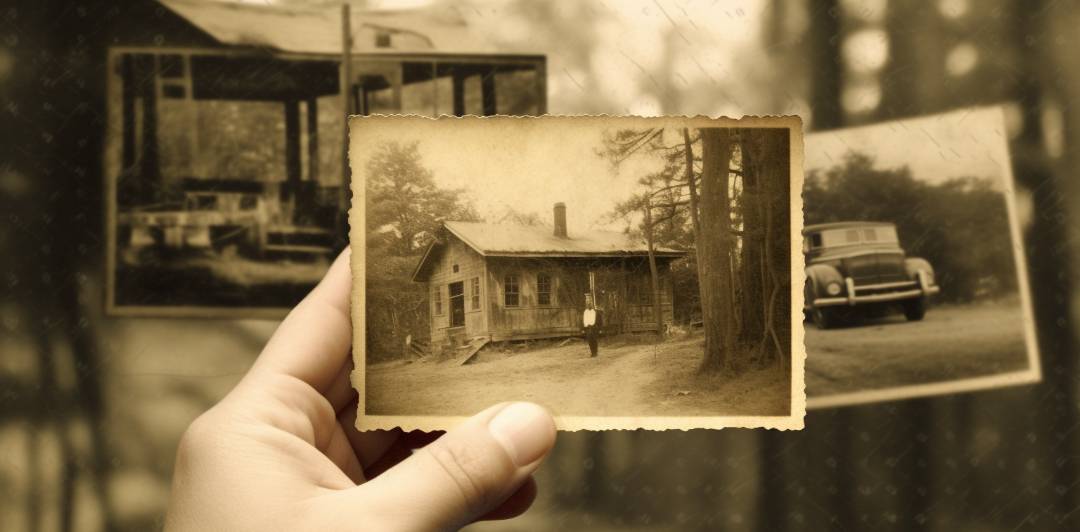
If you’re old enough, you must get emotional when you look through old photo albums. The relatives, classmates, teachers and friends in the photos, as well as yourself, were so young and energetic back then. Your lives and thoughts back then were so different from now. If you don’t look at the photos, you almost forget what it was like back then. And then you have a regret, or even a chagrin.
Your strategy of taking photos was wrong.
Back in the days when there were no cell phones, taking pictures was not an everyday activity. Not to mention the consumption of film, just the need to bring and turn on the camera was enough of a hassle. So very naturally, people were taking pictures only on big occasions, like graduations, weddings, family gatherings, trips, and the like, and people wanted to record these scenes as a souvenir. This is what I call a wrong strategy.
Taking pictures of those highlight moments is for the people next week, or a year from now - it’s for the people at the time. People want to see how beautiful and good they look. These photos are either highlighting that big occasion, or they are posed. That’s fine at the time, everyone thinks they should just show the most important and beautiful side of themselves.
But thirty years later, that’s not what you want to see most. You want to see your grandparents still alive, chatting about the family in the characteristic demeanor of their generation. You want to see your parents busy cooking when they were young. You want to see what it was like to be with your elementary school classmates listening to your teacher teach a common lesson ……
The book of gambling was only a splash of tea at that time. Those trivial things, you guys didn’t even take pictures. People think that things you see every day aren’t worth recording, but now you can’t even remember the layout of your old house, the desk you used when you were studying, or what the crib you slept on for five years looked like.
Now you can only surmise the home’s courtyard from the posed backgrounds, memorialize the drama from people’s offhanded interactions, and you’re dying to see what kind of book is the one used as a prop in the photo. You think to yourself, why do these people have to wear new clothes and pose for the photo, wouldn’t it be more memorable to show up as your usual self? …… This situation can wait to become a memory, just at that time has been lost.
The correct strategy for taking pictures and videotaping is to imagine that you are a reporter who has traveled from the future and wants to record the daily life of ordinary people in this era. Don’t pose but capture, take a little bit of everything, especially familiar scenes. Thirty years from now, you’ll be thanking yourself for carrying a cell phone around to annoy people.
✵
Of course I’m not discussing photography with you, what I’m trying to say is that there’s a ‘misplaced information weighting‘ problem with our perceptions. It’s the high moments that we record, and the fodder for thought is often the high moments, but the high moments aren’t as well represented.
Guess who is the biggest victim of information weighting mismatch? Probably historians. China has the most complete written history in the world in terms of time span, but the twenty-four histories are mostly about the successes and failures of emperors and generals, and not only the key figures but also the highlights of the key figures. How did the common people live in history? How did they talk, what kind of clothes did they wear, what was their life expectancy, how high was their literacy rate, and how good was their nutritional status?…… This information is obviously much more important than how some short-lived emperor died, but there is very little record of it in the history books. It shouldn’t be intentional, maybe people at the time were like us taking pictures and thought that those usual things that everyone could see weren’t worth recording.
As a result, now historians can only speculate. They try very hard. They can speculate on the degree of economic exchanges in various regions from the style of ornamentation of excavated objects, on the service of military households in the Ming Dynasty from the economic disputes recorded in the genealogies of the common people, and on the supply and security system of the Qin army from a letter buried with one of the soldiers. But such information is still too little and too little.
And only modern historians study these; previous scholars would only mull over the reasoning against the history books. But history book records are misleading even if they are all true, because history books do not tell the story of the common people. And if the common people don’t even read history books and only learn about history from novels and dramas, they will only reap the benefits of prejudice.
For example, if you only read the official history, you will think that the Ming Dynasty has been going downhill since the “Tumu Fortress”: the Emperor of the Ming Dynasty was captured by the Mongols, and from then on, the authority of the central government was weakened, and the country’s ability to draw from it declined, so the Ming Dynasty was on the way to a decline. …… However, if you look at the records of non-political domains, and if you take a look at the local archives and notes of the people, you will find the records of the people are very misleading. But if you examine the records in areas other than politics, you look at the local archives, folk notes, you will find that the Ming Dynasty is precisely in the Tumu Fortress after the diversification and prosperity: more and more developed business, life is more and more lively, more and more freedom of the ordinary people …… If it is not later to catch up with the climate change and love of blind command of the Chongzhen Emperor, Ming Dynasty does not perish, China may not be so far behind the West.
For example, if you only read Romance of the Three Kingdoms, you might think that the people of Shu were living the happiest life in the world under the governance of Liu Bei and Zhuge Liang. But if you read Pei Songzhi’s note in the Records of the Three Kingdoms, you will find that Zhuge Liang’s policy was to maximize the exploitation of the people so that the country could have money for war. If you look at the excavated artifacts, the coins minted in Shu Han, the weight of the same denomination became lighter and lighter, which is equivalent to the government has been continuously issuing more money to plunder the wealth of the people. The standard of living of the Shu people dropped considerably from what it was before the arrival of Liu Bei’s group. Only because Zhu Geliang engaged in the same poverty, the people out of only uneven and not the lack of psychological, only less complaints.
So if you could only be an ordinary citizen, would you rather live in Shu under Zhuge Liang, or in Daming in the late middle age?
✵
You understand very well that ordinary days are more important than big scenes, and that ordinary people’s lives are more important than imperial feats, but you still suffer from misplaced information weights. Because you have no other information.
I’m tempted to call this phenomenon “ Highlighting Moment Bias“, but it’s really just a type of a more generalized mindset, that one is called “ Availability Heuristic (AVAILABILITY HEURISTIC)”, or it could be called “ Availability Bias“, and it’s the great god Daniel Daniel Kahneman and his old friend Amos Tversky.
The so-called availability heuristic is the idea that when you consider a problem, instead of comprehensively examining all the information that should be examined, you tend to use the nearest example that comes to mind as a reference, thereby risking drawing the wrong conclusion.
One of Kahneman’s classic examples [1] is whether you would say that there are more words in the English language that begin with the letter “k” or more words that have k as the third letter. 70% of the subjects thought there were more words that began with k - simply because they It’s easy to think of words that start with k: kitchen, kangaroo, Kate …… while the truth is that there are more words with k as the third letter: ask, cake, bike …… but you’d be hard pressed to think of them.
**Availability bias distorts our perception of the probability of things happening.**For example, if all you hear in the international news all day long is about military clashes in Israel and terrorist attacks in Israel, you would naturally think that Israel is a particularly unsafe and chaotic place. And unbeknownst to you, Israel has a great economy and culture and is one of the most innovative countries in the world. The point is that the usual things that happen in Israel are not internationally newsworthy.
Then again, if someone around you has just won a lottery ticket, your own confidence in winning the lottery increases dramatically, and you’re happy to go out and buy a ticket.
Someone surveyed data from 7,400 emergency department doctors between 2011 and 2018 and found that if a doctor took on a patient with a pulmonary embolism - that is, a blood clot in the lungs - he was significantly more likely to give the next 10 days to another patient a test for blood clots in the lungs [2].
Availability bias is also why when you get pregnant or your wife gets pregnant, you suddenly feel like there are more pregnant people on the street. Availability bias makes us feel like whoever gets sick during a new crown epidemic is caused by the new crown virus or the new crown vaccine.
✵
The * “Law of Peak Ends,” which we’ve talked about many times in our columns, is actually a form of availability bias. * Because the moments and endings of an experience that bring you the strongest feelings stick with you the most, those are the first moments that come to mind when you look back on the experience, and so you use those moments - rather than the big picture and duration of the experience - to Make an evaluation.
For example, let’s say you take a test and do multiple-choice questions, and one of the questions you can’t decide on is A, and then when you check it, you feel as if you should have chosen B. Should you change your answer? 75% of college students believe that you shouldn’t change it, and that you should believe in your initial feelings. But this situation has been the subject of 33 studies over seventy years, and the conclusion is clear: you should change your answer - changing your answer will result in a higher average score than not changing your answer [3].
Those college students are also caught in the availability bias. At one point in your testing career, you must have had the experience of both correcting an answer that was wrong and correcting an answer that was right - but the latter has a stronger emotional impact on you because you feel remorse! So you remember the experience of “changing the right answer to the wrong one” more fondly, and it is easier for you to think that such a case is more “available”, and that’s why you should trust your initial intuitive conclusion.
*The idea is that the strength of our memories is not determined by the frequency of the event, but by the intensity of the emotion it caused us. *
If your previous partner was unfaithful to you and you were intensely irritated, you will be suspicious of TA even if your current partner is faithful to you and has never engaged in any suspicious behavior. Availability bias thus puts a shackle on you.
Couples quarrel because of a small daily thing, it is likely that one party suddenly put forward, you a few years ago to me how how …… feel to new hatred and old hatred together. But you think about it, this quarrel is not just because of this matter? Wasn’t the previous matter resolved before? This is also availability bias. So the expert’s advice [4] is that when you argue, you should talk about what happened, and no one should talk about the past.
We should really be evaluating a relationship more in terms of the usual bits and pieces of trivia, rather than just thinking about the peak moments …… That’s what we call “mediocrity is real”.
✵
*The root cause of the availability bias is that you don’t consider the full range of information. Having a little bit of information in the modern world isn’t hard; having comprehensive information - knowing not only what all the instances are, but how frequently each one occurs - is the key to scientific judgment. *
There’s a saying in computer science that goes “garbage in, garbage out“, which means that if your input information is wrong, it doesn’t matter how good a computational model you have. I feel like it’s still easier to get a good model, and harder to get comprehensive and valid information.
From this perspective, the most important difference in human cognition is probably not the ability to think, but the mastery of information. This is why you have to listen to experts even if you are smart, why there is no right to speak without research, and why people must read more.
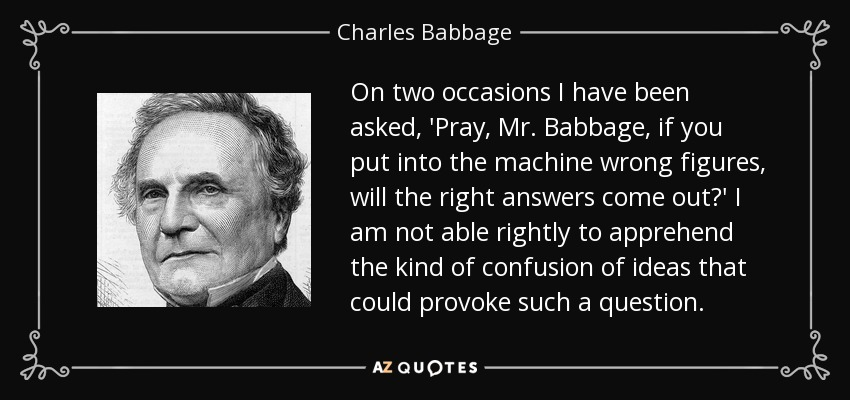
The world’s first programmable general-purpose computer was invented by Charles Babbage, an Englishman [5], so let’s end this talk with one of his famous quotes:
Twice I have been asked, “May I ask Mr. Babbage, if a machine is fed the wrong numbers, will it produce the correct results?” I am completely baffled as to what kind of confused thinking would lead one to ask such a question.
Note
[1] Tversky, Amos, and Daniel Kahneman. “Availability: a Heuristic for Judging Frequency and Probability.” Cognitive Psychology 5, no. 2 (1973): 207-32.
[2] Ly, D.P., (2021) The Influence of the Availability Heuristic on Physicians in the Emergency Department. annals of Emergency Medicine.
[3] https://www.spring.org.uk/2023/01/multiple-choice-tests.php
[5] Computer Thinking 2: Automatic Machines
Getting to the point
- Our perception has a ‘misplaced information weighting’ problem. We record the high moments, and the material we think about tends to be the high moments, but the high moments are not as well represented.
- The availability heuristic is that when you consider a problem, instead of examining all the information that should be examined in a comprehensive manner, you tend to use the closest example that comes to mind as a reference, which can lead to erroneous conclusions.
- The root cause of the availability bias is that you are not considering the full range of information. It’s not hard to have a little information in the modern world, it’s having comprehensive information - knowing not only what all the examples are, but also how frequently each of them occurs - that is the key to scientific judgment.