The Way of Harmony (above)
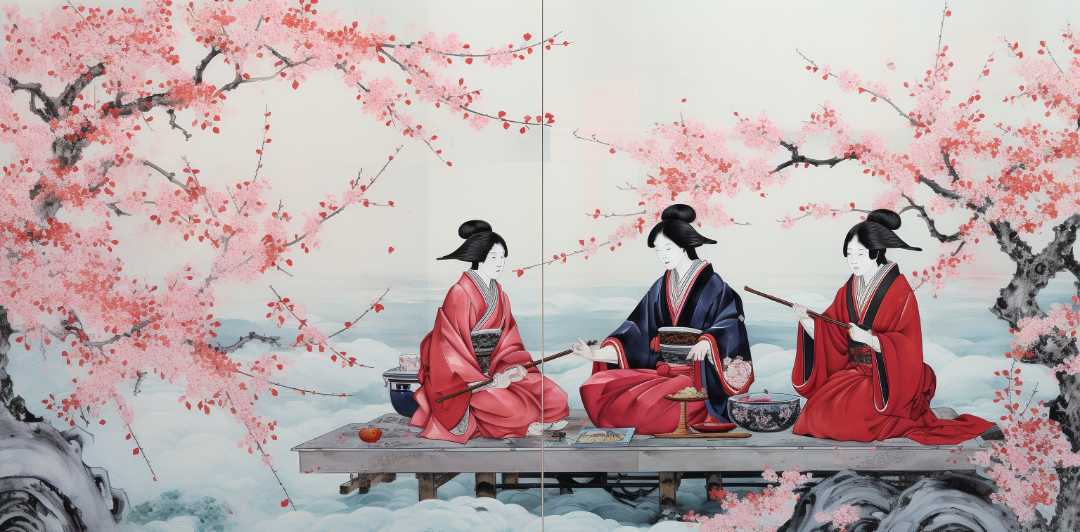
The Way of Harmony (above)
Let’s talk about a piece of wisdom from Japan that is both ancient and modern called “nagomi”, which is Japanese for “wagami” or “なごみ”. The word has some popularity in Japan, being used in restaurant names, brand names, and including naming the Emperor’s train, but there isn’t even a Wikipedia page or a standard Chinese translation at this time. I’ve done some research and feel that the best translation is “wazumi” - the insight of reaching harmony.
Every civilization has something to learn from others, just as every living thing is a success story in evolutionary history. Japan is a developed country with a unique ecological niche that has given birth to a unique way of thinking. The relationship between Japanese companies and society, how Japan handles foreign cultures, the longevity of Japanese people, Japanese animation, technology, business, etc. are all worth pondering.
China’s reform and opening up, I am afraid that what we have learned from Japan is more than what we have learned from Europe and the United States. Especially now China is facing across the middle-income trap on the one hand, while facing the aging of society, in front of China’s various complex problems, we may wish to look at Japan’s solution.
Kazumi is an idea that is particularly suitable for solving complex problems.
Kazumi is probably the highest level of wisdom in Japanese culture, just as Zhongyong is the highest level of wisdom in Chinese culture.
There is a Japanese brain neuroscientist named Kenichiro Mogi, who published a new book in January 2023 called The Way of Nagomi: The Japanese Philosophy of Finding Balance and Peace in Everything You Do, which is dedicated to introducing wazumi to readers outside of Japan. The Way of Nagomi: The Japanese Philosophy of Finding Balance and Peace in Everything You Do), which introduces Wakimi to readers outside of Japan.
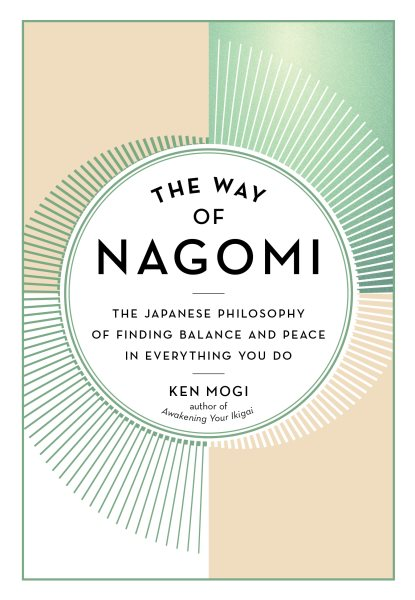
You may have heard of Kenichiro Mochizuki, a senior researcher at Sony’s Computer Science Laboratory, a visiting professor at the University of Tokyo, and the author of several best-selling books on brain science and learning, some of which have been published in Chinese. He understands modern science and is very good at introducing Japanese things in English, so it’s very appropriate for him to write this book. Let’s talk about Kazuomi with the help of this book.

There is a saying in our column that “strong kernels are similar in nature and weak kernels are far apart in practice”, and that good things, no matter where they come from, must be useful to all countries and be similar. * and see and middle of the road, are the way to deal with all kinds of contradictions. *
✵
We often quote Fitzgerald: “The test of first-rate intelligence is your ability to maintain the ability to act normally while having two opposite ideas in your mind at the same time.” So how do you put contradictory, or even exactly opposite, things together?
- Kazumi’s way of thinking is to bring contradictory things into balance in order to achieve harmony, and even sustainability. *
Take a simple example, matcha ice cream. Ice cream is very Western, matcha is very Japanese, and these two things constitute some kind of contradiction - and matcha ice cream is exactly the combination of the two: nobody has to change, you continue to be yourselves, but this combination you form is a thing that can be established.
Then there’s the curry schnitzel with rice. Schnitzel is French, curry is from India, rice is very Japanese, and these three things combine directly to form a particularly popular Japanese dish.
There is a saying in Japanese restaurants called “wayochu (and yangzhong)”, which means to put together three kinds of cooking: Japanese (wa), Western (yo), and Chinese (chu). ……
This is wazumi. So what would you say is the difference between wazumi and chu-chung? Here’s how I understand it, when faced with a bunch of things that contradict each other, what should you do with–
Mediocrity, is to follow the crowd: I see what the general practice is what I do, this is the safest;
Hygge, is to see people talking about people, see ghosts talking about ghosts: for example, I look at the biggest official how to say, I will do how to do;
Impetuousness, is that I must ask which of these things is the best: I firmly choose the best one without wavering;
Mediocrity, is in the current situation to seek a precise solution: I have no prejudice to matcha and ice cream, I see this situation is most suitable for serving matcha or ice cream;
:: Harmony: I’ll leave all these things, I’ll arrange them, and maybe I’ll harmonize them.
Impetuousness is a bit like the American way of thinking, giving an indicator to seek to optimize it to the maximum value; the mediocrity is the Chinese way of thinking, to avoid simplification of the problem, according to the local conditions and specific analysis; and see is the Japanese way of thinking.
The reason why Japan has the Japanese way of thinking has a lot to do with Japan’s international status and history. Japan is an island nation, small but independent, always influenced by external cultures - first China, but also Korea, and now more the West - but retaining a sense of self.
It’s impossible not to keep so many foreign things, and it’s hard to fully localize them, so simply allow them all to exist in the Japanese way.
✵
Another example is gyoza. Chinese people always eat gyoza with vinegar after cooking, they don’t serve gyoza with rice. Japanese gyoza are similar in appearance to Chinese, but they are usually deep fried and eaten with rice. In Chinese people’s view, gyoza and rice are two equal and parallel foods that cannot be eaten at the same time! But the Japanese principle is to serve everything with rice.
Or sake. Everything main course, like pickles, nori, grilled fish, and meat dishes, is served with rice; all small dishes, like sashimi, tofu, and grilled meat, are served with sake.
The point is, says Kenichiro Mochizuki, that these dishes aren’t that good if you eat them on their own-they just have to be good with rice and sake.
Compare that to Western food. In Western food, you serve one dish at a time, and then the next when you’re done, and each dish is the sole star of the moment. The Japanese way of eating, however, is that all the dishes are supporting roles, and they all have to be served with rice and sake, which is called wagamama.
And just so you know, sake is also made from rice. Philosophically, rice and sake are “neutral” foods, with no distinctive characteristics or self-assertion, providing a platform, so to speak - those side dishes have their own personalities and assertions, but the side dishes have to be played on that platform.
So what’s the use, you say? The use is why the Emperor’s family has been able to rule Japan for hundreds of years without falling. The Emperor is all about rice and sake, he rarely makes his political claims, he is low key and unassuming, and the result is that no matter who is in power, the Emperor is still the Emperor.
The Emperor participated in rice planting ceremonies year after year, and the Shintoist offerings to the gods were also rice and sake. Low-key, reserved, and uncharacteristic is the highest order. This is the ideal self that the Japanese elite seeks.
High-end Japanese food is not only eclectic in its ingredients, but also emphasizes the preservation of their individual characteristics. Taking it over does not add a strong sauce, but tries to make it just the flavor of itself. A chef with the spirit of Kazumi will provide you with the freshest things according to the current season, and he will combine them together to help you seek the most appropriate match, and you just eat.
This is different from, for example, no matter whether it is lobster or carp, put a little onion put a little soy sauce a popping pot, immediately all changed into Chinese food.
✵
If we’re going to draw an analogy like that, maybe we could say that American culture is a culture of efficiency. You’re free to experiment and innovate all you want, but in the end I’ll use whichever is most efficient.
Chinese culture is a strong culture, no matter what comes to me, in the end I will make it Chinese.
Japan, on the other hand, is a culture of harmony. Do not ask whether this thing is Western, or Chinese, or local, I do not give you too much transformation, take over with some rice and sake can be.
Of course, you can also say that this is just an analogy, does food really reflect culture? But Kenichiro Mochizuki has found wazumi in every aspect of Japan, so let’s look at them one by one.
- The core idea is that seemingly contradictory things can coexist in harmony. *
✵
**Let’s start with the relationship between the individual and society.**Japanese society is a society that is not very easy for outsiders to integrate and adapt to, and it can be said that even Japanese people find it depressing. This is because Japanese society is very disciplined. This is probably due to the fact that Japan is so densely populated that everyone is crammed together and you always have to assume that someone is watching you and you can’t cause problems for people.
Although we Chinese also talk about collectivism, we may still be a bit freer than Japan. For example, Kenichiro Mochizuki said that Japanese schools not only don’t allow students to dye their hair any other color, but also require them to dye it black if it’s not their natural hair color. I also heard a Japanese person say that in Japanese elementary and middle schools, sometimes the teacher will work with the whole class to bully a child who behaves differently. It’s even harder if you make a mistake. That’s why some Japanese are driven to suicide.
But people are all the same people, and if you are a human being, you have to accept yourself in order to be physically and mentally healthy, and you need to have freedom.
So how do you deal with the contradiction between keeping the rules of society and having personal freedom? You need Kazumi.
A common method is anonymity. Japanese people are very disciplined in public, but you can do some free things anonymously. Needless to say that nowadays Japanese people are very fond of making all kinds of statements anonymously on the Internet, and even before the Internet, Japanese artists, including high-ranking officials from the Emperor on down, were fond of creating poetry and making art anonymously.
It is perfectly acceptable for works to be signed “author unknown”. In Japan’s anime industry, many people publish their works anonymously. There are also people who write songs on Yamaha synthesizers, and AIs sing them, so you can write lyrics and music behind the scenes, and still be popular.
If you want to live happily in Japan, you may need both public and private identities.
✵
**And again, personal and interpersonal.**Japan is especially concerned with relationships, and your identity is first and foremost defined by your relationships. Then there is a contradiction between maintaining good relationships with people and having your own individuality at the same time.
The nagomi here is that you can argue, you can keep your disagreement, but you cannot break the relationship. It’s like a husband and wife can argue, but not divorce. Japanese people always retain maximum politeness in their dealings and try to maintain relationships no matter what, especially not to give themselves another enemy.
In Japan, there is a traditional performing art called “Rakugo”, which is similar to the Chinese monologue or commentary. An actor performs a story for you, playing different roles, such as both husband and wife. Rakugo stories have a lot of conflict about the characters, a lot of dialog, but if you taste it carefully, the quarrels are very mild …… and there is a happy ending at the end.
Confucius talked about the gentleman’s harmony and differences, and Japanese wazumi can probably be described as ‘differences and harmony’.
✵
**There is also wazumi in health care.**Japan has the longest life expectancy in the world, but have you noticed that Japanese people don’t have any “less carbs” or “more vitamins” or anything like that? Eat rice every day, meat and vegetables are not taboo, the result is not only longevity, but also maintain a very good figure, this is how it is?
The spirit of harmony lies in diversity. Health is a comprehensive issue, pay attention to diet, exercise every day, not that you just develop one or two habits can be healthy. Kenichiro Mochizuki describes the Japanese approach to health as including –
Eating only eight minutes full;
:: Be varied in your food sources;
:: Prefer fresh foods that are seasonally distinct;
:: Get up early and do odd jobs;
:: Going to the forest to feel the sunshine and the sound of the wind blowing the leaves, the chirping of the birds, and being at one with nature;
:: Take a dip in a hot spring to absorb the minerals ……
And then you have to strike a balance with all of that.
✵
To summarize, *Wazumi, is about not seeking to solve all problems with one silver bullet, but rather seeking to put the clutter all together in harmony to provide an integrated solution. Kazumi helps us deal with the seemingly contradictory things in our complex world. *
Let’s talk about other applications of wazumi in the next lecture.
Getting to the point
Wagomi is not seeking to solve all problems with one silver bullet, but rather seeks to put the clutter all together in harmony to provide an integrated solution. Harmony helps us deal with the seeming contradictions of our complex world.