The Seven Rules of Power 0: You Can't Hide from Politics and Power
Seven Rules of Power 0: The Politics and Power You Can’t Hide From
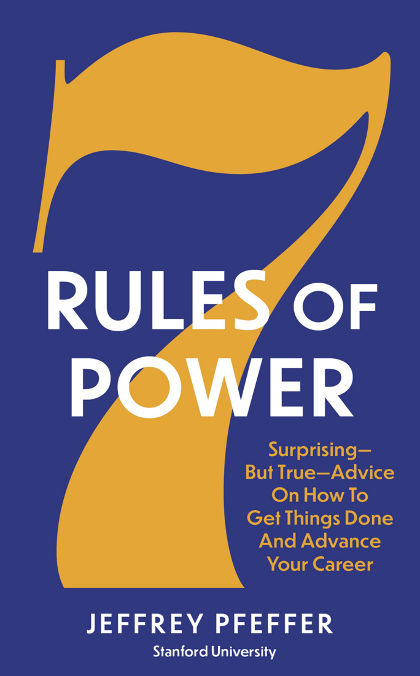
Today we begin with a book that will be published in June 2022 called 7 Rules of Power: Surprising–But True–Advice on How to Get Things Done and Advance Your Career), by Jeffrey Pfeffer, a professor of organizational behavior at Stanford University.
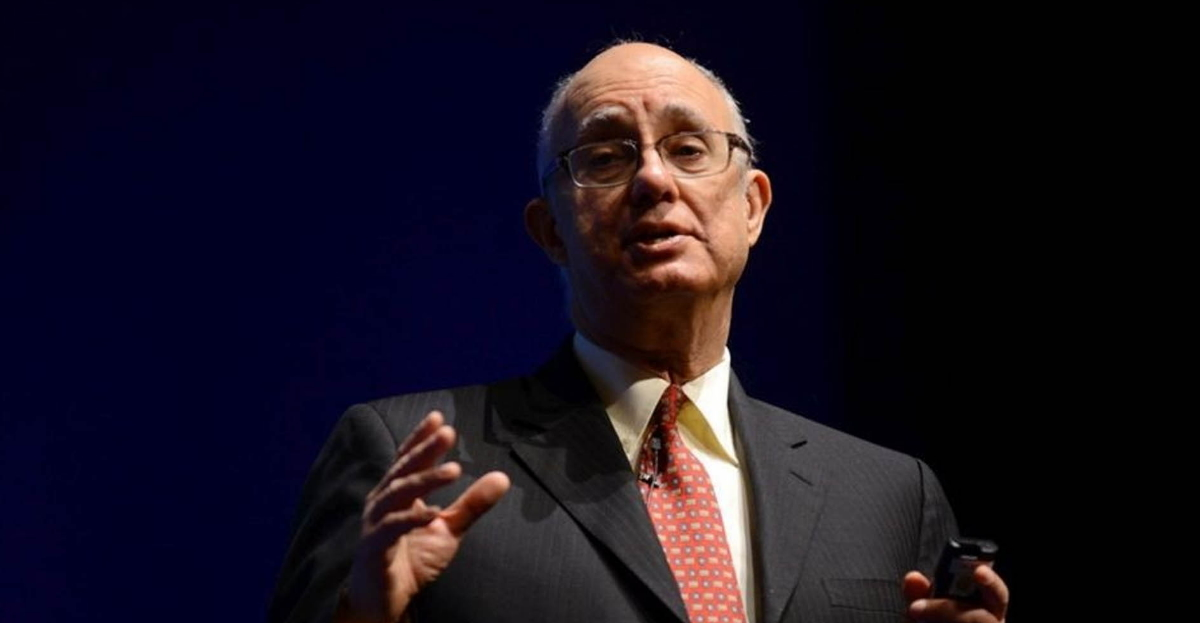
Pfeffer has been at Stanford for decades, and his course on power is one of the most popular electives. One of his books from years ago, Power : Why It’s Only for Some, is available in Chinese and was mentioned in our column.
This new book is characterized by writing about power in a more systematic and liveable way. As an academician, Pfeiffer cites much of the latest research in the social sciences throughout the book. Like a new 2020 study [1] that we talked about in the fourth quarter of our column, Pfeiffer uses it this time around. This book is probably the best current scientific understanding of power.
Let me start with a precaution. What we’re about to explain won’t make you feel very comfortable, and you’ll probably resent it. This is a book about how to take and use power. You may find them too dark, smacking of Machiavelli and Han Fei Zi.
But I urge you to learn a little bit about this. Let’s start with two short stories.
✵
A cowboy in the media world called Rajiv Pant told Phifer his own story. Pant used to work for a publishing house and competed with someone for the CTO position, got into a political fight and lost. His rival became his boss and he had to leave the company. Pant wanted to leave with honor. He went to talk to his former rival and current boss about resigning, hoping to get a better exit offer.
Pant walked into his rival’s office with a big smile on his face and talked to him calmly. The boss didn’t give him a hard time, and the negotiation went well.
But in the course of the conversation, Pant noticed a book on the opponent’s bookshelf, which was none other than Pfeiffer’s “Power”. He realized whether his opponent had defeated himself just by this book.
Pant went home and bought the audio version of the book, Kindle version and paper version, listened to it again and again and again to learn it, and really got the true message. Later Pant served as CTO of the New York Times, CTO and chief product officer of the Wall Street Journal …… He never lost again.
Another story is about one of Pfeiffer’s students at Stanford, who has graduated and once met Pfeiffer by chance in a supermarket. The student said I’ve heard your class, you do speak quite well, I agree with your theory - but I’m not going to use it. We’re the younger generation, we don’t play power games. You know what? I’ve just set up an investment company with a couple of my classmates, and we’ve agreed that we’re all just purely equal partnerships, absolutely no politics!
Pfeiffer could only say, that’s fine, good luck.
A few years later, Pfeiffer ran into this student again and asked him how the investment company was doing.
The student said he was no longer with the firm. He’d been kicked out by the partners. They had politicized him.
Things like this happen every day. * As long as you need to do things with other people, as long as there is a struggle for status and profit, it is impossible to really avoid politics and power. *
We readers hate power struggles; we think they’re too dirty and we want to stay out of them. Our columns often talk about leadership and strategy, and it’s all about how you should change your company, how you should develop your subordinates, and so on if you want to be a good leader-that’s all a default that you already have power.
What if you don’t have power? What if someone else wants to take your power? That’s what Pfeiffer studied.
At the very least, you’ve got to be able to make sure you never get ousted again.
There are three sobering realizations you need to make before you learn the specific rules of power.
✵
- The first realization is that the world is about power. *
As advanced as the world is, it is hierarchical. There are always fewer positions at the top than at the bottom; this is called ‘ranked scarcity’. Competition for good positions is always a zero-sum game, and those with power are always in the minority, in all times and in all fields.
And the higher up you go, the more important power becomes. That’s because when you get to a higher level, you realize that everyone here is smart, has a great resume, and has great skills. No one is bad enough to be sitting here. So what are you competing against each other for? Is it over who has more hair? Competition at this point relies on power plays.
Some scholars think the power game has changed in the modern world - don’t listen to them.
Some say that now that business is globalized and ‘decentralized’ everywhere, has power been decentralized? This is absolutely not the case. The reality is that globalization has exacerbated the concentration of power and wealth.
Others say that the Internet, new media, and social networks are promoting democracy, that it is now easier for the people to speak out, and that traditional power will be weakened. In fact the opposite is true. The reality is that traditional power is very good at using new media and power is consolidating itself.
The experience of the last 20 or 30 years is precisely that the world has become less democratic: people like Putin are grasping for power even more.
So power is far from being a thing of the past; maybe its outward form has changed slightly - Pfeiffer’s book will focus on power in the new age - but its ground rules remain the same.
Relationships always matter. People always decide whether to use you or not by looking first at how enthusiastic and capable you are. People always like to promote people similar to themselves. People are always willing to form alliances with the powerful. The fundamentals of power haven’t changed.
✵
- The second realization is that power has nothing to do with morality. *
Many people devalue power and think that grasping power is immoral, which is not true. If you always resent power, you don’t get it, you just complain about it.
Power is actually a morally neutral tool. It’s like any tool, you can do something with it, you can’t do something without it, that’s all. You can do good things with it or bad things with it, it’s not inherently moral or immoral.
There is a novel written by Yan Zhen called The Water of Canglang. Chi Dawei, a young intellectual, graduated from university and was assigned to work in the provincial health department. At first, he looked down on power, pretended to be noble, and did very poorly. Later, when he had a wife and child, he realized that he had no power and was determined to seize power. As a result, Chi Dawei’s perception is still particularly good, and soon got the power. Do you think this is a kind of degradation? Is this a dragon slaying boy who became a dragon at last? Not really. Ike Dawei did do some good things after he gained power. And this kind of thing doesn’t only happen in China, it’s essentially the same everywhere.
The key perception is that those who are good at using power techniques are not necessarily bad people. Further, Pfeiffer repeatedly cautions against trying to make moral judgments about others in a power play. If you judge someone as a bad guy right off the bat, you’ll be heartily reluctant to ally yourself with that person - and that’s a major loss for you. It doesn’t matter if the person is a good or bad person in the Game of Thrones, what matters is whether they are your ally or your enemy.
The reality is that there are many good people with great abilities like the early Ikeda, and they all failed in the power struggle. Why? Because there are some power moves that they are unwilling, or don’t care to make. They think that only the bad guys do that - not realizing that it’s actually you who has to do that if you want to win.
So if you’re going to play this game, you’d better be a little sportsmanlike: you’re just a PLAYER trying to win, don’t get too uppity.
✵
*The third realization is that you have to have power if you want to achieve great things. *
We, the people, always think that the world should be fair - this is actually a cognitive bias, which scholars call the ‘Just-world hypothesis’. We usually watch novels and TV dramas, and our default worldview is that in this world the outcome should be determined by the payment, and there will be rewards for the payment, and the more the payment, the more the rewards. People with power always instill this idea in the people, and they always talk about transparency, sincerity, and openness, fairness, and justice. …… In fact, they don’t care about those things the most.
The reality is that people’s efforts are often disproportionate to the results. Some positions can make your efforts twice as effective. Why? Because that position has power leverage.
All you have to do is get yourself or an ally into that position. By leveraging the levers, you can get disproportionate results for the same amount of power you spend to get great things done.
Of course the talent to do the work itself is also important. It’s also wrong for someone with no talent to just grab power all day - power is just as important as talent. But power allows you to bring out your talent, to make your talent useful, to make your talent visible, to bring you benefits.
Our column on The Barabasi Success Formula[2] said:**”Success is not determined by your business performance, but by the usefulness of your performance to your social network.”**So how do you turn business performance into usefulness for social networks? Taking power is a good way.
As you can imagine, power plays are not fun. Power moves are often unnatural and out of our habit. You have to make moves that make you uncomfortable. So you need to practice.
And ideally a coach or staff team. You need a couple of close friends who aren’t in the same company or even in the same industry as you - this ensures that there’s no competition between you. They are on your side at all times, helping you with advice and analyzing your words and actions. Most importantly, they must be able to push you outside of your comfort zone and make you think carefully about your choices and actions.
Power has to be about control. But your own choices and actions are the only thing you have absolute control over.
✵
Let’s end with a little story. There was a female scientist working in earth science research who was always in a very vulnerable position because most of the people in her field were male. Her former boss was twenty years older than her and bullied her almost day in and day out. She felt isolated.
This woman scientist then read Pfeiffer’s book and learned how to grab power. She learned to speak with power, she built a network of influence, and she harvested her own people.
This is indeed very different from the ‘scientist’ persona. Not only did the woman scientist tame her ex-boss, but her coworkers began to flatter her. She got things done more smoothly, she was all but stress-free, her happiness improved, and her mood became positive. There are a series of studies that show that power really does enhance one’s physical health.
It is said that a young man can’t live without money, but a big man can’t live without power.
However, I would like to remind you that power has a strong corrosive effect and may turn people stupid [3], and the pursuit of power may backfire. In fact, we are more in favor of ‘energy-based heroes’, and we don’t want to be this kind of energetic person who hooks up with others. However, we should not give up power to the bad guys either.
If someone is bound to know what power is all about, I hope it’s our Elite Day Class readers who know first.
Pfeiffer summarizes seven rules of power, so let’s talk about them one by one.
I’ll end with one more quote from Pfeiffer-
- “If you want power to be used for good, you need more good people to have it.” * [4]
Annotation.
[1] Elite Daily Lessons, Season 4, Four Means of Gaining Power
[2] The Success Formula 1: Where the score determines success or failure
[3] Elite Day Class Season 1, Brain Damage from Power
[4] Original: If you want power to be used for good, more good people need to have power.
Get to the point
As long as you need to do things with other people, as long as there is a struggle for status and profit, it is impossible to really avoid politics and power.
There are three sobering realizations about power that need to be made:
- the world is about power.
- Power has nothing to do with morality.
- You must have power if you want to achieve great things.