Summary: Game theory in irrational human behavior

Summary: Game Theory in Irrational Human Behavior
World Wide Steel Today let’s summarize the book The Hidden Game. Why can’t you easily believe the reasons someone gives? How can you get a jump on the competition if you are not as powerful as your rivals? How can you recognize when someone is using one-sided evidence to convince you? Why are there conflicts that must be resolved with violence? Is your “love” really love? –Behind all these questions lies game theory. As usual, you can review the text by reading it, bookmarking it or sharing it. I wish you a productive day.
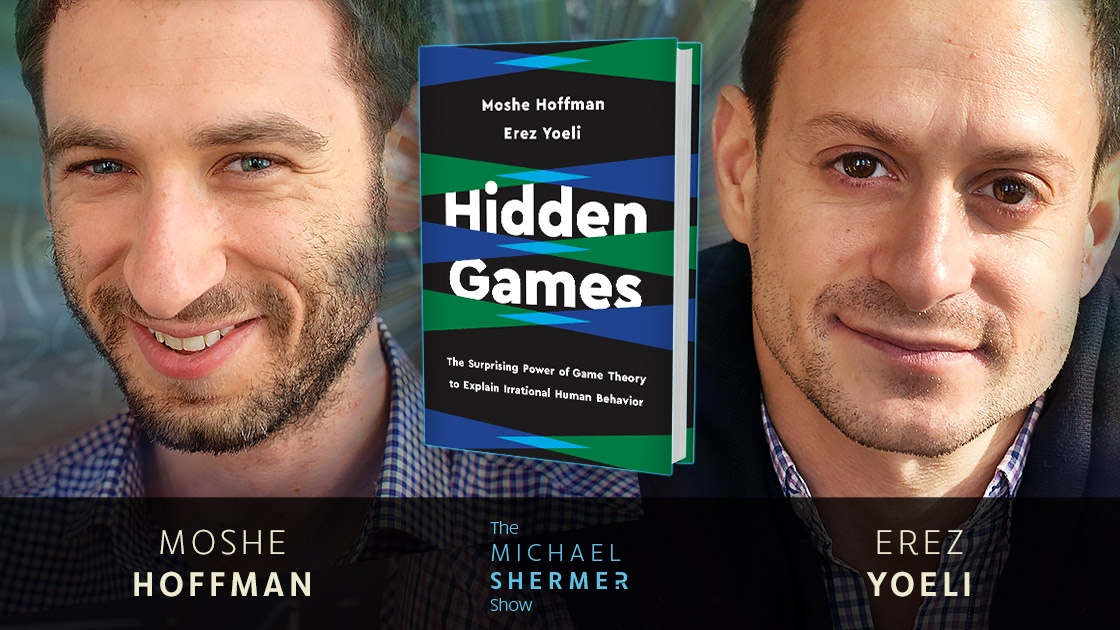
Book Title : Hidden Games: The Surprising Power of Game Theory to Explain Irrational Human Behavior
Author : Moshe Hoffman, a research scientist at the MIT Media Lab and a lecturer in the Department of Economics at Harvard University; Erez Yoeli, a research associate at the MIT Sloan School of Management.
Publication date : April 2022
Core Theme : Understanding Human Behavior with a Higher Perspective Where do people get those seemingly irrational preferences and beliefs from. There are rational reasons behind them, and they are all the result of a game.
★ A theoretical framework ★
★ Primary and Secondary Rewards, Primary and Objective Explanations
Primary Rewards: Any preference given to us by evolution that has to do with basic survival and reproduction is the pursuit of primary rewards.
Secondary Rewards: Pursuits that have nothing to do with evolution, that some people like and some don’t, and that those who like them often learn to like them, are called “Secondary Rewards”.
Behind every secondary reward, there is a shadow of primary reward.
Imitation learning can turn a certain kind of operation originally from primary rewards into a belief, a culture, a custom, a preference, and into secondary rewards.
The interpretation of a cultural phenomenon by people immersed in a culture is called “emic interpretation”, and emic interpretation is often wrong. The ultimate explanation, which is found after examining the context, is called an “etic explanation”, and an etic explanation is the true explanation.
★Subjective Interpretation, Objective Interpretation, and the Hidden Game ★
I. If the competition is evenly matched, who will grab the resources and reap the embrace?
★Hidden Game: How can you seize the lead in competition if your power is inferior to that of your rivals?
When you see an unowned resource, don’t care how big or small your strength is, take it as fast as you can – if you take it first, it’s yours;
Your claim must have a formal name;
the nature of the name is that people are expected, who does not recognize it who will have to face fierce fighting;
the amount of power is far less important than the name;
but when a thing has several conflicting names, conflict occurs, depending on the amount of power.
What is a “high level of bragging”?
★ Master Bit Explanation: Showing off that you have a lot of money.
★ Guest Explanation: To show off, you must use luxury goods.
it has to be accessible and expensive at first glance
it must be wasteful, of little or no use
it must be so expensive that the average person can’t afford it.
if the thing becomes so cheap that everyone can have it, people will dislike it instead.
★Hidden game: there are four levels of showing off -
Level 1: The Thug Level.
Level 2: White-collar level. Tasteful, keeping up with current trends, niche.
Tertiary: Ma Weidu level. Demand absolute scarcity and threshold on the basis of the sense of superiority, and for this reason will even invent some precepts and rules, making it absolutely difficult for ordinary people to do.
Level 4: Sokolov level. Low-profile, shibui, humility, anonymity, these “do not show off”, is precisely the most expensive show-off signal.
How do you convince people of your point of view on serious issues?
★ Master Explanation: Justified, Objective and Neutral
★ Guest position explanation: mislead with the truth: use real evidence to convince others to accept a one-sided point of view.
★Hidden game: how to convince someone?
the Nash equilibrium reached by the party citing the evidence and the party receiving the evidence.
Say what you want to say in your position, don’t go against social norms, and especially don’t go against the Nash equilibrium.
In order to convince others, you must convince yourself. You need to “reveal evidence one-sidedly”, “gather evidence one-sidedly”, “test for pre-determined answers”. You are not deliberately self-deceived, you think you know yourself honestly through a series of evidence.
Why is “law enforcement” so brutal?
★ Master Bit Explanation: law enforcement should be more humane and intelligent.
★ Hidden game: how to deal with decisions in life?
Decision-making judgment criteria in life can be divided into two kinds: ‘quantitative analysis’ and ‘non-zero-is-one’.
For things that don’t require coordination, you can analyze them quantitatively.
For situations that require coordination and where the information is ambiguous and private, it must be either 0 or 1.
V. What is the difference between looking at intentions or actions?
★ Master position explanation: depends on the nature of the thing itself.
★Objective Explanation: Whether to look at the heart or to look at the matter has nothing to do with the nature of the matter itself, but is purely a matter of whether or not there is a need for coordination.
★Hidden Game: What situation should be “discussed in the mind” and what situation should be “discussed in the matter”?
1… When it’s time to discuss things, it must be done in an honorable manner, and the more people see it, the better. This is the underlying logic of all kinds of ceremonies and rituals.
- When it’s time to discuss the heart, you have to be as low-key as possible to avoid letting people form higher-order beliefs. But you can give people a lower order belief.
VI. Why can’t some conflicts be resolved peacefully?
★ Master Bit Explanation: psychological problems, problems with folkways, there is hegemony.
★Objective Explanation: Violent solutions are rational.
★Hidden game: how to solve the conflict?
In the repetition game, the past influences present choices, and present choices are modeling the future. This is also true of retaliation, which can be called ‘repeated punishment’.
Under the repeated game perspective, tolerating a small offense sets a precedent for the other party, and with that precedent, the other party may take advantage of the situation and take a big offense against you, so how can you do that without taking precautions. “Self-defense” cannot be equal, it must be either 0 or 1.
Not all conflicts should be resolved peacefully.
VII. Why do you invest big costs in a cause?
★ Master Bit Explanation: For the love of
★Objective Explanation: We want to collect material and social rewards from it, such as industry prestige, historical status and a sense of accomplishment for saving the day.
★Hidden game: what is really love?
Four corollaries to the theory of “love demands a reward”:
First, if the program is not valued by society, you won’t really love it.
Second, whether or not you will develop a great love for the program depends not only on how good you are at it, but also on how bad you are at other programs.
Third, if there’s a superstar effect in the field – i.e., winner takes all – then the people who stay in the arena will put in huge amounts of time.
Fourth, you’re only really passionate if you have a decent chance of being at the top.
‘Love’ is not that important, love is a secondary reward. You need to make sure that the secondary reward is harmonized with the primary reward.
Love can change. Don’t be someone who loves only one thing. We should learn to love what we happen to be good at.
May you recognize the truth of life and still love it.