Seven Rules of Power 4: Building a Personal Brand

Seven Rules of Power 4: Building a Personal Brand
We continue with Jeffrey Pfeiffer’s rules of power, this one talking about being famous.
Everyone wants to be famous. Especially as we enter the internet age, everyone seems to have the opportunity to be famous using various avenues. Now that you’ve come out to compete for power, you certainly don’t want to be obscure, and being famous can help you gain power. With so many people in your organization, how can you make the leaders remember you, make the masses recognize you, and make yourself stand out?
But before we talk about how to be famous, we first have to figure out what kind of fame we want. In my opinion, fame can be divided into four levels.
✵
The first level is “getting to know “ . Wang is cheerful and outgoing, and he is familiar with everyone, so everyone in the company knows him. Some people think this is being famous, saying “I have a wide range of contacts”, attending all kinds of events, giving gifts to anyone who gets married, and getting acquainted. In fact, if people just “know” you, not very useful.
*The second level is “status”. The difference between fame and recognition is that people not only recognize you, but also know that you are good at something. This is a positive kind of fame. Who is the leader of this company, who is the strongest programmer in your group, who is the best student in the next class, there are only a limited number of positions, so if you occupy them, you are famous.
Fame position is useful for personal development, but it’s still not enough - because it doesn’t have the grip of collaboration. If people just hear that you’re great, but treat you as if you’re in awe of the Peking University math guy, something doesn’t come to you, and you have no power.
The third level is “prestige “ . Reputation is that people not only know that you are very good, but also know what you are good at, and will take the initiative to find you to cooperate. For example, a programmer, in the field of unsupervised learning algorithms for artificial intelligence is recognized as the strongest in the industry, called the gods, who have questions in this area would like to ask him for advice, there are needs in this area will ask him to help.
In front of this unique industry prestige, any education, title, and so on are not worth mentioning. But prestige isn’t even the highest level of fame.
The highest level is “branding “. A brand is one where people not only know what you’re good at and what you’re doing, but they know your story, and people have a good expectation of your character. Brands come with their own communication properties. If you don’t know who Musk is, that’s not Musk’s problem, it’s yours.
Brands have influence, so those who own them can actively create opportunities. What Musk cares about, people will follow along; if he suddenly invests in a certain field, someone will follow along. Branding, is a form of leadership. So in order to compete for power, you better have a personal brand.
Pfeiffer says there are three elements to a personal brand: your expertise, what you’ve accomplished, and your personal story. You’d better be able to articulate these three elements in three words so that people know who you are right away.
So a brand is not a resume or a Baidu encyclopedia page, it’s something communicative, something that has to make people see you as a flesh and blood person. We are famous to come up with such a name.
So how do you build a personal brand? Pfeiffer talks about three ways.
✵
- The first way is proactive storytelling. *
There’s a somewhat legendary Chinese-American female executive in Silicon Valley named Deborah Liu. She’s an engineer who also specializes in management, has a lot of experience, and is now the CEO of Ancestry.com. Ms. Liu worked at Facebook for 11 years, where she was VP of Marketing. Her experience is very interesting.

In the early days, Ms. Liu used to be in charge of Facebook’s game business and points business. These two businesses generated 15% of the company’s total revenue, which can be very important. Ms. Liu and her team took credit for them, but after the projects were done, there was nothing more to do. The company didn’t talk much about her credit, and the team disbanded, with some members going to other teams and some simply leaving the company.
Ms. Liu is very unconvinced, I made such a big performance, how no one to give me credit?
If one had the insight of the average person, one might say is there discrimination against Chinese women here? But that line of thinking was a dead end, and Ms. Liu didn’t think that way.
What Ms. Liu did was to hire an executive coach to help her analyze what was going on. The coach said, “You can’t just be an officer, you have to tell a story! You have to tell a story! What your leadership team is doing, you have to tell it everywhere.
We generally think that as long as we do a good job, the boss and colleagues will be in the eyes, there are achievements have to let others say - in fact, this is not the case. Everyone has their own thing going on and may work with you occasionally, who’s going to be watching you all day?
But you have to say all day long that I made some project that year, it’s quite annoying. Who cares what you did back then? You can’t tell a story like that.
- The right thing to do is to tell the story as it progresses. *
Ms. Liu started another new project at the company, which is Facebook’s mobile to advertise other apps. The core team of this project consists of only five people, Ms. Liu is in charge of management, three engineers, plus a data scientist who is temporarily transferred. This time Ms. Liu has learned to be smart and make a big presence in the company.
From the team’s inception, she had the opportunity to tell everyone in the company what her team is doing, what is the significance of the company: we are the first time that Facebook can get revenue directly from the mobile ah! However, we only have five people, currently to do things with this and this, we encountered this difficulty, need your department’s help ah! Ms. Liu also made a special appointment to talk to Zuckerberg to explain the project to the leadership.
People responded very positively and were willing to help. Some departments said we’ll help you get it to market, some said I’ll help you make appointments with customers, and some helped test the effectiveness of the ads.
Everyone in the company who knew Ms. Liu knew she was working on the project, and people began to talk about it. At one point, in a conference call with shareholders, the executives specifically mentioned that the company was working on this project. Everyone associated the project with the company’s current key issues.
You have a good story and people will want to engage with that story.
In fact, this advertising program didn’t do as much for the company as that game and points program did in the beginning, but Ms. Liu gained far more political capital from it than she ever had before.
This case teaches us two lessons. First, you need to proactively tell people what your team is doing, often and repeatedly. Second, you need to tell the story in a way that feels like a ‘hero’s journey’ - we encountered difficulties, we overcame them, and we gained growth. Tell about your journey, and tell it in an inspiring way!
✵
- The second way to build your personal brand is through content output. *
Nowadays, a lot of people are engaged in self-publishing, such as writing a public website, writing a blog, making short videos, doing a podcast, publishing a book or whatever. Most people do it out of interest, some do it to get income. And as an aspiring powerhouse, the most important role of content output is to help you build your personal brand.
Laura Chau is a Vietnamese-American young woman. Her real job is trading stock funds, but she’s known for a side project: she runs a podcast.
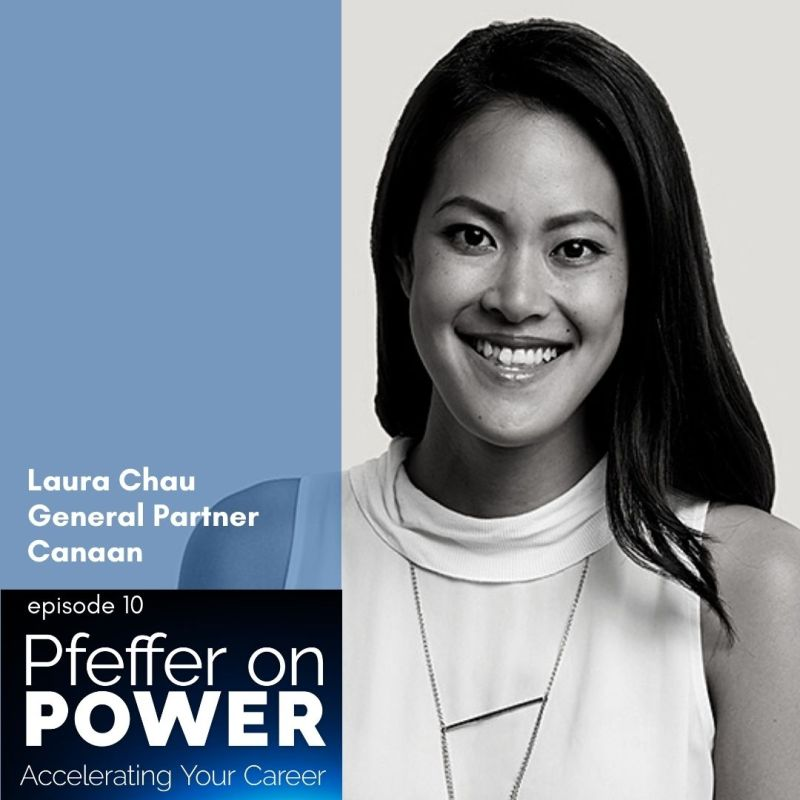
Laura’s podcast specializes in inviting veterans in the stock exchange field or founders of publicly traded companies to be interviewed by her, featuring female guests, each time talking for an hour. In fact, successful people are very willing to go on the podcast to talk about why they are so successful …… I also subscribe to a number of podcasts, almost all of which are interviews.
As Laura’s influence grew, she organized a team to do research support, wrote a blog, and started a show called “Reviewing the Week’s Most Important Venture Capital Deals”. We don’t know what great deals Laura has done, but she has stood out in the dealmaking world, people think of her when they talk about investment opportunities, she has credibility and credibility, and she has power.
And if you’re already in a high position, a great way to consolidate and expand your power is to write a book. Jack Welch, the former CEO of General Electric, is an inspirational icon of the last generation, so why is he so popularly rumored? General Electric has so many people, many people also made outstanding contributions, why do people only know Welch? Because Welch came out with an autobiography that touched the readers.
And that “autobiography” is not even written by Welch himself, is to ask a biographer on behalf of the pen.
✵
*If storytelling is too slow and content output is too difficult, there’s a quick way to build a brand, and that’s borrowing. *
If you’re affiliated with a reputable organization, you can use that organization as leverage to promote your own personal brand.
There’s a dude named Sadiq Gillani, a young executive at Lufthansa. I don’t know how Gillani got that position, he doesn’t even speak German, and Pfeiffer doesn’t describe any outstanding contributions he’s made to Lufthansa …… But Gillani made the most of the leverage that Lufthansa had.

Soon after joining Lufthansa, the head of a consulting firm told Gilani that Lufthansa was a great platform that you could use to increase your exposure. Gillani did just that.
You know the Davos Forum, where world leaders and business luminaries meet every year to blow off steam. The Davos Forum has an annual “Young Global Leaders” conference, and Gilani asked the CEO of Lufthansa to write a letter of recommendation for him to join the conference. At Davos, he was part of a group of 20 people from all over the world who were supposedly “looking at the global agenda for the future of travel.”…… In fact, it was all a lot of talk.
But Gilani became the first person to attend Davos.
Immediately thereafter, Gilani leveraged the power of Davos and Lufthansa’s name to reach out to Stanford University, and organized a two-week course in the MBA class, inviting people he had just met on the Davos panel to come to Stanford to lecture. Everyone wants to lecture at Stanford, business school students would love to see big names in their classes, win-win.
Then again, Gilani got the opportunity to do a TED talk on the name of Stanford, Davos and Lufthansa.
Step by step, Gilani was selected as “Germany’s 40 executives under 40,” “Financial Times 100 best executives,” “100 minority business leaders,” and so on. “These honors. Any one of them would be able to seduce a lot of people.
These titles are Gilani’s specialty, his achievements and his story …… And unbeknownst to him, it’s all just because he has a position at Lufthansa.
✵
If you don’t give a damn about Gilani’s route to the top, my advice is then don’t give the world away to people like that. What is your behavior that isn’t you on? I am in favor of you being on. Like it or not, it’s the fast track to power. Still, power is a morally neutral tool.
If you just can’t let go of the knot of real people, Deborah Liu has a mind trick - don’t imagine all this brazen self-promotion as being for yourself: you’re fighting for resources and honor for your team! You’re helping your boss make better decisions!
Get to the point
Power Rule #4: To build your personal brand.
- Fame can be divided into four levels: recognition, fame, prestige, and brand.
- Three ways to build your personal brand: active storytelling, content output, and borrowing power.