Q&A: How to effectively train inner sense power?
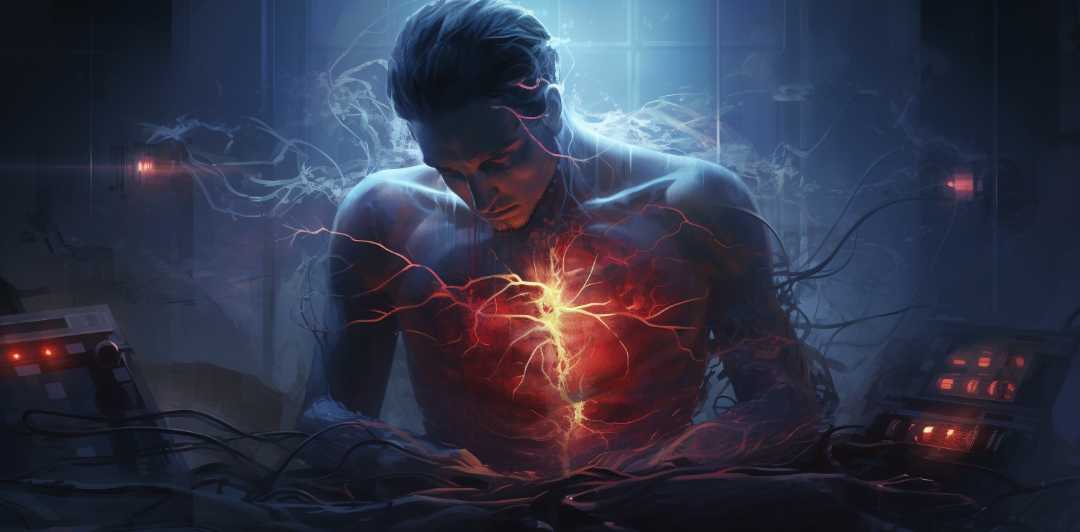
Q&A: How can I effectively train “inner sense power”?
From the Daily Lesson: The Sixth Sense
Reader Chen Jing, Qing Shui, Freedom, caicai: Is there any way to effectively train inner sense power?
Wei Wei Gang replied-
The few articles I found in my research on training inner sense are all about children, probably because there is more diversity in children’s development, and the inner sense of different children is really very different. To summarize, there are three ways in which inner sense can go awry–
**One is over-sensitivity.**The slightest feeling of thirst or wanting to go to the toilet will make you anxious and fidgety, and you can’t go to the toilet without a quick drink of water. The slightest change in temperature in the environment is a distraction. Some children in particular can visibly feel their heartbeat, or even hear it, and this sound is distressing to them.
**One is overly slow.**Already very hungry before realizing they are hungry, then eating and pounding away, not realizing they are full. Going to the bathroom is even more of a problem because you don’t even realize it, and it’s easy to wet the bed if you mess up. What’s even worse is that they don’t know the pain, and they don’t even hurry to cry out when their body is already injured, so they can’t get timely treatment.
**There is another kind of fuzziness.**Just feel uncomfortable, need to do something, but do not know because of what uncomfortable: is it hungry? Is it needing to go to the bathroom? Is it nausea? Is it an itch somewhere? He can’t tell. He will then show emotional agitation, possibly breaking down and crying in pain.
I think these manifestations are a reminder for adults as well. Adults are supposed to know what’s hot and what’s cold, but we may not be able to tell the difference between various emotions (feelings). Sometimes you inexplicably feel a little panicky and something seems wrong, but you don’t know whether you’re missing something or sensing some danger from the outside world. If you are too sensitive to these emotions, you will be greatly disturbed; if you are too careless, you will do a lot of things wrong ……
The advice of the various experts on improving inner sensibility is fairly consistent, and there are just two ways to go about it.
One is sports. * If you can use your body better, you can probably listen to your body better too. And sports make the body’s signaling output smoother and clearer.
One is positive thinking meditation. * Positive thinking allows you to recognize signals more accurately, and meditation allows you to be more calm about them.
All of these inspire us to be perceptive. * To be perceptive is not to overreact, but to react just right. Being overly sensitive and screaming at the slightest thing is certainly the next best thing, and being fuzzy and slow, like some people who pride themselves on being big-headed and not caring about anything, is not desirable either.
From the Daily Lesson: A whim, an unintentional strike
Reader happy-first: In ancient times people seemed to think that the heart was the organ of consciousness, did they also realize the heart’s influence on decision-making and reaction to external stimuli?
Reader Meng Zhonglong: Mr. Wan, it occurs to me that traditional Chinese medicine has always said that “the heart is the official organ of the ruler, and the gods come out of it ……”, and it is the source of human consciousness, and the treatment of psychiatric illnesses in clinical practice always starts from the “heart”. In the clinical treatment of mental illnesses, we always start from the “heart”. Is this knowledge the same as the content of this lecture? If so, how did the ancients summarize it? Can we re-examine these theories of traditional Chinese medicine?
Wan Wan Gang replied -
It makes sense that the ancients should have felt it themselves. I will tell a true story.
Around the 1990s, a few American psychologists, after much coordination, finally traveled to India, where they had the opportunity to test modern scientific methods on some monks who practiced meditation all day long. Carrying their instruments and equipment, the researchers traveled a long way to a particularly remote monastery, where they met several legendary meditation masters.
Their trip yielded very interesting results. Those cultivation masters were indeed different from ordinary people, which I will not talk about here, but I will talk about a small detail.
These monks had never seen the outside world before, and were a little afraid of the American instruments, thinking that you will not hurt us with all this electricity and wires. The intermediary persuaded us that these instruments were non-invasive, the current was very small, and there was no danger, and these monks finally agreed.
The psychologist then proceeded to install the detectors on the heads of the practitioners. At this point, all the monks present laughed.
At that time, the psychologist thought they were laughing at the weirdness of those instruments, but later, after chatting, he realized that it was not that.
The monks said, “Don’t you want to study the effect of meditation on the mind? Then you should be measuring the heart! What does that have to do with the brain?
These practitioners, based on their own feelings, do believe that the heart is where emotions, spirituality and consciousness are processed. They are listening to signals from the heart, not the brain.
…… Of course, I think the root cause here is that you don’t hear signals from the brain – because the brain is hearing the signals, and the brain is on the receiving end. In that sense you really don’t feel the brain thinking, because the brain is the one that feels it, and there is no other organ that feels the brain.
But we should recognize that it’s a mistake to ignore the heart’s influence on emotion and thought. What the ancients got out of their own experience is not entirely without merit. But to say that Chinese medicine is correct, that the brain is not as useful as the heart, liver, spleen, stomach, and kidneys, and that its function is equivalent to that of the kidneys’ deputy, is, in my opinion, an even greater mistake.
Reader Kevin Kuo: Mr. Wan has talked about an experiment on free will in a previous daily class: “In the 1980s, neurophysiologist Benjamin Libet did a classic experiment that has been recited to this day. The subjects in the experiment had to perform a simple action, such as choosing whether to turn a switch on or off. Using an MRI to simultaneously observe brain activity, the scientists found that hundreds of milliseconds or even seconds before the subject realized what he was choosing to do, his brain had in fact already made the choice.” Could that decision before the subject realizes what he chooses to do, as described here, be a heartbeat and body decision that the brain just realizes subsequently?
Reader Chris Thunderhead: if the brain’s consciousness is all determined by signals sent from the body, and the body’s composition is determined by genes, does that side-step the so-called theory of predestination, or mechanical predestination? The world is like a machine that inputs an initial parameter, and the results are predictable. We seem to make the decisions, but we’re really just spokesmen for the press, as in the Matrix line: The choice is an illusion. You have already know what you have to do. You have already know what you have to do.)
Wiksteel’s response–
There is no complete theory on this issue yet. First of all, human beings do not have free will, either from the point of view of physics or from the point of view of Sapolsky’s Behavior, which we talked about in our column. The entire decision-making process is arguably mechanical. But this machinery, specifically, cannot be said to be without the participation of the “self”.
As I understand it, the situation is this: *The body does make a judgment before the brain realizes it, but the brain doesn’t necessarily listen to the body’s judgment because you may have several judgments going on at the same time. *
The subject in that Liebert switch experiment was faced with a particularly simple option, there was nothing to hesitate about, so the brain had no problem following the body’s direct instructions. But for a complex situation, maybe you’d think twice.
For example, you’re quite hungry right now, and there’s a piece of cake in front of you. Your body will immediately want to eat the cake, which is shown by the fact that you have a strong desire to take it, and may even have started salivating. In the language of the AI era, there is a neural network in the body that automatically starts calculating without receiving commands, and it calculates the result of the emotion “want to eat” and submits this result to the brain. In this sense, it is true that the body makes decisions before the brain.
But the problem is that the brain also receives another emotion, which is “fear of fat”. Fear of fat is also a natural reaction, maybe a little slower than “want to eat”, maybe the signal is not as strong, but the brain also receives it.
I understand that what happens next is still up in the air. The brain must have weighed the decision to eat or not to eat. But if you’re weighing, who’s the “weigher”? Is it the prefrontal cortex? Is it the narrative self? Or do we have a deeper self that’s hidden? Or is it that there is no ego and we listen to whichever of the two signals is stronger?
I don’t know what’s going on at this step. But before that, it’s definitely the nervous system doing a good quick calculation before communicating the result to the brain.
From the Daily Lesson: The Way of “Harmony and Seeing
Reader Hyakuroji: May I ask Mr. Wan, Japan and Germany seem to be significantly less free than the U.S., for example, you mentioned in the article that Japanese culture is very suppressive of individual uniqueness and has many rules; for example, many of the policies in Germany since the first reunification seem to have been top-down rather than spontaneous. So how did these two countries become developed? Why didn’t they decline as quickly as the Soviet Union did back then?
WVG replied -
It’s no secret how a country can become a developed country, there’s tons of research and there’s some consensus. I’ve been reading intensively over the last year and have a bit of insight.
First of all, you have to complete the minimum industrialization, turn most of the peasants into workers, the so-called “primitive accumulation of capital”. You can use any means, like the Soviet Union, directly robbing the peasants to send food to the city is also OK, may also be faster. Once this is done you have a platform for growth.
Next you need industrial upgrading, and there are two ways to do that.
The American way, which is innovation-driven. True innovation must be enterprise-centered and free to explore, and in particular it must allow for the elimination of backward enterprises, also known as creative destruction and disruptive innovation. This means that the government can’t pick winners, can’t protect backward enterprises, and can’t intervene strongly in the economy, so there must be a decentralized, market-based competition mechanism. This is the right way to go if you want to maintain your status as a developed country in the long run.
But for developing countries, since they are technologically backward and the United States has already come up with the advanced ones, there is no need to reinvent the wheel, and the fastest way is to introduce technology. This cannot really be called innovation; it is industrial upgrading driven by investment.
Japan and Germany were able to grow at a high rate after World War II, first of all thanks to the United States. The United States not only allowed them to introduce their own technology, but also opened up their markets to them. Of course there were geopolitical considerations for the US to do so, and the key factor was to compete with the Soviet Union.
But the Japanese and German governments did play an important role. You have to invest to bring in technology to set up factories, but domestic entrepreneurs may not have the money or the vision to do so. At this time, if the government gives a guide, the resources are pooled and utilized, the best and then secretly engage in trade protection, is indeed a very good boost. That is why emerging and developed economies have all had a stage of “authoritative government”.
In contrast, the Philippines, which has good relations with the United States but does not have a government that can do anything, has not even reached this stage.
But if you take authoritative government as a developed experience and say that this is the secret of our development and that we must persevere, then you are wrong. There is a limit to the introduction of technology and investment to pull growth, and after a certain point, you realize that there is no more new technology for you to introduce, and the marginal benefits of investment are getting smaller and smaller, and the government can’t pull the economy no matter how much it pulls.
This is the so-called “middle-income trap”. At this time, before Japan or later South Korea, China and Taiwan, the common experience is that a political transformation has occurred: the government decentralized considerable power to the private sector more autonomy, so that entrepreneurs to seek innovation-driven. This is actually a return to the United States on the right path.
Of course, the politics of these places have more or less retained some of the characteristics of the past, but compared with the Soviet Union, it is a world away.
In Japan, for example, you don’t so much have the LDP in control of the major corporations as you have the major corporations in control of the LDP. In terms of the political order, you might think it’s corrupt for the government to be controlled by corporations, but in terms of the economic order, there’s still a little bit of entrepreneurial decentralized decision-making going on.
Of course, the problem in Japan is that only the big companies benefit from this, and it is difficult for small and medium-sized enterprises to emerge and subvert the big companies. So the Japanese economy is not entirely healthy, which is a drag on it, and cannot be considered a purely developed country. That’s why Japan’s economy stagnated for so long and missed out so much on new things.
But still, it was so much better than the USSR after all.