KK Persuasion 6: Wisdom for Living (End)
KK Persuasion 6: Wisdom for Living (End)
This is the final talk in Kevin Kelly’s book, Excellent Advice for Living, and the topic is Kelly’s advice for everyday life. Tech geeks have to live their lives too, and the advice doesn’t involve studying or working, it’s a father’s advice to his children, and a lot of it is about minutiae. But I feel that there is an important theme in these exhortations, and that is *risk. *
Every parent is afraid that their child will get into trouble. Like I’m in my forties, and my dad still always likes to tell me to be careful not to expire my documents, to be careful of scammers, to be careful what I say, and so on……. Unfortunately, he can’t control me now. Kelly also feel the same way, but he said these have a distinctive feature, that is, the distinction between “controllable” and “uncontrollable” two kinds of things.
The spirit of Kelly’s recommendations can be summarized in three principles.
*First, you should have the lowest expectations for things that are not controllable. *
Second, although uncontrollable, there are patterns in things, and finding those patterns can work well in your favor. *
Third, you should be proactive about things you can exert influence over, because sometimes simple actions can have a great effect. *
This is a bit of Stoic philosophy. But Kelly is supposed to be a little more optimistic than Stoicism, and he tends to think more that things will go in the right direction.
✵
Let’s start with a few tips to help you find a sense of control.
A great way to increase your sense of control is to simplify. Kelly says:**”Your time and space are limited. Remove, give away, and throw away anything that no longer brings you joy to make room for those things that do.”**He didn’t say anything about living a minimalist life, but it’s an account you can easily do the math on; useless things take up time and space, and there’s no room for useful things.
Young people sometimes lack this sense of cost, and the reality is that as long as this stuff exists, it is somehow consumed. Kelly says:“All possessions in their natural state are in need of repair and maintenance. What you own will eventually own you. Choose carefully.”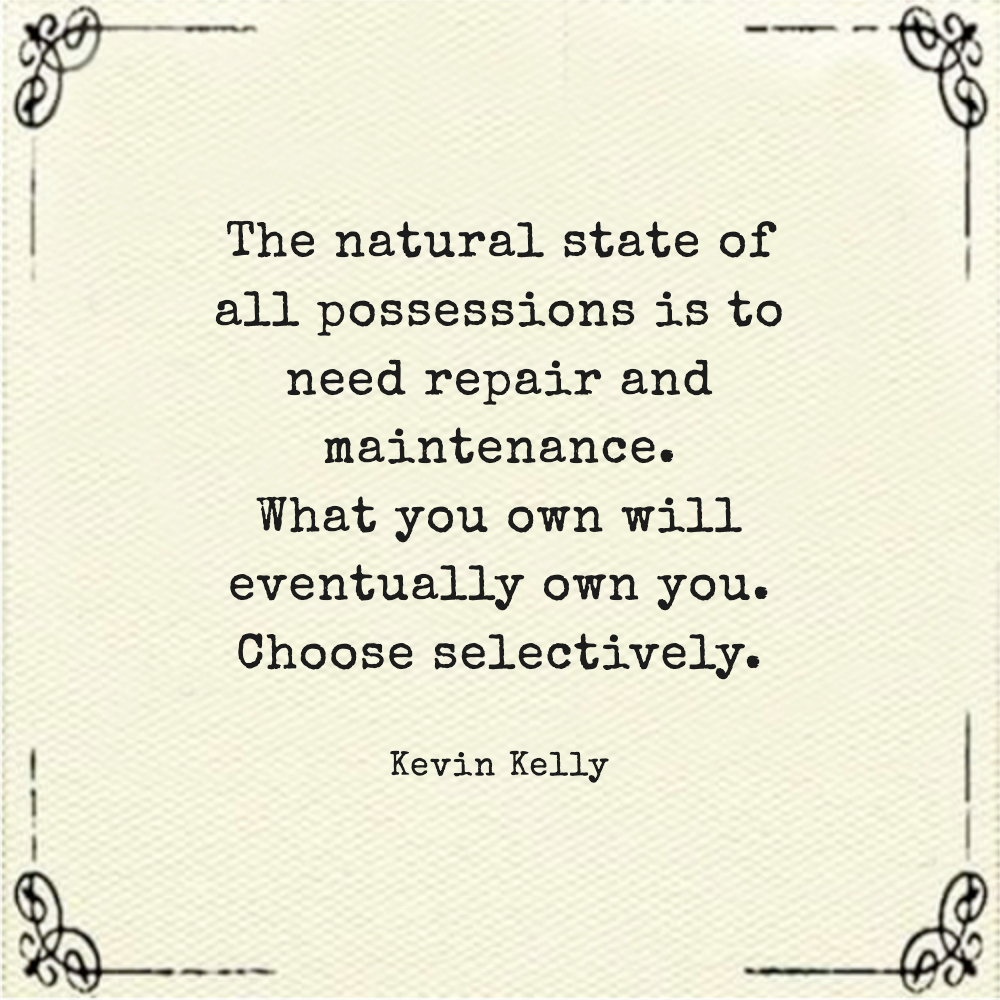
In Chinese, it’s “The gentleman serves the thing, the little man serves the thing.” And Kelly here emphasizes that as long as you have this thing, you have to serve it sooner or later. To take the initiative, you can’t have everything.
Don’t let things outside of your body take over. Kelly says,“Avoid wearing a hat that is stronger than your personality.”
It’s always the person who has to be meaner than the car. Stuff has to be secondary, you have to be primary.
You might as well do things that are good for you if you are going to have such a bottom line. For example, “Learn how to take a 20-minute nap without embarrassment.”
And you can violate certain rules a little bit. For example, if there are some places you’re supposedly not allowed to go into, but you just want to go in and look around, then Kelly would say that’s fine, and his advice would be,“To go through a place that might not allow you in, act like you belong there.”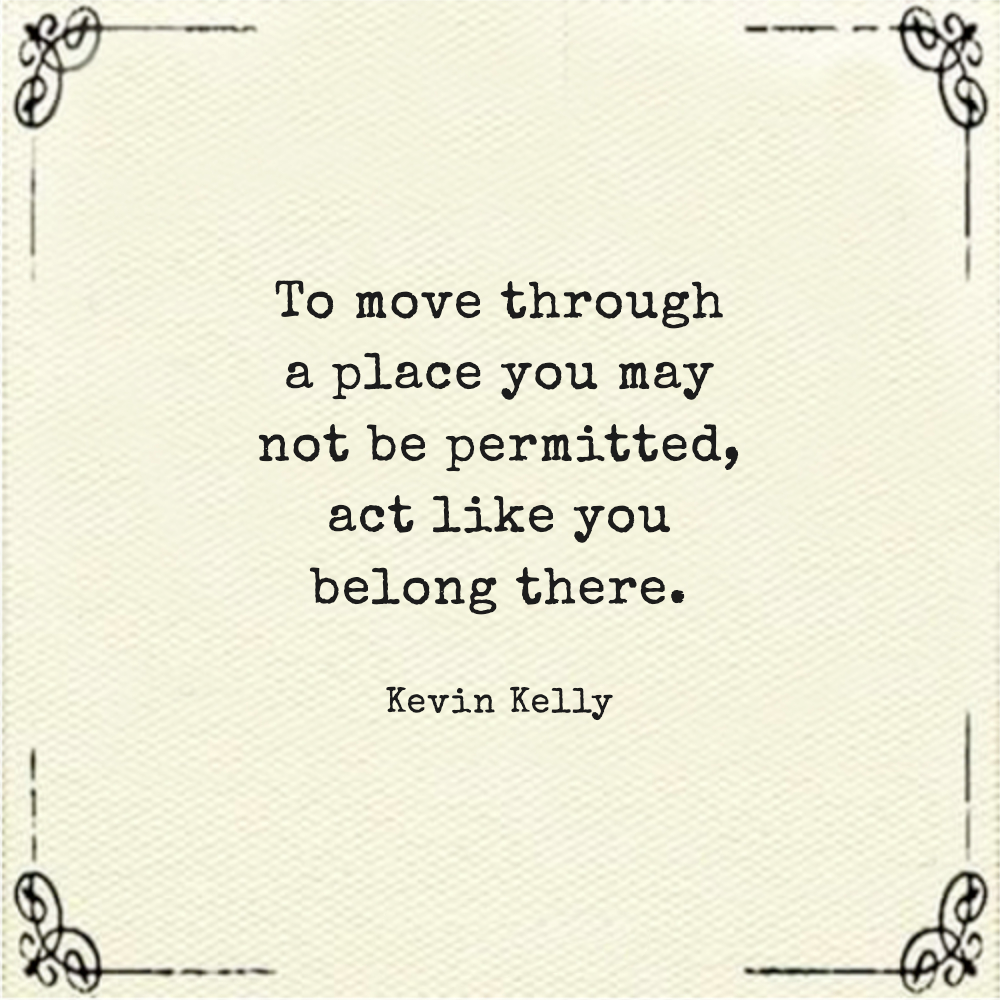
Here’s where I brainstormed a scene where Kelly leads his kids to blend in backstage at the theater by pretending to be a staff member ……
✵
A small violation may be intoxicating, but don’t get into real trouble. Kelly is also concerned about you acting recklessly, especially having to know where the danger lies. He says:**”When working with electricity, volts can hurt you, but amps can kill.”**To put it bluntly, higher voltages might be okay, but higher currents are absolutely dangerous.
Kelly is also afraid of phone scams, but the way to deal with them is very simple:“Assuming that anyone who comes to you for account information is a fraud …… In order to verify the authenticity of the scam, you should hang up and call the official phone number or log on to the official website instead of giving any personal information directly at first listen.”In fact Kelly argues that the phone is just not for making big decisions, adding:“Never respond to a solicitation or offer over the phone. Urgency is a cover for a scam.”
You may recall that Kelly said earlier that “it’s hard to fool an honest person.” …… Let’s just say that honest people don’t get caught up in particularly big scams like “piggy banks,” but they should be careful.
And caution is a form of self-restraint. For example, overspending is a dangerous behavior that should be restrained. Kelly says:“Never use a credit card as a credit instrument. The only acceptable credit or debt is for the purchase of something whose exchange value is highly likely to increase, such as a house.”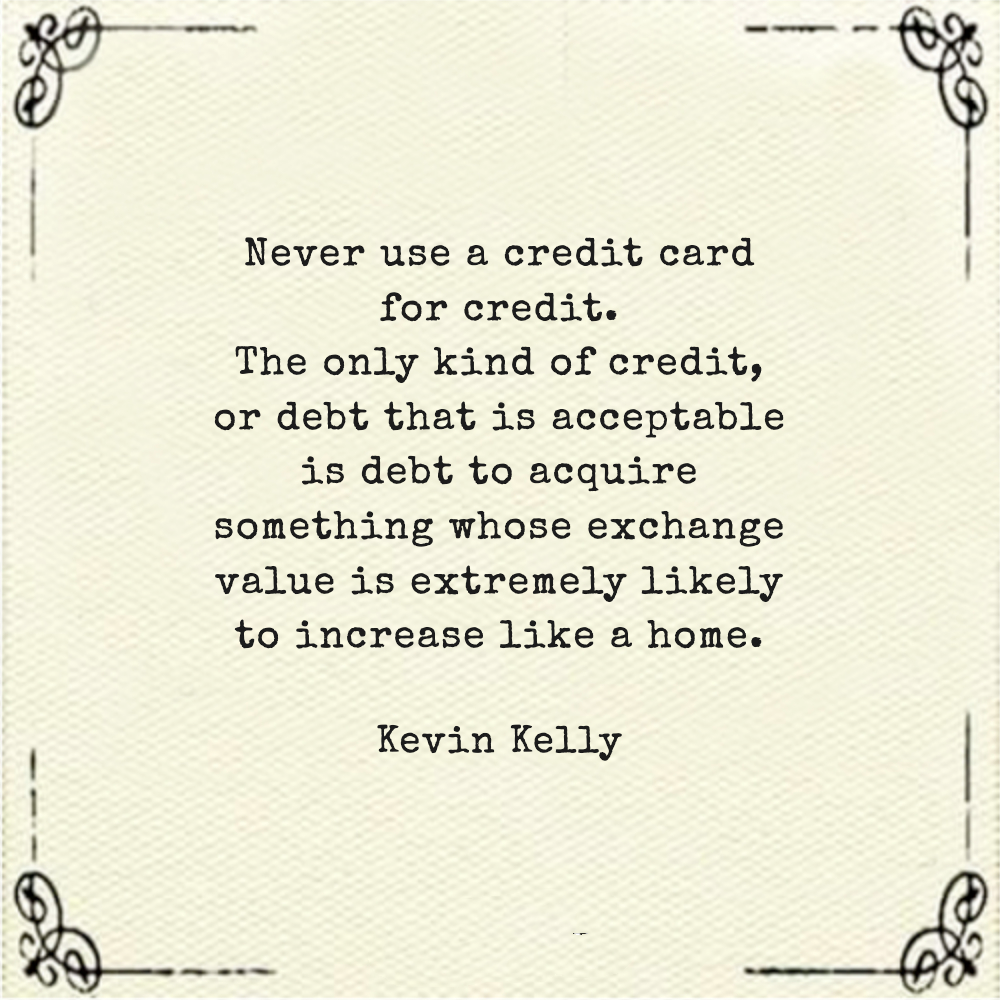
But some losses are inevitable, and the proper attitude toward them is acceptance. Kelly says:“When you lend something, pretend you are giving it away. If it is returned, you will be surprised and happy.”
That’s the way it is in the world, you can’t control it, so it’s best not to expect anything.
Sometimes it’s time to reconcile with yourself. Kelly said:“Things don’t need to be perfect to be beautiful. Especially a wedding.”
It’s just, “Get over it.” Here’s something you may be familiar with:“Comparison is the biggest killer of happiness. If you must compare, compare yourself to yesterday.”
See if this isn’t very different from that energy of having to make things matter to the world that Kelly was talking about earlier in his work advice. That’s right, you can’t be more forceful in all areas, there has to be reconciliation where it’s due.
✵
But you can still do even the chores of life slightly better if you know the rules.
Kelly’s advice includes choosing which team to be in at the supermarket checkout:“The team with the fastest checkout will be the one with the least number of people, regardless of the size of their shopping cart.”
He adds:“Don’t wait in line for something famous. It’s rarely worth the wait.”
And:**”Don’t shop at the grocery store when you’re hungry.”****I agree with this. My family often goes grocery shopping at a supermarket that has a few restaurants next to it. If we ate at the restaurants before we shopped for groceries, we would buy a lot less unnecessary stuff.
Here’s a very useful one to keep in mind if you haven’t heard it this time around:“If you want something done, find someone who’s busy to do it.”
This is a profound insight into human nature. The busy person is the one who really does things. He’s pressed for time, but he’ll find time to do it for you; those idle people who have nothing to do all day long don’t have the habit of getting things done.
Kelly also had one of the ‘best pieces of investing advice’:**”Average returns, but sustained for an above-average period of time can produce extraordinary results. Buy and hold.”**This is classic long-termism.
Kelly’s advice on buying a home:“The general strategy in real estate is to buy the worst property on the best street.”
The reasoning is that the appreciation potential of a property is largely determined by the location - not the house itself.
One more light-hearted one:“Your best portraits are not taken when you’re smiling, but in the quiet moments after you’ve smiled. Find a photographer who makes you smile.”
This is also a rule.
✵
Okay, now on to more advanced maneuvers: you can proactively influence situations in your daily life as well.
Sometimes just one sentence can garner a better deal. Kelly says:“When you don’t know how much to pay for a task, ask them, “How much is fair?” Their answer is usually fair.”
…… Instead of asking “how much should I pay you”. The word “fair” can inadvertently influence the other party’s asking price.
Kelly adds:“The best time to negotiate a new job salary is the moment they say they want you, not before.”
The following one is so amazing I never thought of it, but it does sound like this when you hear it:“When someone rejects you, don’t take personal offense to it. Assume they are just like you: busy, occupied, distracted. All you have to do is ask for another one later. You’ll be surprised to find that the second attempt usually works.”
To put it bluntly, as long as you’re not too thin-skinned, the average person is too embarrassed to reject you twice in a row ……
✵
Even if the world is in danger, it’s far better to be proactive than reactive. One of the most central spirits I see in Kelly’s book is positivity. Being active with people, being active in doing things, being active in exploring. It’s better for you to be active than for someone else to be active. As an exercise in active exploration, we can listen to Kelly’s advice on taking a vacation.
Kelly says:“If you’re feeling stuck in life, take a trip to a place you’ve never heard of.”
Don’t look at a vacation as rest and relaxation, it should be looked at as a safe adventure. For this reason you might even expect something to go wrong during your vacation - Kelly says:“Vacation + disaster = adventure.”
Kelly recently mentioned a concept called the ‘time machine’ on one of Tim Ferriss’ podcasts, saying that in fact everyone can now travel back in time - and that’s by traveling to a backwater. Kelly spent some time living in one of the most remote villages in Afghanistan. There wasn’t even electricity, the sun rose and set, and there was feces in the streets. The local men had only two jobs - farming or working as blacksmiths - and the women were confined to being housewives. This is the typical life of most people throughout history.
It’s a mind-blowing experience. Kelly says:“When you’re on vacation, start by going to the most remote part of your trip, bypassing the city, and then return to the big city at the end. This way you’ll maximize the shock of heterogeneity in the remote places, and then on the return trip you’ll welcome the familiar conveniences of the busy city.”
This is clearly not the city-brat kind of hit-and-run travel; it’s the game of the brave who have read thousands of books and traveled thousands of miles. Kelly says:“To have a great trip, you should move toward a point of interest rather than a location. Travel is about inspiring passion, not about punching up locations.”
For that reason you should pack light and not pack like a poodle. Kelly says:“Your enjoyment of travel is inversely proportional to the size of your luggage …… It’s liberating to realize how little you really need.”
With this spirit of discovery, you don’t have to leave home to travel. Kelly says:“Buy the most up-to-date guidebook about your hometown or region. Play tourist once a year and you’ll learn a lot.”
✵
This is where Kelly’s various pieces of excellent advice are basically given to you. This last one is one I purposely saved for last because it struck a chord with me. I’m sure I’ve heard this somewhere before, but now I seem to have more of an epiphany.
Kelly said-
**”A wise man once said: before you speak, let your words pass through three doors.****At the first gate, ask yourself, “Is this true?”****At the second gate, ask, “Is this necessary?”**At the third gate, ask, “Is this kind?”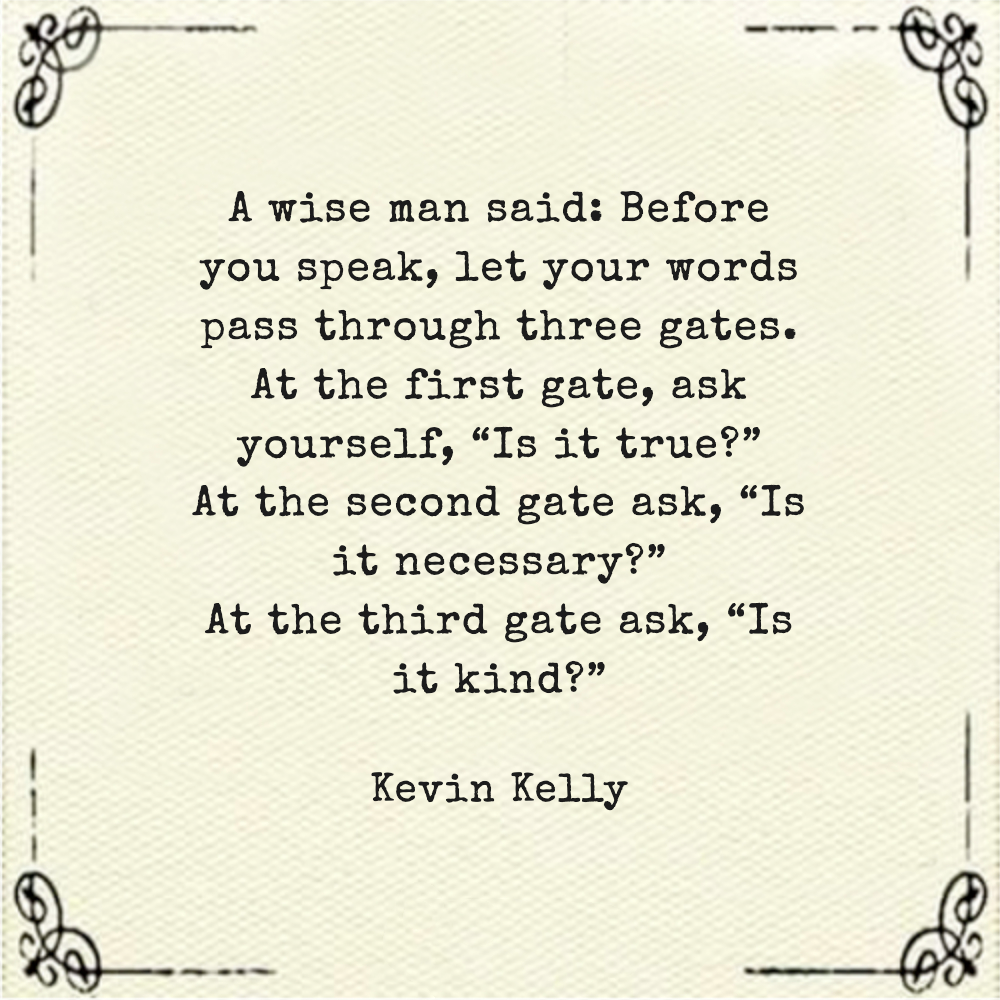
The next time you speak, or before you tweet a friend, maybe you could think about these three doors. Even if you’re right, you don’t have to say it. Even if you feel strongly that it’s necessary, if it’s not well-intentioned, it’s best not to say it. These three gates will make your words more respectable.
Kelly gives 450 pieces of advice, and the ones I’ve selected are the same ones I wish I had known earlier. Share them with your friends.
(The End)
Get to the point
Kelly’s wisdom for living can be summarized in three principles-
First, you should have the lowest expectations for the uncontrollable.
Second, although uncontrollable, there are patterns to things and finding those patterns can work in your favor.
Third, you should be proactive about things you can exert influence over, because sometimes simple actions can have a good effect.