KK Persuasion 2: Working Hot and Cold

KK Persuasion 2: Working Hot and Cold
In this talk we talk about Kevin Kelly’s advice on work. Being an aphoristic book, Kelly says that all of this advice comes up straight away, without setting a target audience first, or saying under what circumstances you should refer to the advice.
They are not advice for the “working man.”
Different people have completely different attitudes towards work. Work can be a pleasure in life, a means of earning a living, or it can be the purpose of life.
My father, for example, loved to study since he was a child and was the best student in HART I High School when he was in high school. At that time, the Cultural Revolution had not yet begun, and he could have gone to university. But because there were many children in his family and my grandfather was the only one with a salary, my father, as the oldest, dropped out of high school and entered a factory in order to help earn money. His teachers felt sorry for him. My dad did a good job in the factory. He was the head of the workshop for as long as I can remember, and managed 400 to 500 workers, all of whom respected him. I once went to see him in the workshop and saw him wearing a set of incredibly shabby overalls, talking and laughing loudly, and I felt that he was very happy.
But my father supposedly didn’t particularly care about his work. He seldom talked about the factory at home, and he didn’t delve much into business management, nor did he care about market operations……. Of course they were a state-owned enterprise, and there wasn’t much for him, a workshop director, to operate. My dad wasn’t interested in getting promoted either, and it showed in the fact that he was distant from the factory leaders. Instead, he was interested in getting my brother and me to learn math, not only buying books prospectively, but also doing the problems himself. In my dad’s mind work was work and life was life.
This is probably why many people are willing to go into state-owned enterprises, or take the exams for public office: you get to keep the boundaries of your life, and you also get the security of stability. However, history has shown that SOEs do not provide real stability and security, and the situation is completely different now. Whether it’s a state-owned enterprise or a private company or a civil servant, this era requires you to devote more energy to your work. For some people, work has become a kind of drudgery, bargaining between pay and reward.
If you only see work as a means of earning a living, you probably won’t play this game very well. People like KK see work as a life’s work, a way to make a name for themselves. In their view, working for a paycheck is undesirable, and working for a hobby won’t get you very far: you should work to make something big, to change the world.
Probably my favorite line in Kelly’s book is:“Don’t waste time fighting the old, just build the new.”
This is the attitude of the practical man to the world. I’m not happy with you guys, but I’m lazy and I’ll be a good one.
✵
If you have that kind of spirit, you must be passionate about your work. You’ll be as excited to tell people about what you’re doing as a pastor preaching a sermon, passing on the enthusiasm. To venture capitalists and entrepreneurs, this enthusiasm is the most typical trait that signals possible success. Kelly says,“Enthusiasm is worth 25 IQ points.”
He also said that everything should be thrifty but passion must be squandered because passion leads to creativity.
Especially young people. People tend to overestimate the role of money in getting things done, and Kelly believes that truly new things rarely require a lot of money - otherwise billionaires would monopolize the invention of new things. Kelly says:“If breakthroughs could be bought, then the rich would buy them. However, inventing new things requires passion, persistence, conviction and ingenuity - qualities often possessed in abundance by the poor and young. Stay hungry.”
This is probably the best explanation for Steve Jobs’ phrase “Stay hungry, stay foolish”, which is also why Silicon Valley investors especially like poor and young smart people. Barefoot is not afraid to wear shoes, do things have to have this energy.
Enthusiasm not only gives you motivation, but also allows you to have a high enough goal. Possibly inspired by the Chinese saying, “If you take the law from the top, you get it from the middle; if you take the law from the middle, you get it from the bottom,” Kelly said:“The advantage of setting an extremely ambitious goal is that it sets the bar very high, so even if you don’t reach the goal with your efforts, you’re likely to exceed the ordinary successes.
So what if I’m not up to the task of setting a goal that’s too high, you say? Incompetent is right. Kelly says:“Your best jobs will be the ones you’re not quite up to, because it will push you to challenge yourself. In fact, you should only apply for jobs that you’re not very good at.”
This is also in line with the principles we have emphasized time and time again, such as “doing things in the learning zone” and “needing the right kind of challenge”. But you can be even bolder. The goal could even be something you’ve imagined - or, better yet, something you’ve imagined. Kelly’s exact words are:“Anything real begins with the imagination of possibilities. Therefore, imagination is the most powerful force in the universe. You can get better at it. It’s the only skill in life that benefits from ignoring everyone’s knowledge.”
So if you’re not feeling the heat at work, you’re doing the wrong job.
✵
You definitely can’t do it without passion, but you’re not a real jobber with just passion. Passion always turns cold. To get things done, you not only have to adapt to the cold, but you have to learn to be cold.
The first thing is to calmly determine which is the real opportunity. Kelly said, “A really good opportunity doesn’t have “good opportunity” in the title.”**It’s better if it’s an opportunity that no one else has noticed yet. Maybe it comes out of a crisis, maybe it sounds ridiculous, maybe it makes you feel like you might fail - but crisis, ridiculous and failure are all positive words with Kelly.
He says:“When crises come, don’t waste them. Without problems, there can be no progress.”
He said:“Every breakthrough is ludicrous and absurd at the beginning. In fact, if it wasn’t ludicrous and absurd to begin with, then it’s not a breakthrough.”
He said:“It’s easy to get trapped by your own success. Say no to tasks you might not fail at, and yes to tasks you might fail at.”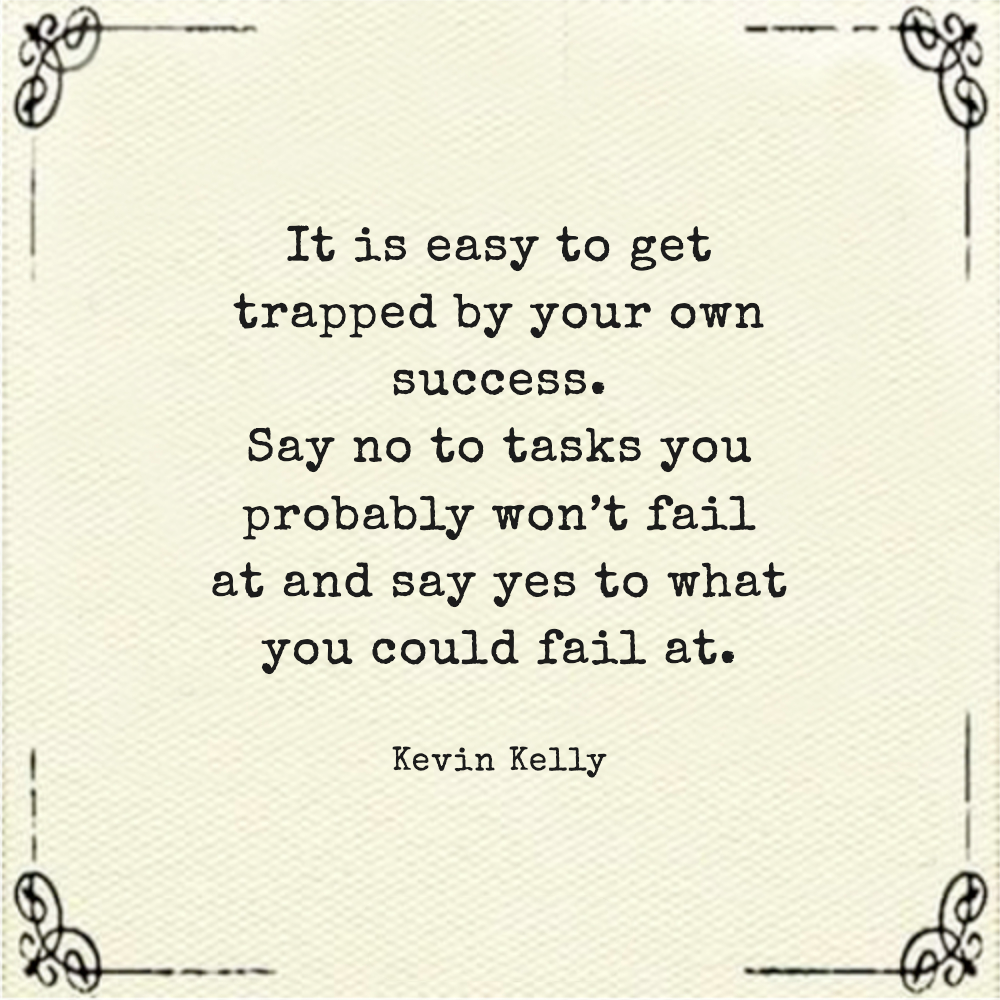
These words are seriously not in line with the values of the East Asian cultural circle that seeks stability, and if you were to talk like that all day long people might think you’re arrogant. But you can’t do what Kelly and the others did without a little bit of daring to think and do.
Bold does not mean that the heart is not careful, the most critical to judge the opportunity is to avoid falling into the “wishful thinking” [1]. In Kelly’s words**”The difficulty in predicting the future is forgetting what you expect it to be like.”**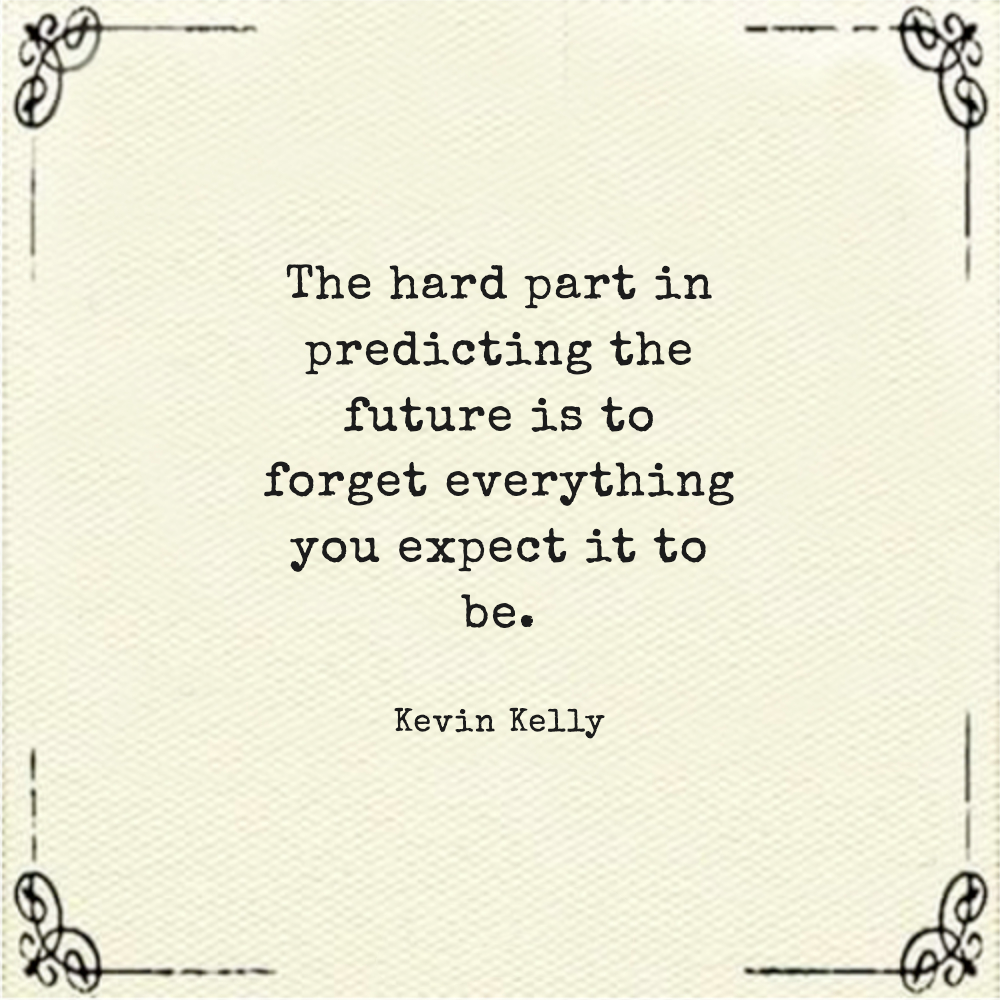
Hopefully that quote will chill you out a bit first. But overall, you must have guts before you can talk about the heart.
✵
A further coolness is focus. Much like when we talk about Ultraman, the focus we’re talking about here isn’t something like focusing on the teacher’s lecture don’t play with your phone to distract yourself or anything like that, it’s about making sure that the important things are prioritized and that you don’t waste your energy on trivial things. Kelly coined a witty phrase called**”The most important thing to do is to make sure the most important thing is the most important thing.”**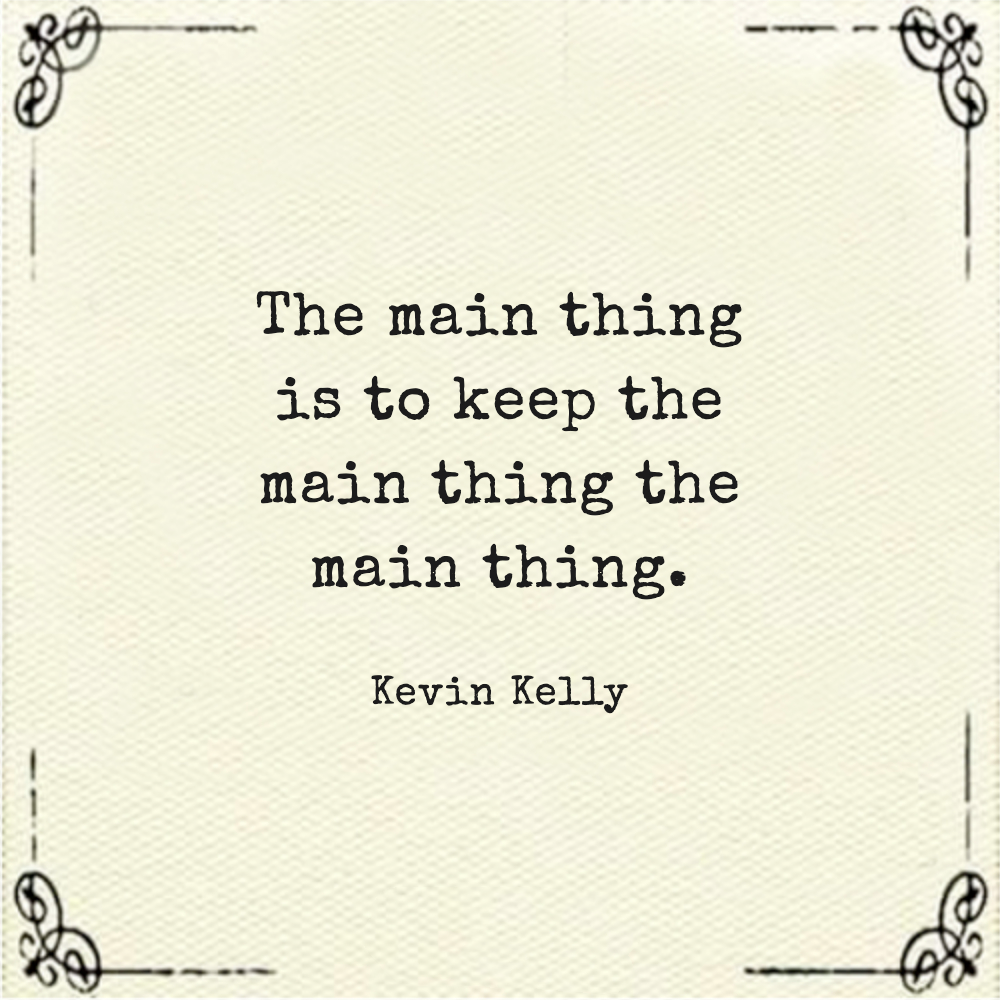
There’s another one called**”Focus on what you focus on.”**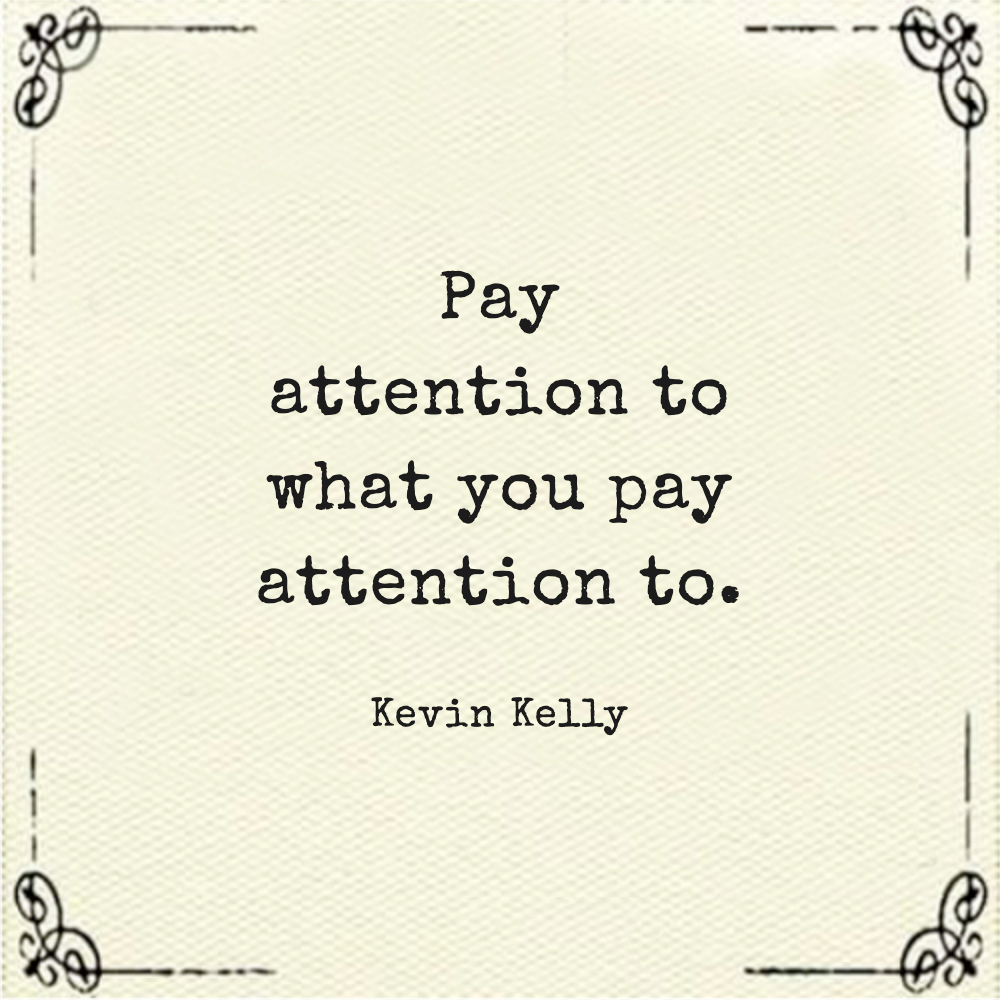
So how do you make sure that the important things are prioritized? Kelly offers three suggestions-
One is to “always ask for a deadline because it eliminates the irrelevant and mundane.”
One is ‘when you are invited to do something in the future, ask yourself: if I were invited to do it tomorrow, would I do it?’ There won’t be too many commitments that pass this immediate can-do filter.”
One is “What’s the worst that could happen if this doesn’t get done?” Shorten your to-do list. Leave only those things that will lead to disaster if you don’t do them.”
Many people believe that you should only do the “important” or “urgent” things, but as you can imagine, people like Kelly refuse to do the “urgent” things. He believes in focusing on the important, saying:“Don’t let someone else’s emergency become your emergency. In fact, don’t be swayed by any kind of urgency. Focus on what’s important. Urgency is a tyrant. Importance is your king. Down with the tyranny of urgency!”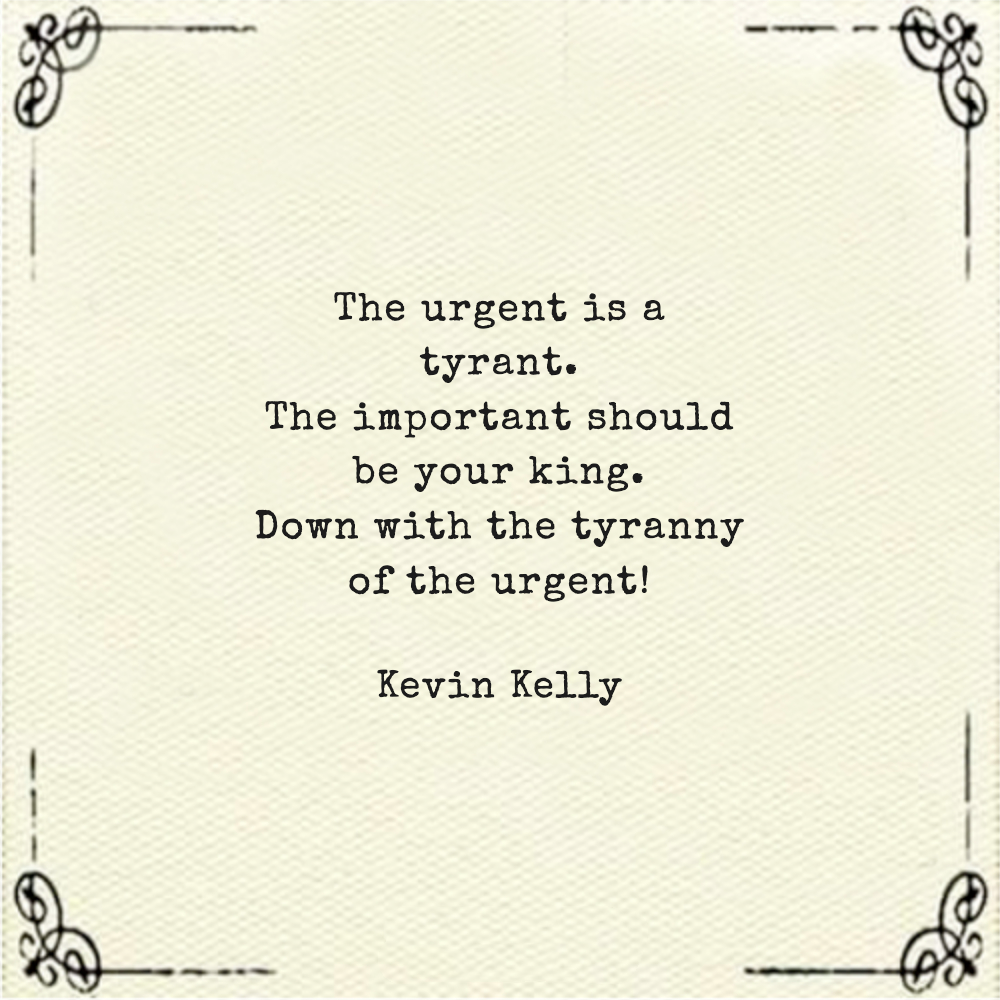
So you say you don’t do the little things, and you don’t do the urgent things, so what exactly should you do all day?
✵
*The answer is “iterate”. Iterate calmly, silently, patiently. *
Good things are improved and polished countless times. You make it, you’re not happy with it, you revise it, you make it again, you’re not happy with it, you revise it again. …… Kelly’s quote is:“To make something great, you just have to do it. To make something great, just go and do it again and again and again and again. The secret to making superior things is to make them over and over again.”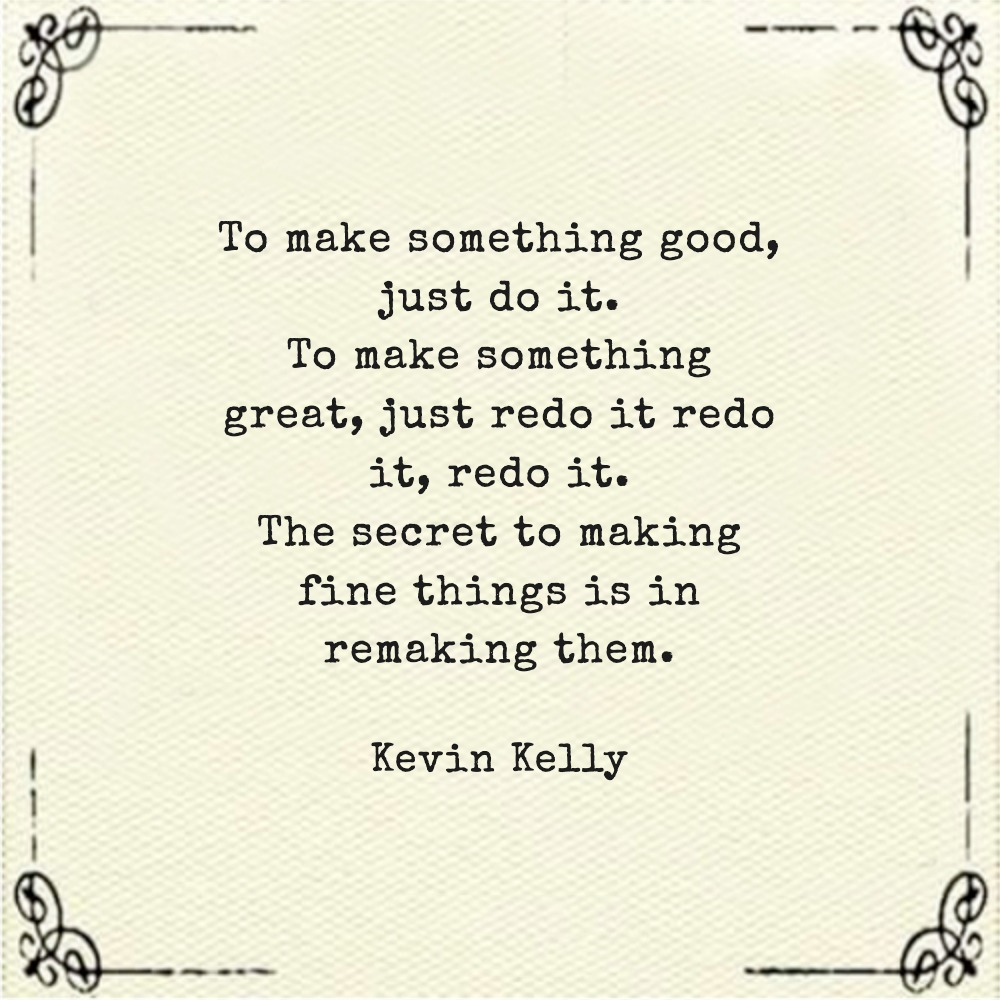
The process is not at all bombastic, and here it’s less about passion and more about persistence. Kelly’s following passage may strike you:“When you want to give up, just do five more: five more minutes, five more pages, five more steps. Then repeat. Sometimes you can break through and keep going, but even if you can’t, you have five more than you had. Tell yourself you’ll give up tomorrow, but not today.”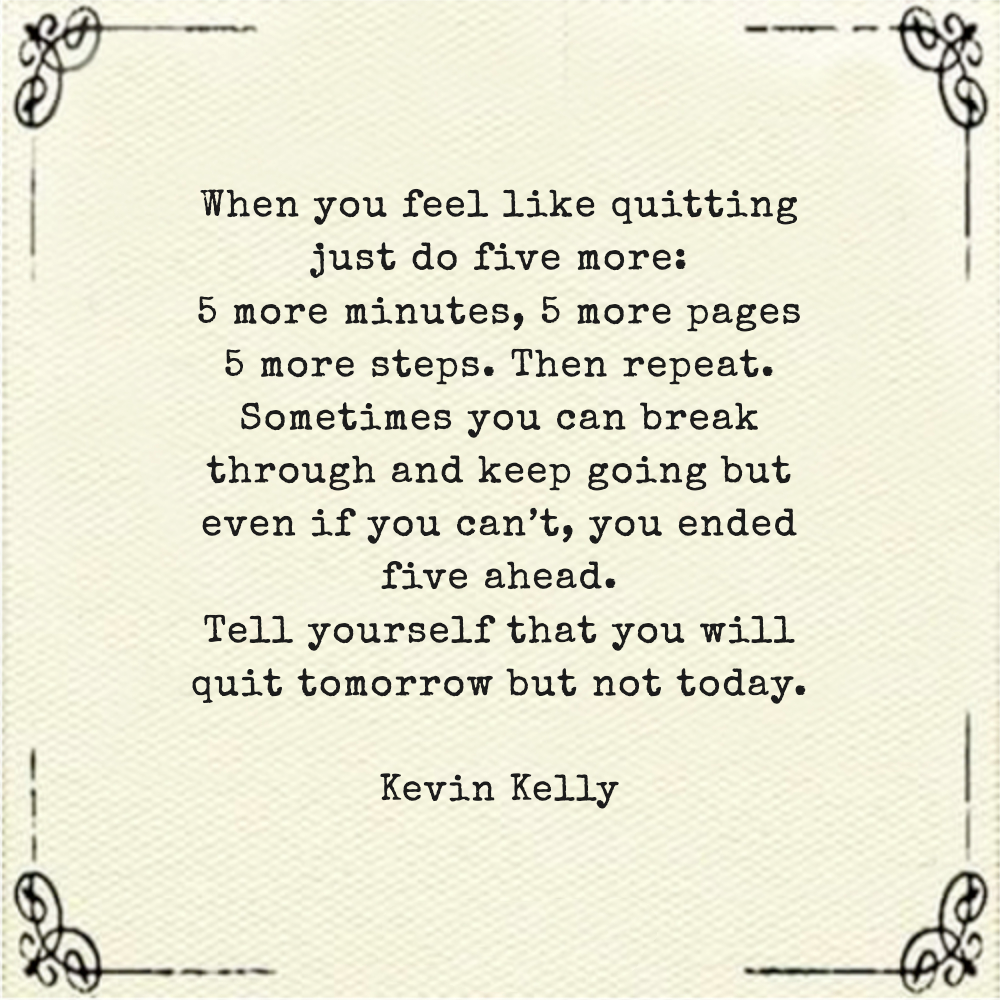
But if the direction is just wrong, it’s not right to go down one path. This is a contradiction that all entrepreneurs must face [2], you have to be good at sticking to it, but also good at judging whether it’s worth sticking to it; you have to be particularly opinionated, but also have an open mind and be able to listen to other people’s opinions. Kelly knew this paradox so well that he parroted the Serenity Prayer [3], saying:“You need three things: the ability not to give up on things until they work, the ability to give up on things that don’t work, and the ability to trust others to help you distinguish between the two.”
Such abilities are also iterated and polished. As the saying goes, sharpening is the most effective way to amplify and improve your results, says Kelly:“Spending even 15 minutes (1% of your day) improving the way you work is the most effective way to amplify and improve the results of your work.”
But never be afraid to make mistakes. Iteration never means not making mistakes, but not making the mistakes you made. Kelly says:“Don’t keep repeating the same mistakes; try making new ones.”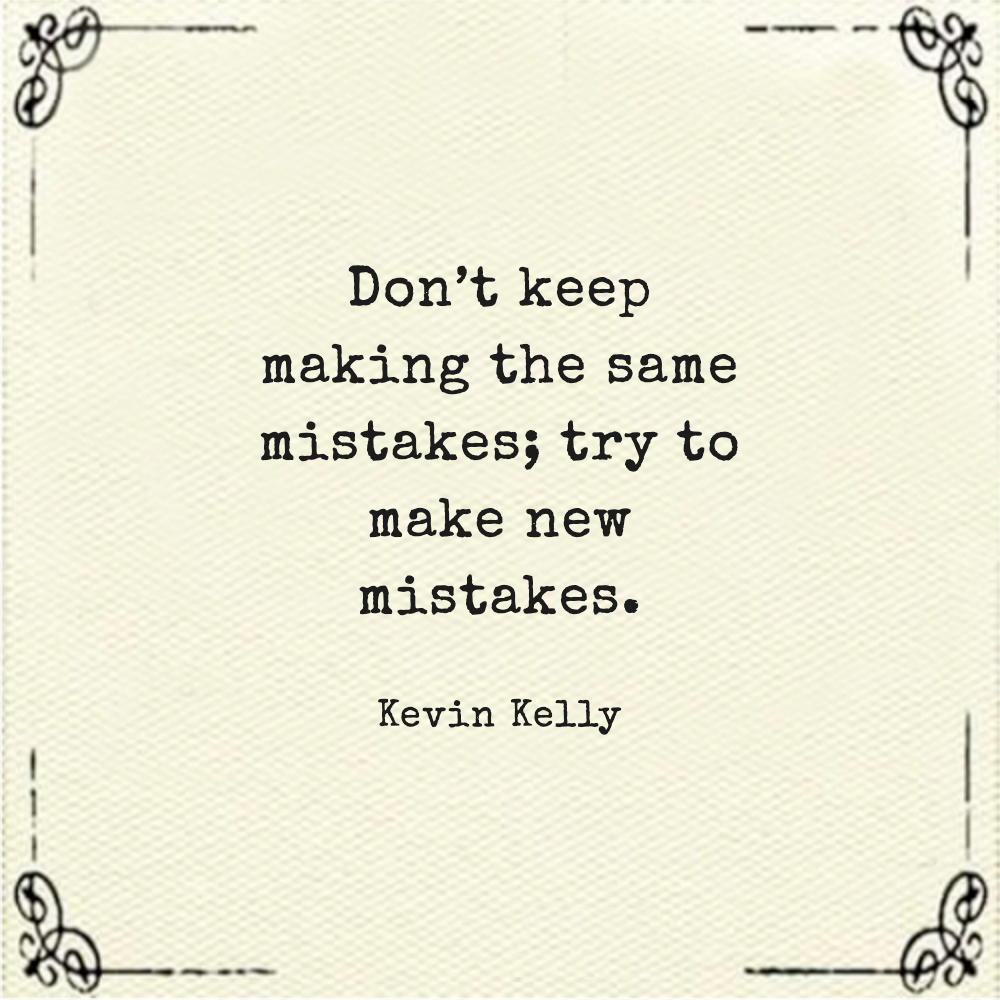
He also said:**”Stupid people end up doing exactly what smart people do in the beginning.”**So don’t ever worry about doing stupid things, it’s really worthwhile to do things that you certainly didn’t do well when you started, the key is that smart people have iterative kung fu.
✵
Improving the way you work also means using competent tools. I’ve always said draw a bow when it’s strong use an arrow when it’s long, and Kelly thinks the same way. To young people, he says:“In the beginning, buy the cheapest tools you can find. Upgrade the ones you use regularly. If you can already get the job done with a particular tool, then buy the best you can afford.”
And as an adult, if you’re a bit of a hippie and geek, you should only use the best tools. Kelly says:“If you find yourself thinking, “Where’s my good knife?” Or “Where’s my good pen?” , then you should pay attention, that means you have some bad tools. Get rid of those bad tools.”
So don’t buy into the whole “flowers and leaves can hurt you” metaphysics, good tools can give you more self-esteem for your work. I have a physicist friend who likes to handwrite his notes, and he tells us he only buys the best notebooks. We’re big people, so don’t settle for less. If the company doesn’t arrange it, buy it out of your own pocket.
✵
Kelly’s advice also includes taking active breaks and scheduling one day a week to not work at all. There’s also thinking more in terms of your clients’ and bosses’ perspectives, as well as outsourcing as much as you can if a job can be outsourced, because other people’s time is the best leverage you have.
One other work virtue I’d like to emphasize is responsibility. Work is not a performance art, you have to take responsibility for what you do in order to do it. This means you have to be anxious when things don’t go right, and you have to look to yourself when things go wrong. Kelly says:“If your sense of responsibility doesn’t expand as you grow, you’re not really growing.”
It’s human nature to pass the buck, and it’s true that a lot of the time it’s not your fault. But it’s not your fault, and you’re responsible. Kelly puts it this way:“Maturity is based on the idea that even if something isn’t your fault, that doesn’t mean it’s not your responsibility.”
The weak man is afraid to take responsibility because he feels that taking the blame is being bullied, but the strong man is brave enough to take responsibility because responsibility implies ownership: this thing is yours if you dare to take the blame.
The core idea of this talk is that if you want to really make a difference, you have to make your work your own. It starts with passion, ends with calm, and ends with ownership. If you can create something, make a difference in the way you want to, make something that matters to people, that’s a feeling that’s worth a thousand bucks.
Kelly says:“Experiences are fun, impactful and satisfying, but only being important makes us happy. Do what matters.”
Annotation
[1] Scientific Thinker 3: Full of Enthusiasm, Wishful Thinking
[2] Elite Daily Lessons Season 2: Everyday Applications of Dragon Slaying Techniques
[3] The Serenity Prayer is “Grant me serenity, O God, that I may accept, what I cannot change; grant me courage, that I may change, what I can go about changing; and grant me wisdom, that I may be able to distinguish, the difference between the two of the above.” Our column talked about: the Stoic philosophy of peace of mind.
Highlights
If you want to really make a difference, you need to make your work your own. It starts with passion, builds into calmness, and ends with ownership. If you can create something, make some changes as you see fit, make something that matters to people, that feeling is worth a thousand bucks.
“Don’t waste time fighting the old, just build the new.”