Evolutionary Ideas 5: Getting People to Act Like Scratchers
Evolutionary Ideas 5: Let’s Act Like Scratchers
Even if you are saying the absolute right thing, getting someone to actually listen to you and do the thing can be difficult, as any parent knows all too well. In fact, the child recognizes that it’s the right thing to do, but since you’re the one who told him to do it, he just won’t do it.
In this talk, we’ll move on to the evolutionary psychology and behavioral science approach in Tatum’s book, Evolutionary Thoughts,How to trigger the other person’s action without having to force a response.
Let’s start with an example. Some streets have a kind of speed display sign on the side of the street that automatically uses radar to give a speed check to vehicles driving by. Let’s say the speed limit on this street is 35 mph, and you drive by, and this sign detects that you’re speeding, and displays your speed in flashing orange to remind you to slow down.
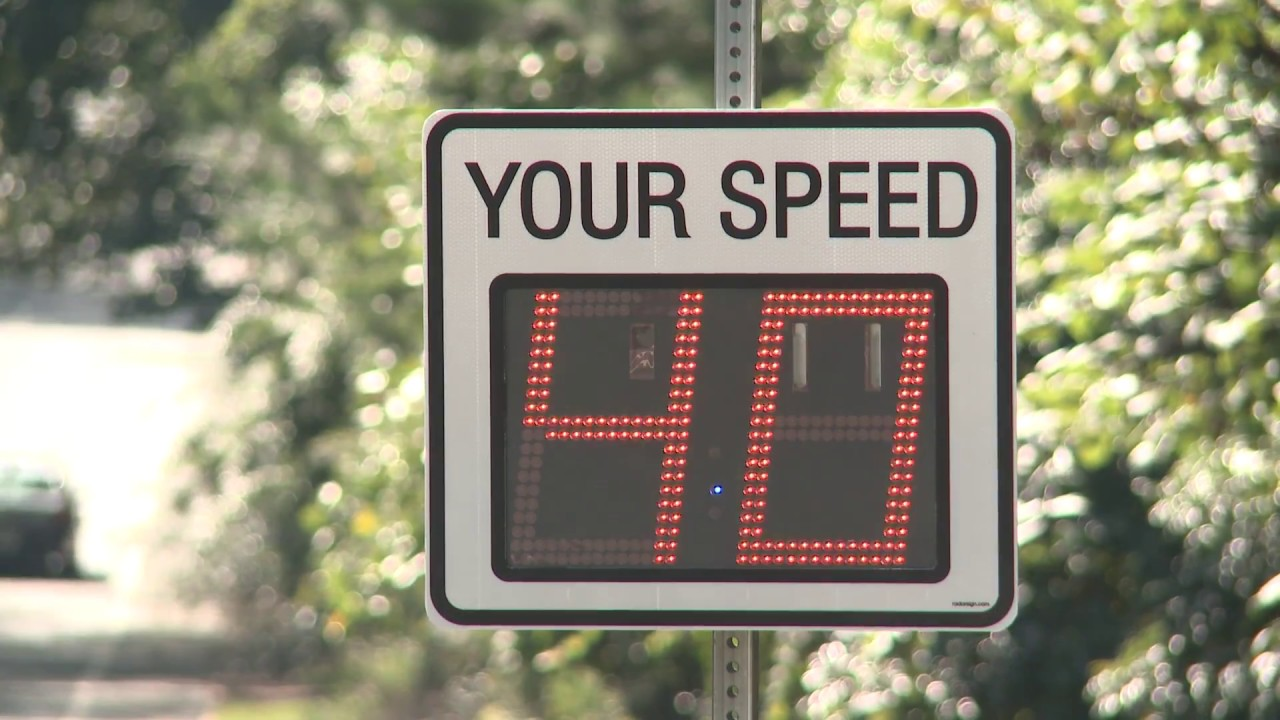
There is actually no camera on the speed sign, it has no enforcement capability, it’s just a reminder and you can totally ignore it. But in most cases, you will slow down as soon as it reminds you. Why is this?
Because the big orange numbers flashing non-stop make you feel out of place, you feel like you’ve made a mess of the world. You instinctively want to get the world back in order.
Slowing down is your spontaneous action.
✵
People are very good at recognizing various orders.
For example, as our column has talked about before, the human brain has a very special tendency to spot faces in all sorts of situations. The foam of coffee, a toasted mark on a loaf of bread, a terrain on Mars, may all be patterned by what we think is a human face. There is an official name for this psychological phenomenon, it is called “pareidolia“. There’s a particularly interesting example from Tatum’s book that I must let you know about.
In 1955, Canada came out with a new version of the $100 bill. Being a Commonwealth country, this Canadian bill was beautifully stylized with the Queen’s head on it. But soon after it was issued, it was said that the Queen’s hair in the bill implied the face of a devil [1].
Can you experience that face and see it?
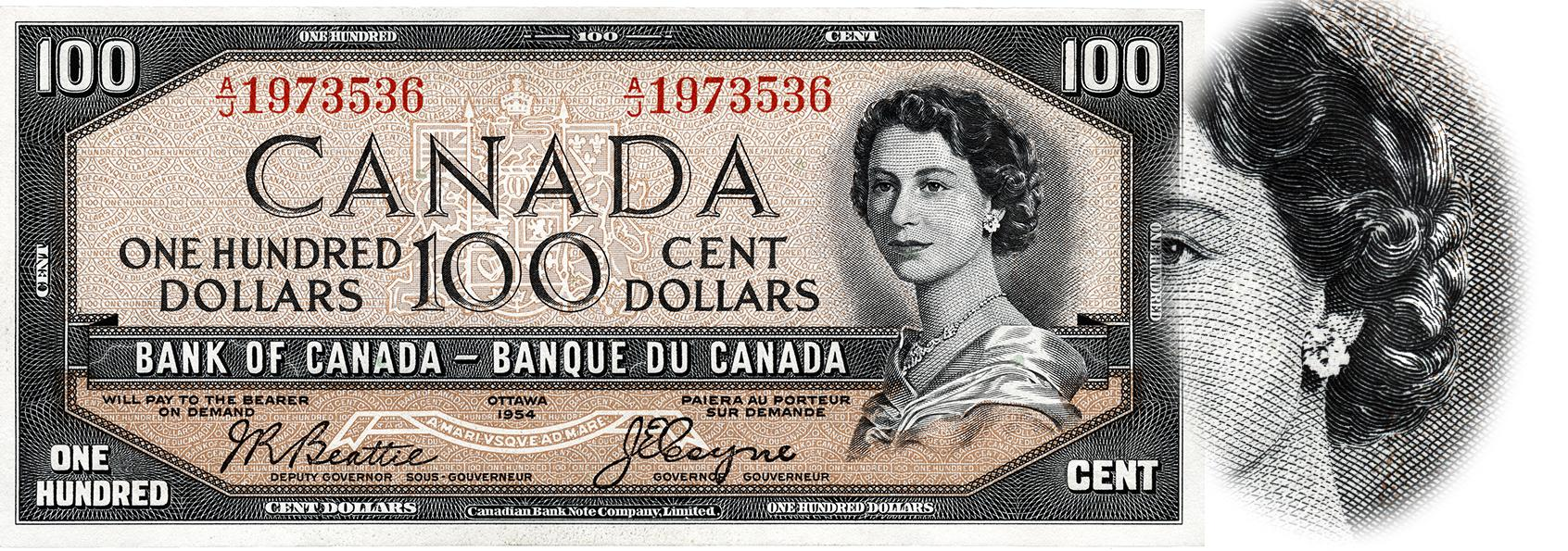
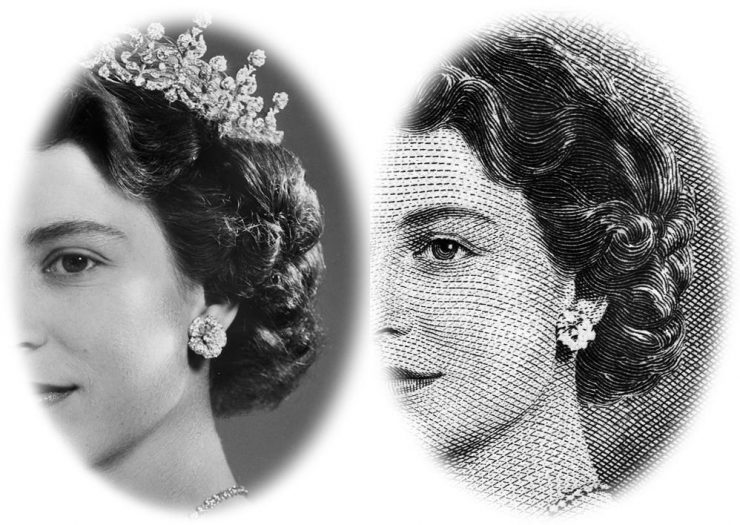
You wouldn’t have even thought about it that way, but someone reminded me of it, and it felt like a real spooky face …… Canada rushed to modify the bills, and here’s the new version of the graphic-
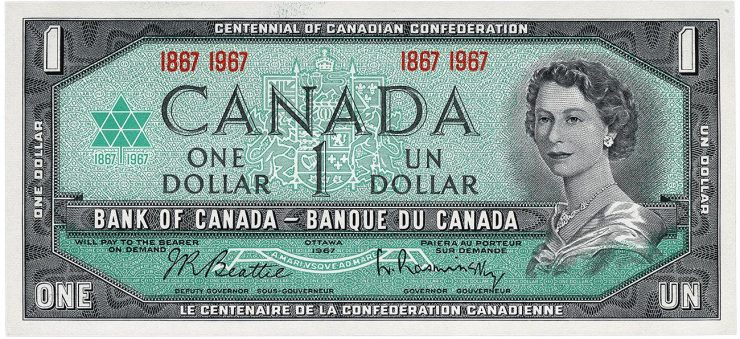
That previous version with the ghost face has become a very popular collector’s item.
This example is just to illustrate how common vacuous misperception is, which is a fixed tendency of the human brain. One installment of our column talks about “generalized superstition”[1] and says that the so-called superstition is to look for reason where there is none, to find meaning where there is none, to discover laws where there are none, and to impose causation where there is no causation ……
Now let’s take this a step further, it’s not really just faces or laws, but more generally, people just really like to discover ‘order’ in the world. Or rather, people are very like order. *
We don’t like clutter, we want things to be in their place and in order.
That’s why we really like symmetrical things, because symmetry is strongly ordered. Studies have shown that symmetry makes it easier for you to distinguish it, detect it, and remember it.
To take it a step further, we not only like order, we want to maintain it.
If you don’t believe me, just take a look at the following chart–
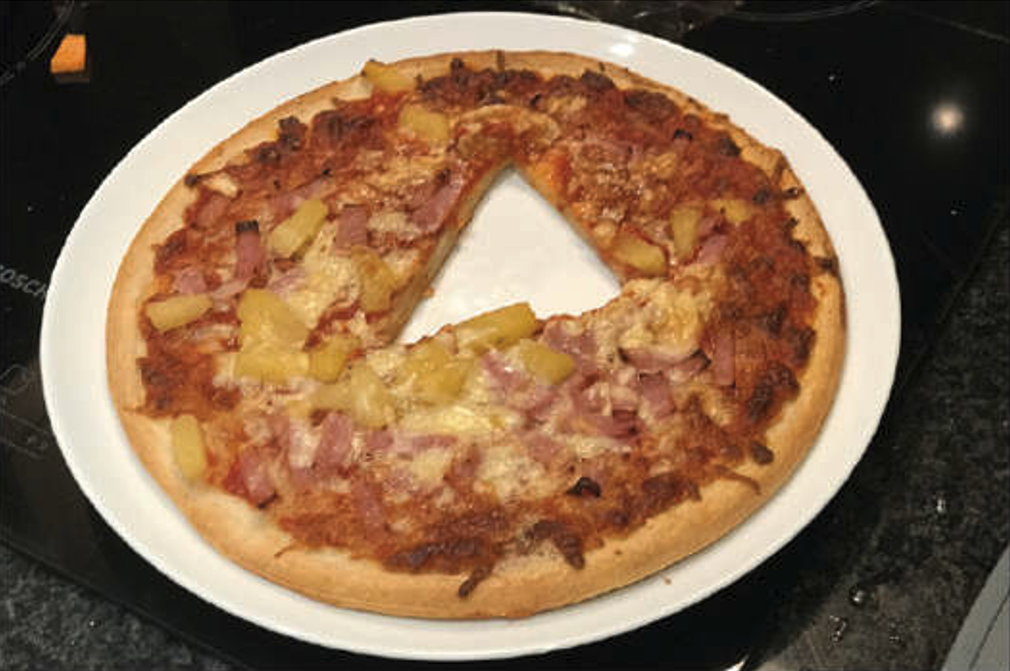
It’s a pizza, and someone cut away a piece of it. But the person didn’t cut the pie in the normal way, and cut away a very irregular triangle in the center, and not quite right in the middle.
You feel a strong sense of discomfort, or even a sense of pain, at this. Or more accurately, it’s as if you have an itch somewhere on your body that you have to scratch. You feel like you’re having an obsessive-compulsive disorder (OCD) attack.
You feel like you need to take action.
Because you want to maintain order. Just as you want to rearrange the table when it’s not in order, you have to adjust the painting on the wall when it’s hung crooked. Otherwise you’re in trouble.
And that’s the first thing we’re going to say about attracting people to action: * You spontaneously want to bring things back into order. *
For example, someone designed a switch like the following–
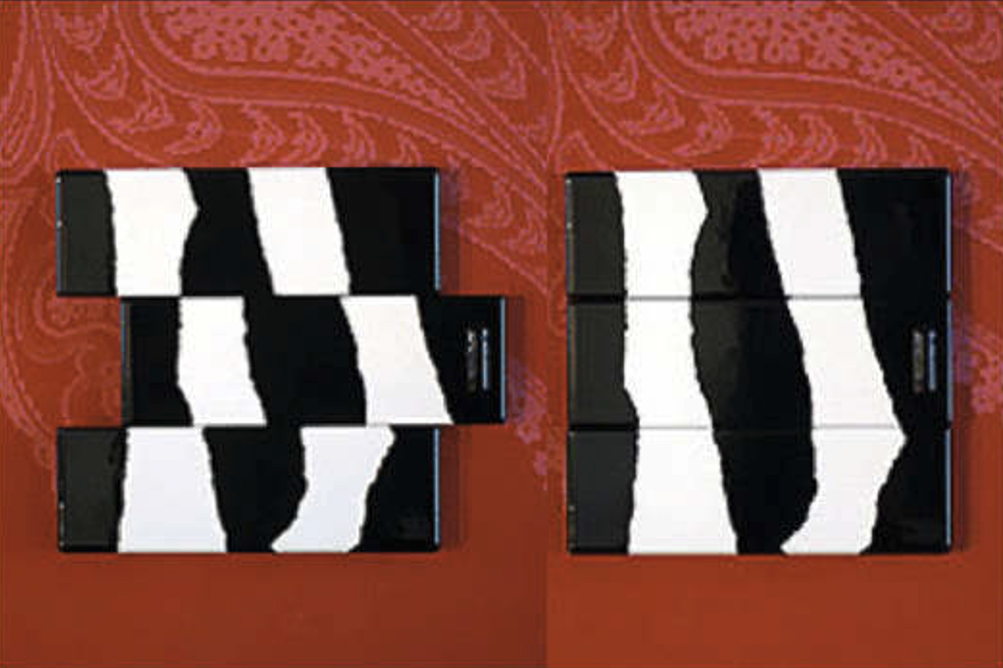
It’s a pattern of two horse legs on a black background. When the lights in the room are turned on, the center switch is mismatched out and the whole pattern is destroyed very inconsistently. You’ll be strongly tempted to turn the switch back off to align the horse legs ……
The designer’s intention is to take advantage of this OCD mentality of yours and save electricity.
✵
- The second way is to give feedback. * A lot of times it’s not that you don’t want to do the right thing, it’s just that it’s hard for you to do it without a reminder.
For example, you don’t really want to drive over the speed limit, but you didn’t pay attention to the speed limit sign and accidentally went over the speed limit. Then if there’s a flashing speed display sign on the side of the road to provide you with a feedback, maybe you’ll slow down. This is another layer of interpretation of that example we started with.
So adding feedback is a great design idea.
When you give a white wall a fresh coat of white paint, you’re going to have a hard time because you can’t tell where you’ve just painted and where you’ve missed. So someone invented a paint that is pink when you first put it on, and then after a while it dries to white, and then it’s very easy to paint. The reasoning behind this is that there is feedback.
Another example is a powerful tranquilizer called Rohypnol, which when taken can give a person short term memory loss. Outlaws violate women by sneaking this drug into alcohol or drinks in bars and such, so that when women drink it, they go into a state of being at the mercy of others. And this drug is colorless and tasteless, so how do you prevent it?
In 2014, four American college students invented a nail polish called Undercover Colors. It’s pink on the nails, but if you stick your finger in a cup and dip it in, the polish turns black if there’s Rohypnol in it.
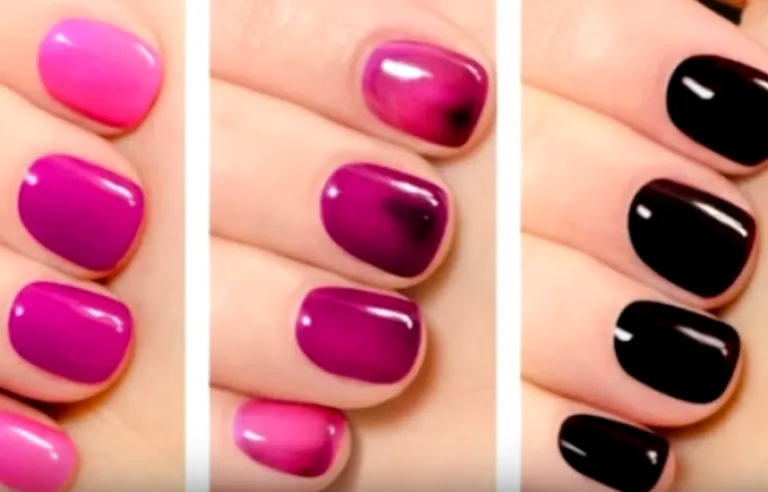
Then you try the poison with nail polish before you drink anything in a dangerous situation and the problem is solved. That’s how feedback works.
✵
The third way is to utilize people’s rebelliousness, or ‘psychological resistance (reactance)’ . People are willing to feel in control and don’t want to be controlled, so the more you make someone do something the less they want to do it.
So the more you let people do things, the less they will want to do them.
You may remember an episode in Mark Twain’s novel The Adventures of Tom Sawyer. Tom was asked to paint a wooden fence, he did not want to do this work, so he told his friends that painting is a very interesting and special thing, not everyone is qualified to do. As a result, his friends were so interested that they asked Tom to let them paint too, and were even willing to pay for the gift! It turned out to be an easy task for Tom.
There is a famous experiment in psychology where subjects were asked not to “think of a white bear” for the next 15 minutes - and the result was that people were thinking of white bears. If you don’t say it, no one will think about it at all, but if you say it, people will think about it. It’s a phenomenon that happens everywhere.
In 2003, American singer Barbra Streisand sued a photojournalist for fifty million dollars for publishing a picture of her family’s mansion on the Internet. Before she sued, the photo was only viewed six times, including once by herself and once by her attorney. As a result, after the lawsuit was reported, the photo was immediately viewed 1 million times. …… This phenomenon is now known as the “Streisand Effect”.
To satisfy the reverse psychology, let’s take another look at this photo -

You don’t let me do it, you restrict my freedom and independence, then I have to do it.
Every time there’s a school shooting in the United States and someone calls for a gun ban, gun sales go up; every time the government engages in an anti-drug campaign, people are more likely to want to get their hands on some drugs; when you hear that a book has been banned, it suddenly sparks an interest in the book; when you hear that a certain niche movie is banned in a certain country, you’re more likely to want to bring that movie over to see it… …These are the Streisand effect.
The Streisand effect leaves governments at a loss. You can’t ban this thing, and you can’t ban it either. …… So how should businessmen capitalize on this reverse psychology of people?
Some merchants simply and deliberately say, so-and-so situation you do not want to use our products, I suggest you use others. This may have a certain risk that consumers may feel that you are discriminating. A gentler approach is to stimulate human curiosity.
The information gap is also a limitation: the less you let me know what that is, the more I want to know. That’s why ‘blind boxes’ are popular now: you pay a sum of money and I promise to send you a box of something - I promise value for money, but I’m never going to tell you exactly what it is …… so you’re more tempted to buy it.
✵
At the root of rebelliousness is the fact that people like to feel free and in control. You don’t actually have to create rebellion, as long as you can remind people that they have freedom and a sense of control, people will be more willing to act.
There’s a social psychology experiment that goes like this. Get a group of volunteers to go out on a busy street, find some random pedestrians, and say can you please give me a few coins for the bus. Some will give, some won’t. In the control group, the volunteers make the same request, but with the extra sentence, “but you are free to accept or to refuse” - and it’s this sentence that makes the number of doubled the number of coins received.
Remind the other person that he is free, and his obedience will be greater instead.
People really resent restrictions and love freedom.
So we must fully respect the freedom of others, and that means it’s best not to tell people no. Sometimes it’s simply a matter of words. For example, in a bank or something like that, there are so many service windows. If one of them needs to be closed temporarily, then instead of putting a sign saying that the window is closed, you can say, “We’ll serve you at another window,” and the customer will feel much better.
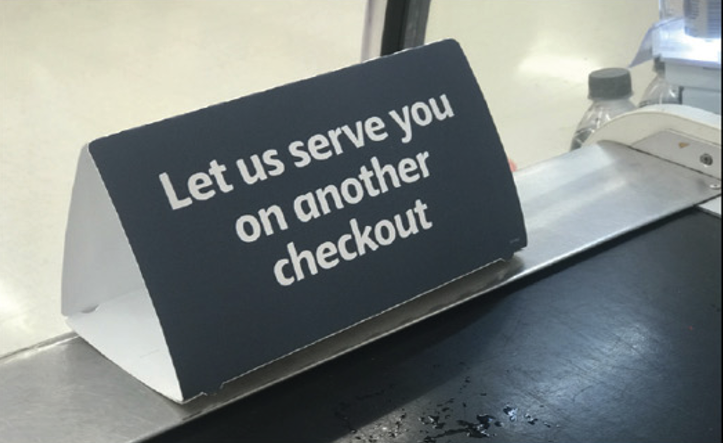
It can also be said that this is called “want to catch the long way,” to put it bluntly is that you have to go along with the hair stroke ……
✵
I often have a feeling when I read the book Evolutionary Ideas that services didn’t seem to work that way in the past. Consumers used to be more rational than now, I buy things to buy a good price, I see you this product has no hard work, you do not have to with me the whole of these behavioral tricks. That in the end what has changed? Why are sales tactics than product technology are important now?
Because now is a material more abundant era, consumers have more and more choices. Invisible, the consumer’s self-esteem is also getting stronger. Your home products are good, other people’s products are not bad. In fact, any businessmen who can stay in the market, the level will not be too different.
In this case, the brand will have to distinguish itself from other dimensions. People not only demand your quality and service attitude, but also demand that your values have to be aligned with mine, and I even have to see if your political stance is right.
This is a time when consumers are getting more respect. But note that this is not the result of government indoctrination, this is civilization brought about by business.
When you are in a social environment where you are treated with courtesy everywhere, when you don’t need any special status to walk into any bank, any store, and people treat you with respect, know that it’s because you are in a free market economy.
Annotation
[1] https://www.bankofcanadamuseum.ca/2018/10/devil-hairdo/
[2] Elite Day Class, Season 2, Generalized Superstition
Getting to the point
Three ways to trigger the other person’s actions without having to force a reaction:
- people like to discover ‘order’ in the world, making them spontaneously want to bring things back to order.
- give feedback. Often it’s not that the person doesn’t want to do the right thing, it’s just that it’s difficult for him to do it without a reminder.
- Utilize man’s rebelliousness, or ‘psychological resistance’.