AI Topic 9: People to be more like people

AI Topic 9: People to be more like people
On the very day I write this column, March 15, 2023, OpenAI releases GPT-4. GPT-4 is coming faster than we thought, and is more capable than we thought. It’s multimodal and can handle images and sounds; it can program you to create a website based on requirements written casually on a napkin; and it’s generative capabilities of all sorts have been greatly enhanced.
Perhaps most impressive is the level at which the GPT-4 takes the mainstream human exam. It scored more than 90% of all test takers on the U.S. Bar Licensing Regular Examination (BAR); it scored more than 99% of all test takers on the U.S. Biology Olympiad; and it scored a near-perfect score on the GRE Language. Its math scores are not yet optimal, but I tested it on a few Olympiad questions and it got them right.
GPT-4 These scores are more than enough to apply to graduate school at a top US school.
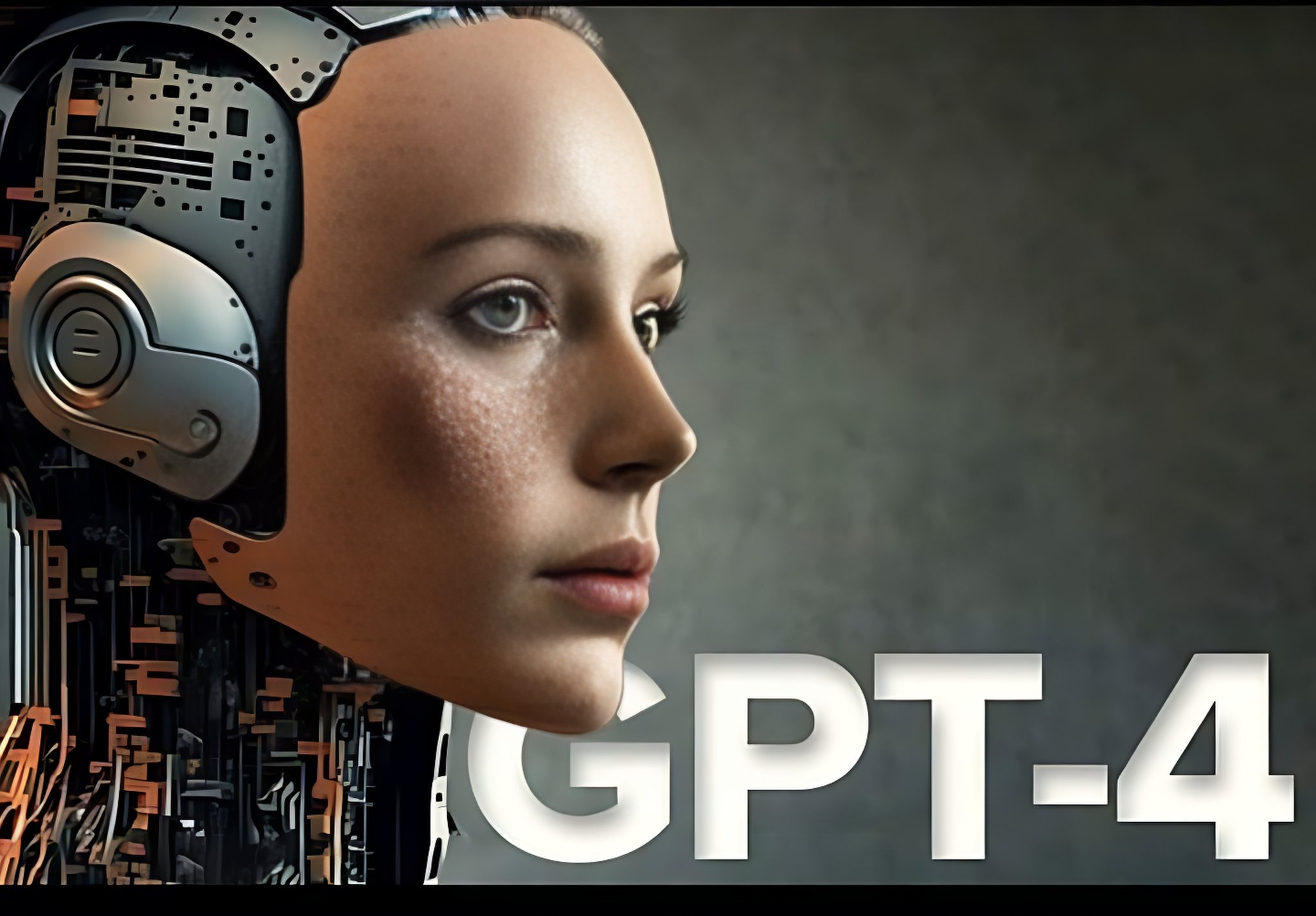
And it’s iterating at an even faster pace. Maybe GPT-5 will be out by the end of this year, then AGI in a couple years.
What should education do in the face of this situation? What should people do? Now the whole society must rethink these questions.
This lecture we continue to talk about Chatrath’s book “Threshold” insights about leadership. * The most important idea I see in this book is that human beings have an absolute advantage over AI that AI cannot catch up with, at least in the short term - that is, human beings understand human beings better. *
AI more powerful must also listen to people command, the ultimate decision-making must be people, this is called the bottom line thinking; all production, all scientific research is for people, this is called not forgetting the original intention. The needs of people must be the starting point and landing point of all endeavors, so understanding people is always the most important intelligence.
And AI cannot understand people better than people. As we said in the last lecture, AI is no more powerful it has no flesh, it is not a carbon-based organism, it does not have the ability to perceive human beings.
In the age of AI, we’ve already lost in those general cognitive items of logic and arithmetic, listening, reading and writing - we have to make ourselves more like people rather than more like AI if we want to take advantage of our strengths.
Business in the age of AI requires you to know yourself, your team, and your customers, and it requires you to be emotionally intelligent and existentially intelligent. Chatrath suggests four ways to cultivate these two types of intelligence; in the last talk we talked about ‘Meditation and Contemplation’ and in this talk we talk about ‘Embodied Intelligence’ and ‘Autonomous Thinking’.
✵
- Embodied Intelligence, which is the ability to empathize with one’s own emotions and those of others through the body. *
In 2018, Chatrath had a stint with Baidu’s Financial Services Business Group (FSG). This department later came up with a product called Du Xiaoman Finance. How did an internet finance business like this one come about?
China’s economically active population totaled 900 million, and of those 900 million people, 550 million had no credit history with the central bank. This leaves them with no way to get a loan. But in life there is always a need to borrow some money on a temporary basis, and without a credit history you can only borrow from relatives and friends, which is always less convenient than borrowing from an institution - Internet finance is meant to solve this problem.
The advantage of the Internet company is that it can judge your credit by the record of your online activities. For example, Ant Financial Services has your Taobao shopping data, and those data can predict whether you have the ability to repay.
Baidu’s data, on the other hand, is reflected in apps like Baidu Maps, Baidu App Store, and Baidu Reading. Baidu knows what books you usually read, what kind of study habits you have, what apps you have downloaded, Baidu has a picture of you.
Do you think reading has anything to do with whether or not you can pay back the money? Yes, it does. Baidu has conducted some small-scale experiments, grouped people applying for loans to do A/B tests, and based on the repayment situation in the results of the experiment, combined with Baidu’s data, an AI can be trained to predict which characteristics will be repaid. This will give each user a credit score.
So you’re saying it’s all AI, where are the human capabilities? Note that data analysis is not all knowledge gained on paper.
To really understand the data you have to go deep into the users. Baidu is sending people out into the field to talk to users to understand what their daily lives are like and how they view the ethics of repayment. In particular, many of the potential customers are young people who lack awareness of their ability to repay, they don’t quite understand what it means to borrow such a large sum of money, and Baidu has to find a way to help them understand. Even if the same hard data, you operate differently in the process of service, you will get different results.
These require you to have emotional communication with the user. These are things that AI can not do.
Baidu’s internal work discussions also require emotion. For example, the issue of data privacy, based on a person’s record of using a reading app to read books to decide whether to give him a loan, may I ask if this is reasonable? I look for you to borrow money, I have to give you all the data of my various activities on the Internet, so that you know me better than my wife, is this good?
We stand in the user’s point of view from the outside, surely feel that these Internet merchants are really profit-oriented, nothing to do …… but stand in Baidu’s point of view, they also have all sorts of have no choice. First of all this has legal problems. Furthermore, if you abuse the data, users will not want to use your products in the future. But if you don’t use the data, you can’t engage in Internet finance.
Baidu also had a big headache and held various meetings to have a moral debate. During the debate, everyone was discussing what to do with their own personal feelings and emotions. Baidu has done some bad things, but not all of them are bad.
The result of the debate is that the department that owns the user data can’t give the data directly to the financial sector, but rather analyze the data and give the financial sector a label or a score. This way there is a block in the middle to protect the user’s privacy.
These aren’t AI-generated algorithms, this is an idea discussed by people with emotional functions.
✵
And emotions are not purely a brain function, emotions are very much related to the body.
When you communicate a difficult message to someone, you sweat. When someone praises you, you get a tight feeling in your chest. Your stomach may flip when you feel love. And the interplay between emotions and the body works both ways. You’ve just walked through a zip line that swings around and your heart is racing when you meet a member of the opposite sex, and that heartbeat signal will make you think you’ve encountered love. Visiting the grocery store in a state of hunger will cause you to buy more. The human intestinal nervous system is known as the “second brain”, which makes people who are often emotionally stressed will also often have stomach pains ……
We often know our emotions by how our body reacts. How can an AI understand human emotions if it doesn’t have a body? How can it understand human emotions? How can it predict human emotions? At least so far the emotional function is still a human advantage.
- Sufficiently perceiving your own emotions and those of others, and distinguishing the subtle differences between different emotions, can have a major impact on your decision-making. *
✵
Threshold leadership also includes expressing emotions. Sometimes the team needs you to say a few words to inspire or infect the atmosphere. How do you say it well?
Poetry, for example, is one of the most common ways humans express their emotions. And poetry has a distinctly physical imprint-poetry is poetry because it rhymes and rhythms; rhymes and rhythms work for people fundamentally because they have to breathe.
An AI can write poetry, and it can make the meter tight, but we expect it to have a hard time grasping the emotions embedded in the sense of rhythm because it doesn’t have a mouth or a respiratory system: it can’t appreciate what the effect of a poem is when it’s read out loud. The reality is that even the most advanced GPT-4, doing its best English poetry, has crappy rhymes.
Only real emotion can move people, and real emotion requires the body and voice to work together to express it. Your distinctive personality needs body language to match. You need to stand up straight if you want to embody confidence. If you want to make people believe that the situation is under control, that you are not only not anxious but also happy, at least you have to give a smile.
The body’s effect on people also includes energy. If you haven’t slept well and your body is tired, your brain won’t work as well as it should. When you have enough energy, your whole mental outlook is positive.
AI has none of that.
✵
- Another way to develop a person’s unique intelligence that also has to do with the body is to think autonomously. *
The fact that people are made of flesh may mean more to our intelligence than we realize. The physical body is not just a maintenance system for the brain; a human being is more than just a brain.
From Plato to the Enlightenment, and all the way up to the present day when many people advocate the uploading of consciousness, people have been treated primarily as brains, ignoring the body. For example, in the movie The Matrix people are soaked in liquids and hooked up to a bunch of tubes, the body becomes a battery and only the brain is active, and as usual they can experience a full life in virtual space.

But Chatrath argues that these brains in the tank are not full human beings.
For the role of the body for a human being is not just to sustain survival-the body also provides emotions. The body, is an indispensable source of information for the brain. The body is also a key part of the human thought process when the enteric nerves are taken into account.
In fact, we might even go so far as to say that it is because the body also influences the mind that each person has his or her own independent thinking.
Think about it, if all humans can be reduced to a brain in a jar, and the brain can be considered a separate organ that processes information, then you can easily control the information input to each brain. How is that different from AI? Where’s the independent thinking to be found?
The most fundamental, philosophical function of the body is not yet the ability to provide emotions, but the fact that the body allows for more channels of information input. Your body has various perceptions of the outside world, and those perceptions are subjective and different for everyone. Healthy people, disabled people, sick people, fat or thin, tall or short, all perceive differently - and it’s those differences that make us think differently. Not to mention the fact that having a body is what makes you live, what makes you grow, what makes you have different experiences from childhood to adulthood, what makes you a multifarious personality.
I’m afraid that absolute ‘independent thinking’ doesn’t exist, after all, everyone is networking and extracting information from the outside world; but with a body we can at least ‘think on our own’. With a body, there is no power that can completely control the information input to you.
Chatrath observes that teams with embodied intelligence tend to be culturally energized and more thoughtful about ethical issues. For one thing such teams have emotional connectivity. But more importantly, the people who make up such teams have an uncontrollable nature. They are not machines, they don’t think what you set them to think, they think on their own. It is because of each person’s autonomous thinking that the team has different perspectives, that it is creative and dynamic, that it is generative, and that it is able to deal with complex problems.
✵
Do you know what the fastest way to train AI is? It’s to use an existing AI to generate all kinds of data and corpus and train the new AI directly. not only is this the fastest way to train, but it’s also the most accurate. But because you don’t have a fresh corpus, the AI practiced this way isn’t fresh.
That is to say, if everyone lives like an AI, the AI will have no new training material, and the AI will stop progressing.
New data is generated by people. People are not programs, and people should not live by fixed rules. The mission of life is to create accidents and add information. Some accidents come from your emotions, some from your body’s unique perceptions, some from your autonomous thinking - wherever they come from, they must not come from the indoctrination given to you by the AI, and they must not come from your speculation about the leader’s intentions.
- Those moments when you are at the mercy of your will are the moments when you are truly alive. *
In this way, AI is not replacing people but liberating them. aI can make us live more like people. People actually have a lot to offer because people are one of the most complex things. You go to talk to any person, as long as he speaks to you in human terms, without official jargon or reciting brainwashing information, you will gain something that surprises you, and will find that he has a unique perspective and ideas.
…… Of course, the premise of all this is that AI has not yet mastered human emotions. Then if AI can perfectly replicate human emotions in the future, what should we do? Let’s talk about it in the next lecture.
Get to the point
- The two ways to develop emotional and existential intelligence are ‘embodied intelligence’ and ‘autonomous thinking’.
- Embodied Intelligence is the ability to empathize with one’s own and other people’s emotions through the body.
- The body provides emotions, is an indispensable source of information for the brain, and is a key part of the human thinking process. With the body we can ‘think on our own’.
- those moments when you are at will are the moments when you are truly alive. ai is not replacing people but liberating them, ai can make us live more like people.