AI Topic 5: Business Strategy Analysis

AI Topic 5: Business Strategy Analysis
Hundreds, maybe thousands, of AI apps have been born since ChatGPT appeared a few months ago, and it’s a time for the herd to rise.
In particular, at the beginning of March, OpenAI lowered the cost of its API traffic by a factor of 10, and you can call GPT-3.5 directly for all sorts of applications. I’ve been tracking the news on Twitter, and it feels like literally everyone can make their own AI apps now: from websites to mobile apps, to browser plugins, to open source software, to whatever, and it doesn’t matter if you weren’t familiar with programming and development before because you can let ChatGPT do the programming for you.
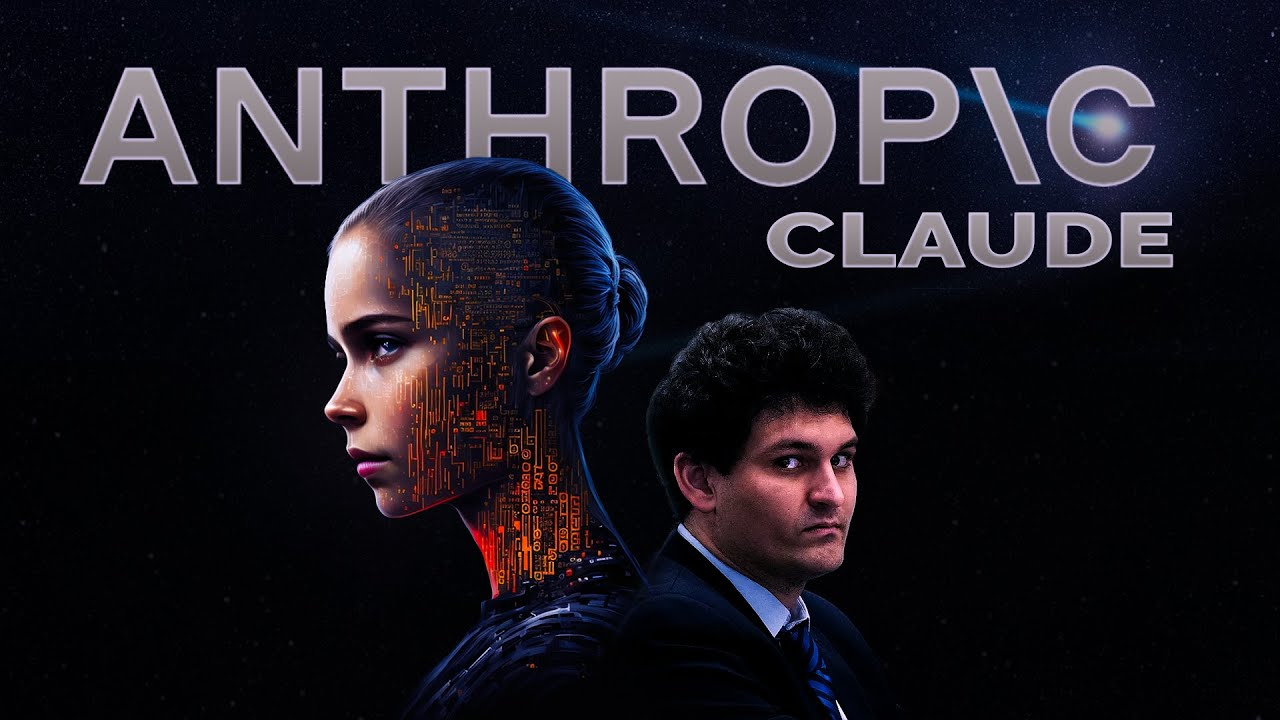
At the big company level, outside of OpenAI, Google, Microsoft, and Meta all have their own models. Elon Musk was originally one of the investors in OpenAI, but later withdrew because of philosophical disagreements, and is now looking for someone to do his own model. As of now, it looks like the closest model to ChatGPT-3.5 in terms of performance is probably Claude, developed by a small startup called Anthropic, that was founded independently by a previous employee of OpenAI.
The Chinese side is also in the air, with Baidu, Tencent and several other big companies training their own models ……
This is definitely the liveliest time for Internet startups since the 1990s. If you’re interested in doing something big, don’t miss this wave of opportunity.
You’ll have a lot of questions.Google is so strong, why isn’t Google the one launching ChatGPT this time?With OpenAI already so powerful, how much chance do Chinese companies have?
We continue to talk about the business strategy of AI with the help of the book “Power and Prediction”.
AI is indeed an unprecedented change, but the logic of business has not changed.
✵
If you’re familiar with business logic, you can figure out why Google didn’t take the lead with ChatGPT. it was a classic disruptive innovation.
One of the most critical technologies for large-scale language models is the transformer architecture, which was invented by Google, which has a deep accumulation of technologies and has more than one language model of its own. However, it has been waiting for Microsoft to search and GPT model combination, launched Bing Chat, Google just can’t sit still, in February 7 launched a competitor called Bard, the results of the test performance is not good, resulting in a big drop in the stock price.

Why did Google get up early and be late? This is actually a very typical situation that Clayton M. Christensen talks about in The Innovator’s Dilemma.
I would venture to say that Google has not been doing conversational search properly as a program from the beginning. Because conversational search is not in Google’s interest.
Traditional search can easily insert ads into the results, and those ad revenues are Google’s lifeblood. Conversational search consumes ten times the arithmetic of traditional search, which is acceptable, but what about ads? You can hardly insert ads in chat.Google obviously does not want to subvert itself, he will not take the initiative to engage in this new model …… while Microsoft is barefoot and not afraid to wear shoes.
As a result, once Bing Chat came out, Google’s search traffic dropped significantly-
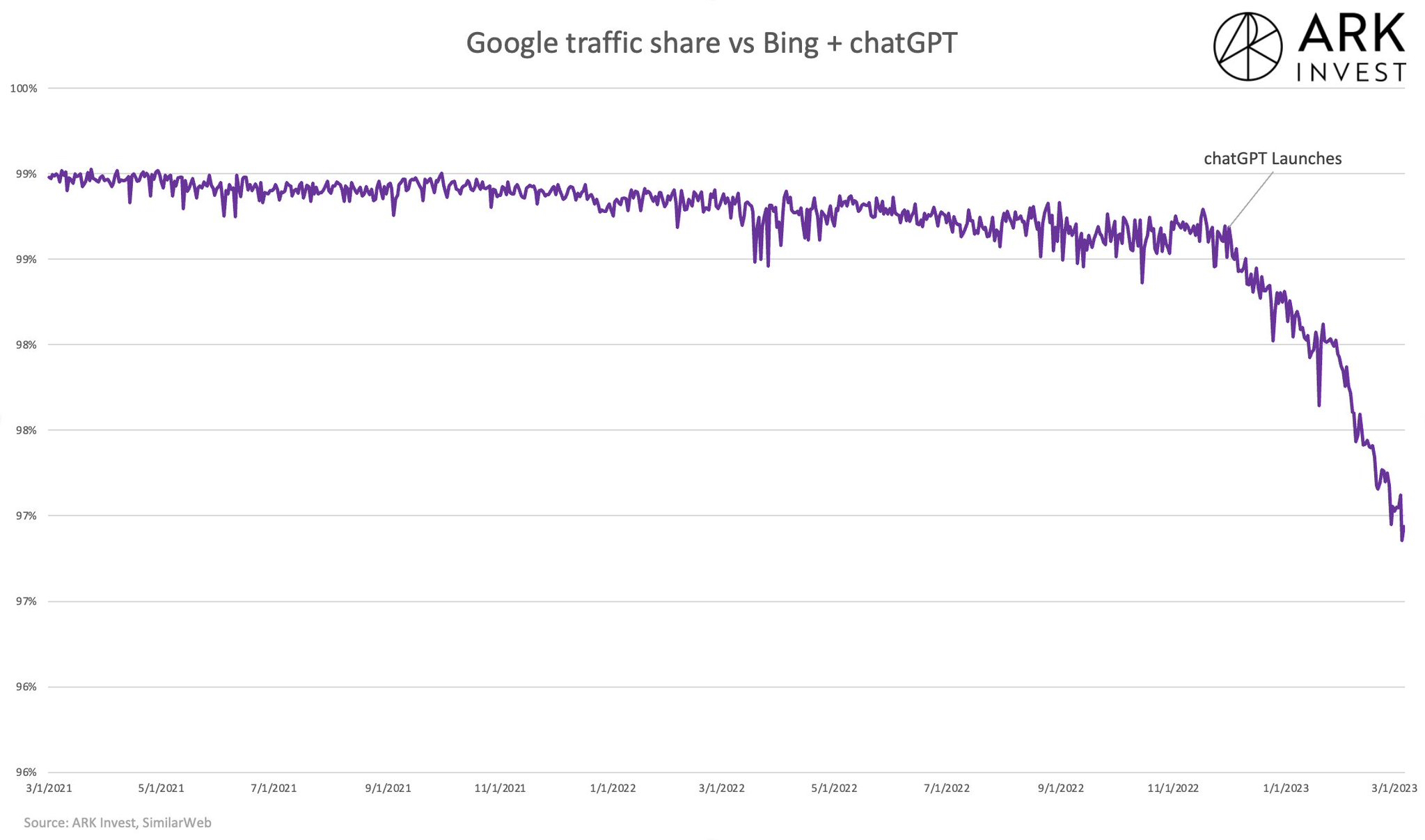
Christensen says, * A technological change, even if radical, is not disruptive as long as it improves a traditional business model - disruption only occurs when that technology improves something other than traditional metrics. *
✵
Take a familiar example. Why Netflix’s streaming media playback model could disrupt Blockbuster’s video rental model?Blockbuster actually saw Netflix coming and found a strategy to deal with it, and developed a video-on-demand business as well …… But, it lost to itself.
Blockbuster is a franchise model. You open a store in your own city, it provides you with movie sources, and you run the rental business. So can you guess what one of the biggest revenue streams of the franchise is?
It’s late fees. Consumers who rent a videotape and don’t return it in a timely manner have to pay a late fee - a late fee that accounts for 40% of the franchise’s revenue. And the franchise also has revenue from selling popcorn, candy, and the like. If Blockbuster took a page from Netflix and got a mail-in DVD and streaming-on-demand model without late fees, would the franchises still have revenue?
Reflected in the company’s strategy, this led to a power struggle between the old and new models …… In the end, the board of directors forcibly ordered the company’s executives to revert to the original model.
Do you guess that a similar struggle is happening at Google at this moment? Guess what Baidu is thinking right now?
The strongest argument from conservatives is that new things aren’t good enough. For example, the iPhone had all sorts of problems when it first came out, it was very battery hungry and awkward to type on …… arguably far inferior to the Blackberry in terms of productivity. Just as ChatGPT and Bing Chat now have all sorts of things that are not as good as they could be.
But the key is that the iPhone, representing a new business model, which provides users with a completely different experience of using the phone.Bing Chat completely changed the search thing, even if there are now a variety of shortcomings, as long as this direction is established, it will do better and better.
It took 4 years for the iPhone to really impact traditional cell phone sales. We have reason to believe that Bing Chat search model, I’m afraid that with a shorter period of time will affect Google. after the search engine how to make money? Is it change to charge? Is forced to add advertising in the conversation? No one knows. But we do know that it is definitely going to change.
✵
Still, a big company like Google has a head start in getting into AI. In business language, to be in the AI business, you need to reach a ‘minimum startup threshold’, you need a ‘moat’, and you need to create a ‘flywheel effect’.
The start-up threshold for AI is data. Prediction requires data, and you first need to be ready to reach the minimum effective size of the amount of data.
In the era without AI, the amount of data is not very important. For example, in the early days of the Internet there used to be dozens of companies all making search engines, and you felt pretty much the same with any of them. At that time you did not care much about whether the search results particularly match your requirements, perhaps the first page shows ten web pages are not what you want, it does not matter, you can turn to the second page. To return more accurate results, search engines must incorporate AI, but that’s an afterthought.
But now that we’re doing self-driving cars, it’s a different story. We have a low tolerance for self-driving cars to go wrong. This requires companies offering self-driving business to have practiced their AI first, and then you must have accumulated a lot of data beforehand to do so.
But if you’re not in the self-driving business, there’s an abundance of data online these days, and gathering it isn’t too big of a problem for many startups. For example, there is a company called BenchSci that uses AI to help scientists engage in pharmaceutical development, which is to use machine learning to research publicly published academic papers and tell scientists what kind of biological reagents need to be prepared to study a certain kind of drug, so as to greatly shorten the research and development cycle-

So far its all good business. But you might ask, since the data is all publicly available, what does it do if another company does business like this?
It depends on whether it has a moat or not. The best moat for an AI company is learning from user feedback.
Take Google search, for example. You type in a few keywords, and Google seeks to rank that page you want as high as possible on the first page, preferably the first result. So how does Google decide to rank the results? It used to use a ranking (PageRank) algorithm, but now it’s a deep learning AI that combines your usage habits to predict the results you want most. And this AI especially learns from your feedback.
Every click you make on Google, which pages you click on, what ads you click on, is helping Google improve its predictive model.Google’s search results are getting more and more accurate, you’re getting more and more comfortable using them, it’s giving you just the links you need, it’s displaying just the ads you’re interested in, and the advertisers are very much aware of these… …which is why Google’s market share in search engines is untouchable.
Having a first-mover advantage and a moat, if you then catch up with a business that is an expanding market and you can continuously improve from user feedback, it’s the same as having a growth flywheel.
Technology is a living thing, technology is a product of ecology. There have been many commercial airplane manufacturers throughout history, and now there are only two left internationally that make large airliners, Boeing and Airbus. They are constantly improving, learning from every flight accident and every problem, and they have accumulated many years in this way. Now China is also building large airplanes, maybe we can indeed reach a relatively high level of technology in a certain cross-section, but we don’t have so many years of experience in improvement - we haven’t even had any accidents - we haven’t built our positive feedback flywheel yet, and we can imagine that we will face a lot of difficulties. We could conceivably face a lot of difficulties.
That’s why the bar for autonomous driving is so high, and there are still so many companies investing in it at all costs. General Motors, for example, has invested a billion dollars in its self-driving program. This is because once the rush succeeds and the flywheel unfolds, it will be difficult for others to catch up. Now is a rare window of opportunity. If one company’s self-driving system proves to be the best in the future, it’s likely to be a difficult situation like Google’s dominance in the search engine business.
✵
To put it this way, while Chinese companies have a lot of accumulated and applied experience in AI, they are not the strongest technologically after all, so where are the opportunities for China? This leads to another business logic - * Differentiation. *
Sometimes as long as you can cross a certain threshold, good to a certain extent, “good or bad” will be difficult to compare. Which is better, Coca-Cola or Pepsi? Which is better, Mercedes-Benz or BMW? They have different styles and appeal to different people.
Then we can imagine that the same language model like GPT, different companies will also have differentiated needs -
Some companies want to be efficient and just be able to answer user questions quickly and accurately;
Some companies want to be able to sell their products in a chat conversation;
Some companies want bots to be more humanized, to diffuse user anger, to make users feel good ……
Perhaps different models will focus on different needs. Like we mentioned the Claude model earlier, which is said to be better than OpenAI’s GPT-3.5 for novel creation.
The simplest differentiation is localization. For example, for melanoma detection, European AIs are more accurate in judging light-colored skin because they choose data from Europeans. Then if a Chinese company makes a melanoma detection AI specifically for Asian skin color, it would be well worth it.
Another example is that China’s traffic conditions - including signaling systems, traffic flow and pedestrian habits - are very different from those in the United States and Europe, and it is impossible for the AI of a U.S. company to be taken to China for direct use, so specifically training a Chinese-owned self-driving AI is a necessary.
✵
We’ve talked about several competing trends in this talk:
**AI business has a first-mover advantage, but at the same time AI is a disruption of the existing hegemony in the market;****AI has a winner-take-all effect because it’s still essentially software with near-zero marginal cost, but at the same time AI has a need for differentiation. *
This is a rare situation where there are opportunities for both big old companies and small emerging companies, the strong and the weak. New AI applications are emerging every day downstream, and people from all walks of life upstream are training their own large-scale language models. Only a few companies have shown first-mover advantage so far, but we don’t know who has a moat and who can build a growth flywheel. This is a rare situation in history where “Qin lost its deer and the world is chasing it”.
This will be a very short window, and it is expected that the ‘highly talented and fast-footed will be the first to win’ very soon.
And I feel that China is now half a beat behind. At this moment, OpenAI’s API can’t be used in China, domestic models are slow to come out, and domestic AI applications haven’t exploded yet, so we may have lost the lead.
One thing I would like to remind is that Chinese is no longer an obstacle, OpenAI does not use a lot of Chinese corpus training, but ChatGPT can speak very authentic Chinese, perhaps more authentic than domestic models. Chinese companies must think about differentiation in other ways ……
Highlight
Several competing trends in AI business development:
- AI business has a first-mover advantage, but at the same time AI is a disruption of the existing hegemony in the market;
- AI has a winner-take-all effect because it is still essentially software with almost zero marginal cost, but at the same time AI has a need for differentiation.